Social Media Marketing

Attention is rented.
Make it convert.

Organic reach keeps falling and every platform wants you to pay for the audience you already built. We run social as a commercial channel — content that earns attention, paid that scales what works, and reporting that ties both to revenue rather than to likes.

8.4k1.2k620REACH412kENGAGE+186%FOLLOWERS+9.2k
Content strategy
Short-form video
Paid social
Revenue reporting
01
The reach problem

You do not own your audience on social. You rent access to it, and the rent keeps rising.

Organic reach has declined steadily across every major platform, and the trend is structural rather than temporary — feeds are algorithmic, attention is finite, and platforms monetise access. Businesses that treat social as free distribution keep posting into a void. The ones that work treat it as two connected systems: content that genuinely earns distribution, and paid that amplifies whatever proves itself.

Organic reach keeps falling

Follower count no longer predicts reach. Platforms show content to a fraction of your audience and charge for the rest, which means posting consistently is not a strategy on its own.

Content built for brands, not feeds

Polished corporate content underperforms native-feeling content on every platform. Feeds reward things that look like they belong there, not things that look like advertising.

Same content everywhere

Cross-posting identical assets to every platform ignores that each has different formats, aspect ratios, audiences and conventions. It is efficient to produce and poor at performing.

Measured on vanity metrics

Likes and follower growth are easy to report and weakly connected to revenue. Programmes justified on engagement get cut the moment someone asks what it earned.

<10%
Typical organic reach of followers
3s
To stop a scroll
60%+
Of social time on video
8+
Years running social programmes
02
What we actually do

Organic proves the message. Paid buys the reach.

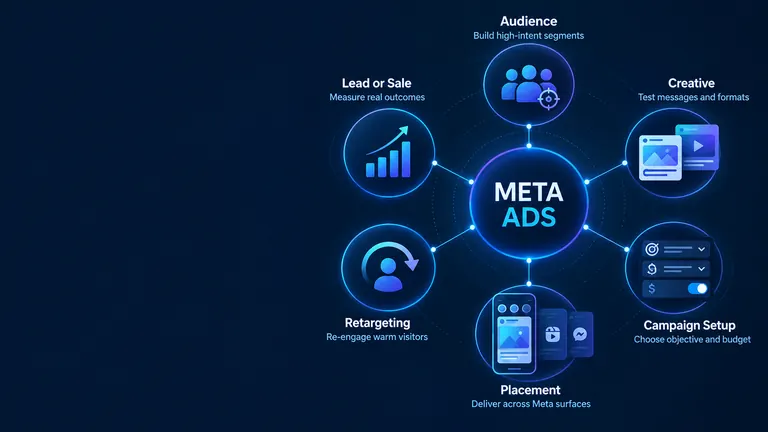
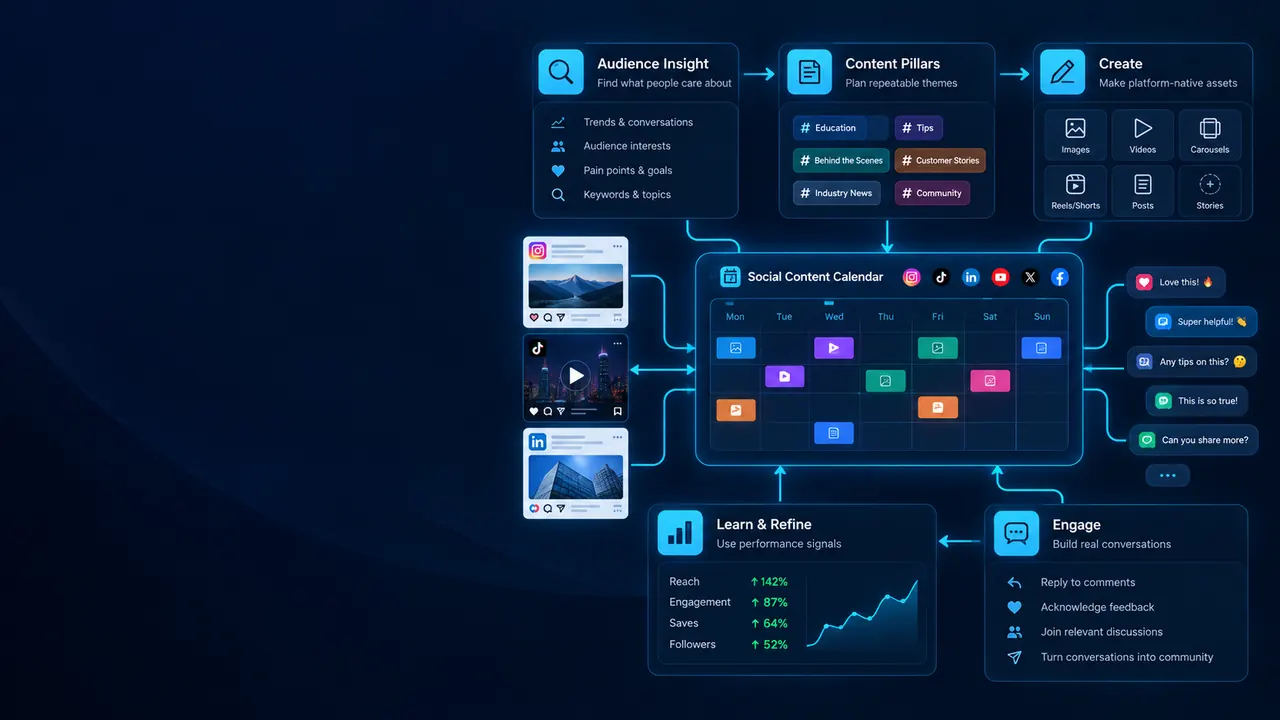
We treat organic and paid social as one system rather than two teams. Organic is where messaging, hooks and formats get tested cheaply; paid is where whatever proves itself gets distribution.

That order matters. Running paid on untested creative means paying to discover what does not work. Testing organically first means the money goes behind messages that have already earned attention without it.

  • Platform-native content — produced for the format and audience of each platform rather than one asset resized five ways.
  • Short-form video — the format every platform currently privileges, built around a hook that earns the first three seconds.
  • Paid amplification — budget behind organic winners, with audience testing, creative rotation and proper conversion tracking.
  • Community management — replies, DMs and comments handled promptly, because engagement signals feed distribution and unanswered questions cost sales.
  • Revenue attribution — tracked links, pixel setup and blended reporting so social is judged on pipeline rather than on likes.
Posting
Social as a channel
Post consistently, hope for reach
Test organic, amplify winners
One asset, five platforms
Native to each platform
Polished brand content
Feed-native creative
Boost the best-liked post
Paid behind proven converters
Report likes and followers
Report pipeline and revenue
Comments unanswered
Managed within hours

Why organic still matters: not for its reach, but as the cheapest creative testing environment available. A hook that fails organically will fail with money behind it too — you will just find out more expensively.

03
The Sachkhand blueprint

How we build a social programme that returns

Six workstreams that connect content, paid and measurement rather than running them as separate exercises.

01

Audit & platform selection

Where your audience genuinely is and what is already working. Most businesses are spread across too many platforms and would perform better on two done properly.

02

Content system

Formats, hooks and pillars defined so production is repeatable rather than improvised weekly. The system is what makes consistency possible at quality.

03

Short-form video

Built around the first three seconds, because that is what determines whether the rest gets watched. Every platform currently privileges this format.

04

Paid amplification

Budget behind organic winners, with structured audience and creative testing rather than boosting whatever got the most likes.

05

Community management

Comments and DMs handled promptly. Response rate feeds distribution, and unanswered buying questions are lost revenue.

06

Attribution

Pixels, tracked links and blended reporting so social performance is expressed in pipeline and revenue rather than impressions.

04
What is changing through 2026

Four shifts in social

Distribution has moved from follower-based to interest-based, and search behaviour is migrating into social feeds. Both change what content should be built for.

01

Feeds are interest-based, not follower-based

Platforms increasingly show content to people who did not follow you, based on inferred interest. That makes follower count far less important and content quality far more so — a good post can reach people who have never heard of you.

02

Social is becoming a search engine

A significant share of younger users search directly within social platforms rather than a search engine. Captions, on-screen text and hashtags now function as search signals, which makes social content discoverable long after posting.

03

Short-form video dominates distribution

Every major platform privileges short vertical video because it holds attention. Programmes built on static images are competing for a shrinking share of feed real estate.

04

Creator partnerships outperform brand content

Audiences trust people over logos. Creator-produced content typically outperforms brand-produced equivalents on both engagement and conversion, and is increasingly the more efficient buy.

05
Why Sachkhand

Measured on pipeline, not on likes

Social is easy to report well and hard to report honestly. We do the second one.

Revenue reporting

Tracked links, pixel setup and blended attribution so social is judged on what it produced. Engagement metrics sit behind that as diagnostics.

Fewer platforms, done properly

We will usually recommend cutting platforms. Two done well beats five done thinly, and most businesses are spread far too wide.

Video-first production

Built for the format platforms actually distribute, with hooks tested against real retention data rather than internal opinion.

Organic and paid as one system

Organic tests the creative cheaply; paid scales what proves itself. Running them separately wastes budget on unvalidated messages.

Community handled properly

Response times measured and managed, because engagement signals feed distribution and unanswered questions are lost sales.

Social search optimisation

Captions, on-screen text and hashtags treated as search signals, so content stays discoverable long after it stops being distributed.

06
The Honest Comparison

Why Businesses Choose SDM for Social Media Marketing

Same budget, very different outcomes. Point by point, here’s how a specialist partner compares to a typical agency or going it alone.

What actually matters With SDM Typical Agency In-House / DIY
Senior specialist on your accountAlwaysOften a juniorStretched thin
Custom strategy built for your goalsTailoredTemplatedGuesswork
Deep audit before any work beginsSurface-levelSkipped
White-hat, penalty-safe methodsGuaranteedVariesHigh risk
Plain-English reporting tied to revenueMonthlyJargon PDFsNone
Direct access to your specialistAccount-manager relayN/A
Organic tested before paid spendBoost top postGuesswork
Platform-native creativeOne asset resizedCross-posted
Reported on pipeline, not likesEngagementFollowers
Community response time managedAd-hocUnmanaged
Social search optimisationOverlookedUnknown
Ongoing competitor gap analysisOne-offManual
Conversion-focused, not just trafficTraffic-firstUnclear
Premium tools included (Ahrefs, SEMrush)SometimesCostly extra
No long lock-in contractsFlexible6–12 mo lock-inN/A
Established agency, operating since 2017VariesLearning curve
Fast onboarding & early quick wins~2 weeksSlowTrial & error
Human, SEO-led content (no AI spam)Outsourced / AI spamTime-heavy
Focus on compounding, long-term ROICore promiseShort-term winsSlow & ad-hoc
Recovery from Google penaltiesSometimesVery hard

20 reasons growing brands make the switch. See the difference for yourself →

07
Measurement

Likes are a diagnostic. Pipeline is the result.

Social attribution is genuinely imperfect. We are explicit about what is tracked, what is modelled and what is inferred.

Attributed revenue

Tracked-link and pixel-attributed revenue, reported alongside blended figures so the limits of attribution are visible.

Video retention

Three-second and completion rates, which predict distribution far better than likes and tell you whether the hook works.

Cost per result

Paid cost per lead or purchase by campaign and creative, so budget moves toward what converts.

Community response time

How fast comments and DMs get answered, since both feed distribution and directly affect conversion.

Non-follower reach

The share of reach coming from people who do not follow you — the clearest signal that content is earning distribution on merit.

Social performance
Organic + paid — rolling 90 days
LIVE
Revenue
+74%
Non-follower
68%
3s retention
71%
Cost/result
−38%
Response
<2h
↑ 186% attributed social revenue vs previous period
08
The engagement

Four stages, repeated every month

Test cheaply, scale deliberately, report honestly.

01

Audit & focus

Where your audience actually is, what has already worked, and which platforms to stop. Most engagements begin by cutting scope rather than adding it.

→ Two platforms, done properly
02

Build the content system

Pillars, formats and hooks defined so production is repeatable. Video-first, native to each platform, built around the first three seconds.

→ Consistent output at quality
03

Amplify what works

Paid budget behind organic winners, with structured audience and creative testing and proper conversion tracking in place first.

→ Efficient paid scale
04

Report & iterate

Revenue and pipeline reporting with engagement as diagnostic. Losing formats retired, winning ones extended into new variations.

→ Compounding creative library
09
Outcomes

The targets we set for social engagements

Targets we plan against for ecommerce, hospitality, professional services and B2B clients after six months.

+186%
Attributed revenue
Target by month 6
−38%
Cost per result
Paid social
68%
Non-follower reach
Content earning distribution
<2h
Community response
Average

Targets, not best cases. Social attribution is imperfect by nature — platform-reported figures usually overstate and last-click usually understates. We report both alongside blended revenue so you can see the range rather than a single flattering number. These are planning targets rather than a record of past client averages; we agree a realistic range against your own baseline before an engagement starts.

10
Scenarios

Social in action — three sectors

Different audiences, the same method: test organically, scale with paid, report on revenue. The scenarios below are composites drawn from situations we encounter repeatedly — they illustrate method, not the account of any single named client.

Ecommerce

Cutting three platforms and tripling revenue

Challenge

A brand posted daily across five platforms with a small team. Output was thin everywhere and attributed revenue was negligible.

What we did

Cut to two platforms, rebuilt around short-form video with tested hooks, then put paid budget behind the organic winners with proper conversion tracking.

+214%
Attributed revenue
2
Platforms, from 5
B2B

Founder-led content that filled a pipeline

Challenge

Corporate brand content generated almost no engagement and no attributable pipeline despite consistent posting.

What we did

Shifted to founder-led commentary with a documented content system, then amplified the highest-retention posts to a targeted professional audience.

+164%
Qualified leads
4.2×
Engagement rate
Hospitality

Turning social into bookings

Challenge

Strong follower count and high engagement, but no measurable link between social activity and reservations.

What we did

Implemented tracked booking links and pixel attribution, restructured content around occasion-led hooks, and amplified proven posts locally.

+128%
Attributed bookings
−44%
Cost per booking
11
Questions

The questions we get asked most

Honest answers on reach, attribution and what social can realistically deliver.

Is organic social still worth doing?+

Yes, but not primarily for its reach. Its real value is as the cheapest creative testing environment available — a hook that fails organically will fail with budget behind it, and you will find out far more expensively. Organic also compounds through social search, since content stays discoverable long after distribution stops.

Which platforms should we be on?+

Fewer than you currently are, almost certainly. Most businesses spread a small team across five platforms and produce thin content everywhere. Two platforms done properly consistently outperforms five done thinly. We pick based on where your buyers actually are and what your team can genuinely sustain.

How do you attribute revenue from social?+

Tracked links, pixel setup and blended modelling — and we are explicit that it is imperfect. Platform-reported conversions usually overstate, last-click usually understates. We report both alongside blended revenue so you see the range rather than the single most flattering number, which is what most agencies show.

Do we need to be doing video?+

On most platforms, effectively yes. Every major feed currently privileges short vertical video because it holds attention longest. Static-only programmes compete for a shrinking share of distribution. It does not need to be expensive — native, phone-shot content frequently outperforms polished production.

Should we work with creators?+

Often, yes. Creator-produced content typically outperforms brand-produced equivalents on both engagement and conversion, because audiences trust people over logos. It is also increasingly the more efficient buy. The work is in selecting creators whose audience genuinely overlaps yours rather than picking on follower count.

How much should we spend on paid social?+

Enough to test properly, which is more than most businesses allocate for testing and less than they fear. We start with a structured test budget across audiences and creative, then scale behind what produces. Spending behind unvalidated creative is the most common way social budgets get wasted.

How long before we see results?+

Paid produces measurable results within weeks. Organic takes longer — typically two to four months to build a content system that reliably earns distribution. The compounding benefit comes from the creative library: every tested winner makes the next campaign cheaper.

Next step

Ready to make social a revenue channel?

We will audit your platforms, content and attribution setup, and show you honestly which channels are worth keeping and what they could realistically produce.

Free social & content audit
Platform focus recommendation
Attribution setup review
Creative gap analysis
SOCIAL REVENUE+186%

Further reading

Go deeper on this

The thinking behind the work. These guides go deeper on the methods this page describes — written by the team that runs them.

Chat With Us
🚀 Book Free Audit & consultation!
45 min · Free audit + strategy + consultation · No obligation