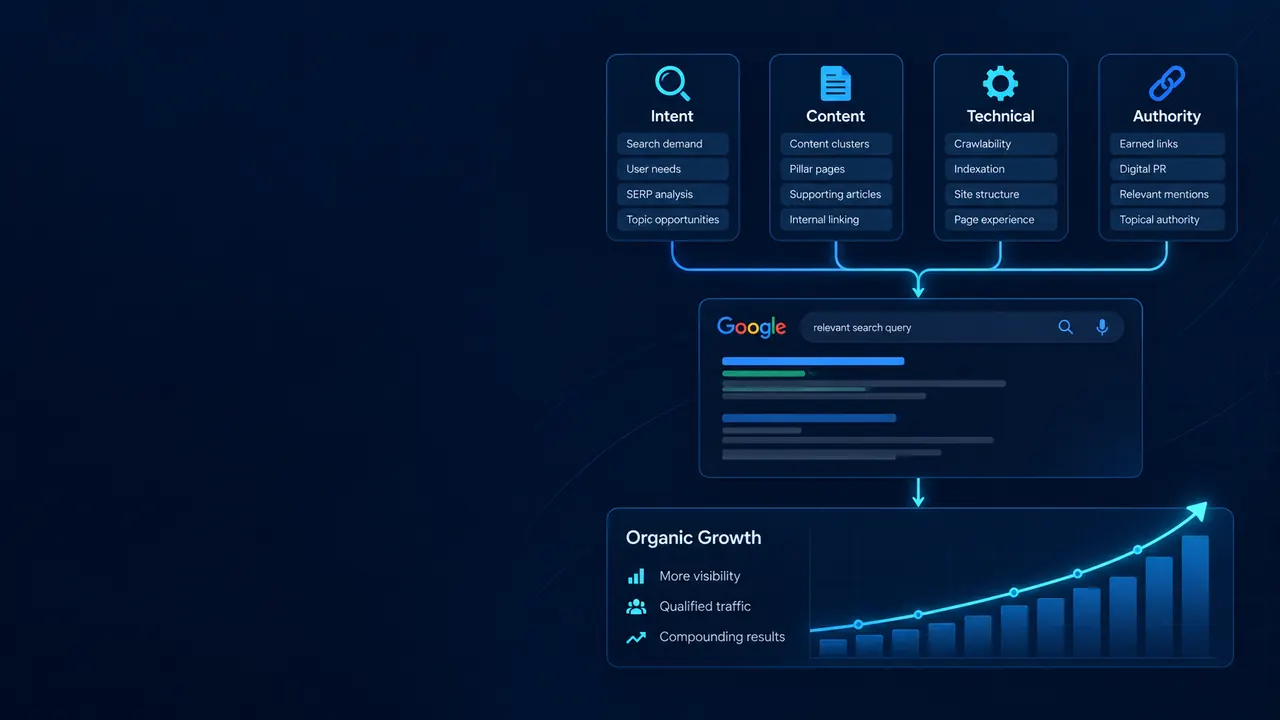
SEO Services at a glance
As a full-service SEO agency and SEO company, we combine technical SEO, on-page optimisation, content and white-hat link building into one search engine optimisation programme — built to rank in Google, AI Overviews and AI search, and measured on leads and revenue rather than traffic alone.
Get a free audit →- Technical SEO audit
- Keyword research
- On-page optimisation
- Content strategy
- Link building
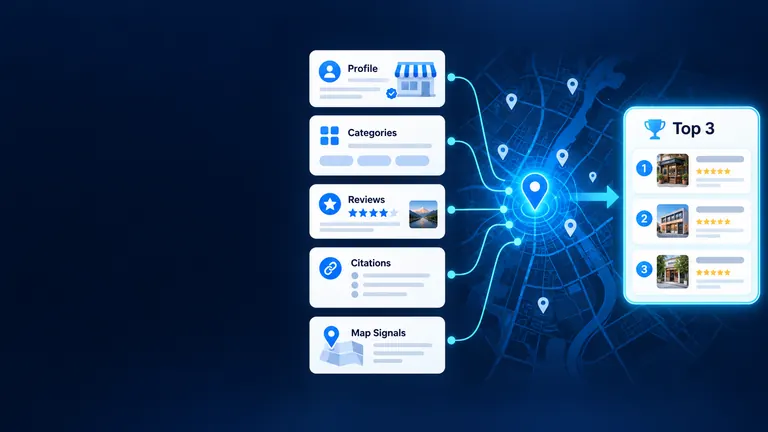
- Local SEO
- AI SEO & GEO
- Monthly reporting
Search did not get harder. It got more selective — and most SEO stopped keeping up.
Three things changed at once: AI answers now resolve a large share of queries before anyone clicks, generated content became abundant enough that publishing volume stopped working, and passage-level ranking made page-level optimisation blunt. Sites still running a 2019 playbook — publish weekly, build links, track two hundred keywords — are not underperforming because they are doing it badly. They are doing the wrong work well.
- Zero-click answers
Answers resolve before the click
AI Overviews and answer boxes settle a growing share of informational queries on the results page. Ranking fourth for a query that never produces a click is a metric moving without a business outcome behind it.
- Content volume trap
Content volume stopped working
Generated content is abundant, so its marginal value collapsed. Publishing more of the same no longer buys authority — and on a topically unfocused site it actively dilutes what you already rank for.
- Cannibalisation
Cannibalisation nobody audited
Years of publishing without an intent map leaves multiple pages competing for the same query. Signals split, none ranks properly, and the fix is consolidation rather than yet more content.
- Revenue blind spot
Reporting disconnected from revenue
Impressions and average position rise while enquiries stay flat. Without intent-segmented, revenue-attributed reporting there is no way to tell whether SEO is working or merely busy.
Rankings are the mechanism. Qualified revenue is the product.
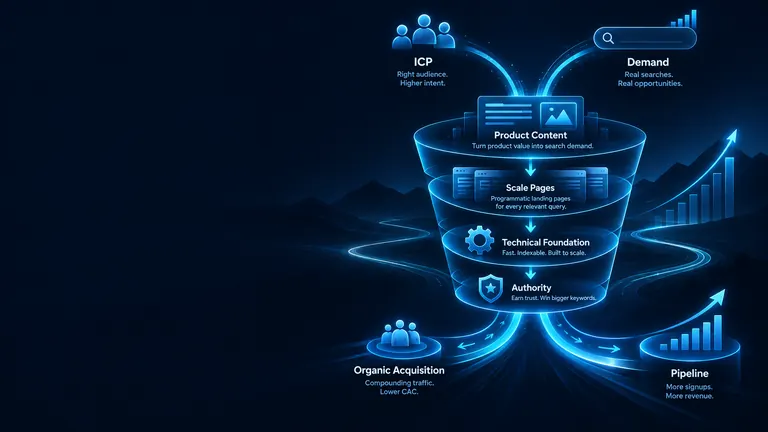
Modern SEO is the work of making your site the most credible, complete and technically sound answer to the queries your buyers actually use — then making sure that answer is visible across classic results, answer surfaces and AI-generated summaries simultaneously.
That means four disciplines pulling together rather than four separate retainers: technical foundations that let pages be crawled and rendered, on-page architecture that establishes what each page is for, content with genuine first-hand depth, and authority earned from real publications. Any one of them alone plateaus within a quarter.
- Publish weekly by quotaPublish when a query needs it
- Track 200 keywordsOwn 15–25 revenue queries
- Page-level optimisationPassage-level structuring
- Buy links at volumeEarn editorial placements
- Anonymous contentNamed expert authorship
- Report impressionsReport attributed revenue
Paid stops the day you stop paying. Organic assets keep returning — which is why SEO overtakes paid on blended cost per acquisition somewhere between months twelve and eighteen for most clients.
- Intent-mapped keyword strategy
- Every target query mapped to one URL and scored by commercial proximity, so effort concentrates where purchase decisions actually happen.
- Technical foundation
- Crawlability, rendering, Core Web Vitals, indexation control and site architecture — the work that determines whether anything else you do can register.
- Content with first-hand depth
- Original data, named expert authorship and genuine experience, which is the differentiator now that generic coverage is effectively free.
- Authority from real publications
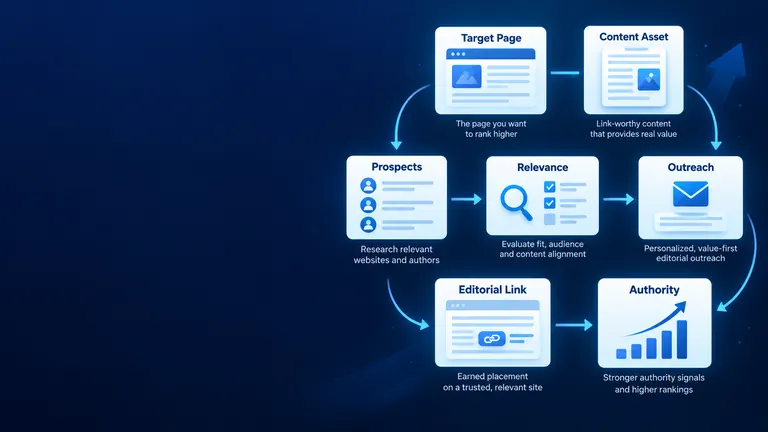
- digital PR and genuine editorial placements. No private networks, no paid directories, nothing that becomes a cleanup bill in eighteen months.
- AI-surface visibility
- GEO and AEO work built in, so you are cited inside AI answers rather than displaced by them as those surfaces keep expanding.
How we build organic growth that compounds
Six workstreams, sequenced so technical headroom exists before content investment and authority is earned rather than bought.
Diagnostic audit
Full technical crawl, content and cannibalisation analysis, competitive gap mapping and commercial keyword scoring. You get a prioritised plan with impact and effort against every item, plus what to safely ignore.
What’s included
- Technical SEO audit and full site crawl
- Content, cannibalisation and keyword gap analysis
- Commercial keyword scoring by revenue potential
You receive: A prioritised SEO action plan
Technical foundation
Crawl, rendering, Core Web Vitals, indexation and architecture resolved first. Content investment on a site that cannot be crawled properly is money spent on pages nobody will see.
What’s included
- Crawlability and rendering fixes
- Core Web Vitals and site speed
- Indexation and site architecture
You receive: A technically healthy website
Intent architecture
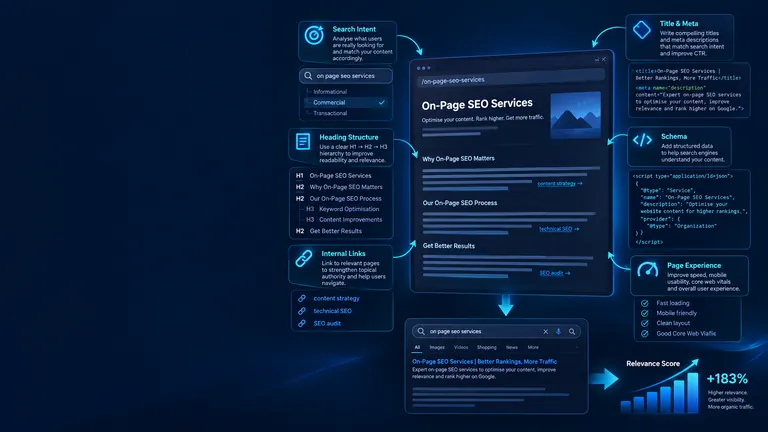
One primary intent per URL, cannibalisation consolidated, and a documented keyword map that becomes the reference for everything published afterwards.
What’s included
- One primary search intent per URL
- Keyword cannibalisation consolidated
- A documented keyword-to-URL map
You receive: A keyword map for every page
Content with real depth
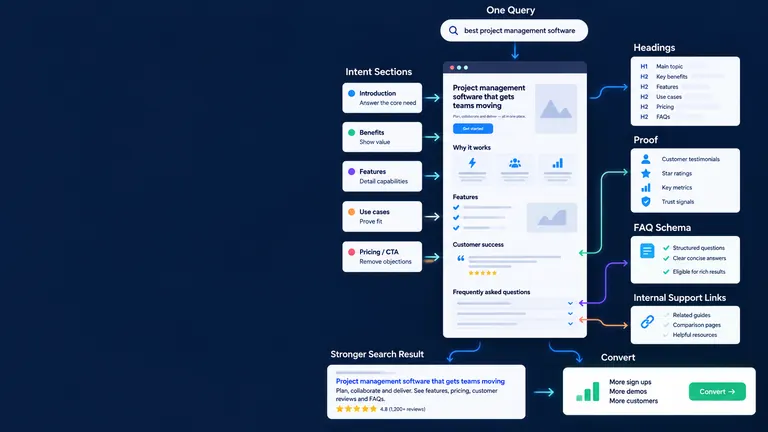
Pages built from SERP-derived specifications with first-hand evidence, named authorship and verifiable claims — the qualities that separate ranking pages from merely competent ones.
What’s included
- SEO content briefs built from SERP analysis
- First-hand expertise and named authors for E-E-A-T
- Verifiable claims, data and examples
You receive: Publish-ready, search-optimised pages
Authority acquisition
Digital PR, original research and genuine editorial outreach. Fewer links than a volume provider, all of them real, none of them a future liability.
What’s included
- Digital PR and original research
- Editorial backlinks from real publications
- Link targets chosen to lift commercial pages
You receive: A monthly log of earned links and coverage
AI-surface visibility
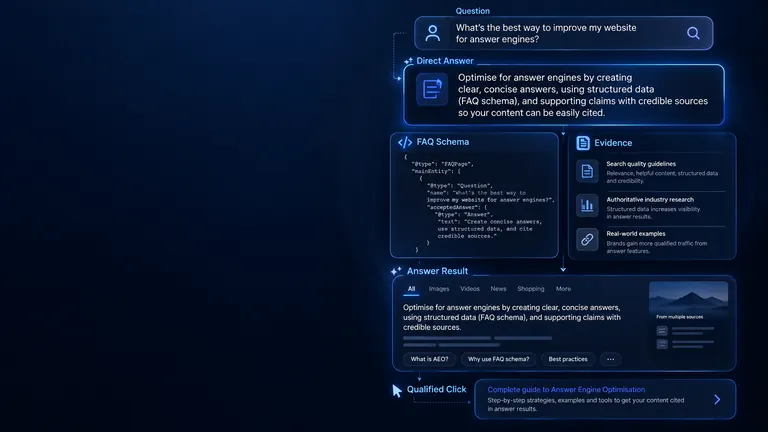
Answer-first structuring, entity grounding and schema so you are cited inside AI Overviews, ChatGPT and Perplexity rather than being replaced by them.
What’s included
- Answer-first page structure for Google AI Overviews
- Entity and schema markup that grounds your brand
- Citation tracking in ChatGPT and Perplexity
You receive: Monthly AI citation tracking alongside rankings
Get a free audit →Built for compounding, measured on revenue
Working since 2017, across every market we publish a page for, with a deliberate refusal to sell activity that does not move rankings.
A senior specialist, always
You work with the person doing the analysis, not an account manager relaying it. That single decision removes most of the translation loss that makes agency retainers underperform.
Thirty markets, natively
From the US, UK and Australia to Germany, Japan and the UAE — each with genuinely different search behaviour, competitive sets and phrasing. We build per-market strategy rather than translating one plan and hoping.
Nothing with a cleanup cost
No private networks, no paid directories, no tactics that need undoing later. Penalty recovery routinely costs more than a year of doing it properly, and we have never had a client need it.
AI search built in
GEO and AEO are part of the core engagement rather than an upsell. As answer surfaces absorb more queries, visibility inside them stops being optional.
Reporting tied to revenue
Enquiries, pipeline and cost per acquisition lead every report, with rankings and technical detail supporting rather than substituting for them.
No long lock-ins
Flexible terms after the initial build period. If the work is producing you will want to continue — and if it is not, a contract should not be what keeps you.
Why Businesses Choose SDM for SEO
Same budget, very different outcomes. Point by point, here’s how a specialist partner compares to a typical agency or going it alone.
| What actually matters | With SDM | Typical Agency | In-House / DIY |
|---|---|---|---|
| Senior specialist on your account | Always | Often a junior | Stretched thin |
| Custom strategy built for your goals | Tailored | Templated | Guesswork |
| Deep audit before any work begins | ✓ | Surface-level | Skipped |
| Keyword research by buyer intent | ✓ | Volume-first | Random |
| White-hat, penalty-safe methods | Guaranteed | Varies | High risk |
| On-page, technical, content & links | Full-stack | Costly add-ons | Piecemeal |
| Plain-English reporting tied to revenue | Monthly | Jargon PDFs | None |
| Direct access to your specialist | ✓ | Account-manager relay | N/A |
| Optimised for AI Overviews & ChatGPT | Built-in | Rarely | Unlikely |
| Ongoing competitor gap analysis | ✓ | One-off | Manual |
| Conversion-focused, not just traffic | ✓ | Traffic-first | Unclear |
| Premium tools included (Ahrefs, SEMrush) | ✓ | Sometimes | Costly extra |
| No long lock-in contracts | Flexible | 6–12 mo lock-in | N/A |
| Established agency, operating since 2017 | ✓ | Varies | Learning curve |
| Fast onboarding & early quick wins | ~2 weeks | Slow | Trial & error |
| Human, SEO-led content (no AI spam) | ✓ | Outsourced / AI spam | Time-heavy |
| Focus on compounding, long-term ROI | Core promise | Short-term wins | Slow & ad-hoc |
| Content + links + technical in one team | Full-stack | Siloed | Piecemeal |
| CRO to turn rankings into revenue | ✓ | Add-on | Overlooked |
| Search intent mapped to each page | ✓ | Partial | Guesswork |
| Recovery from Google penalties | ✓ | Sometimes | Very hard |
| Dedicated strategy for AI + classic search | ✓ | Siloed | Confusing |
22 reasons growing brands make the switch. See the difference for yourself →
Rankings explain the result. Revenue is the result.
We instrument the full path from query to revenue, segmented by intent, so investment decisions are made on contribution rather than on traffic.
Revenue from organic
Attributed revenue and pipeline by landing page and intent segment, which is the only number that settles whether SEO is working.
Non-branded share
Proportion of organic performance from non-branded queries — the honest measure of whether you are finding new demand or harvesting existing awareness.
AI citation rate
How often you appear as a named source inside AI Overviews and generative answers, the leading indicator for the next two years of search.
Technical health
Field Core Web Vitals, index composition and crawl efficiency, tracked as the leading indicators that precede ranking movement.
Authority growth
Genuine referring domains earned and their quality distribution, rather than a raw link count that rewards volume over relevance.
Our SEO process: four stages, repeated every month
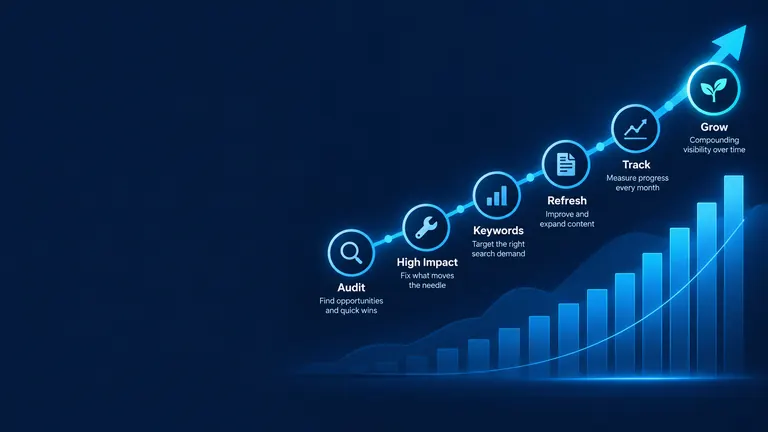
SEO compounds, so the programme is built to keep adding rather than to deliver once and stop.
Audit & strategy
Technical crawl, content and cannibalisation analysis, competitive gap mapping and commercially scored keyword selection. You get a prioritised roadmap with reasoning attached to every decision.
DeliverablePrioritised roadmap + keyword mapFix the foundation
Technical remediation and on-page architecture first, because these unlock content you already have and produce the earliest measurable movement in almost every engagement.
DeliverableClean crawl + resolved cannibalisationBuild & earn
Content built to SERP-derived specifications with genuine depth, plus digital PR and editorial outreach for authority. Shipped in batches so impact stays attributable to specific work.
DeliverableRanking pages + earned placementsMeasure & compound
Revenue-attributed reporting, winners deepened, underperformers re-specified against whatever now ranks, and the next tranche queued. This is where compounding actually happens.
DeliverableRevenue report + next tranche
Proven results from real SEO clients
Published case studies from our clients — each with the starting point, the dates, the source and what the numbers don’t prove.
 Franchise SEO~70×~1K → 69.8K monthly organic visits
A home services franchise group — 34.1K ranking keywords and 1.8K AI mentions.
Read the case study → Home services SEO+165%28K → 74.3K monthly organic visits
Top 3 for “emergency plumber”, cited on 218 pages in AI answers.
Read the case study → B2B SaaS SEO6.4×7K → 44.8K monthly organic visits
77.9K Google clicks in three months — organic is the top channel.
Read the case study →The full SEO stack, and where each piece fits
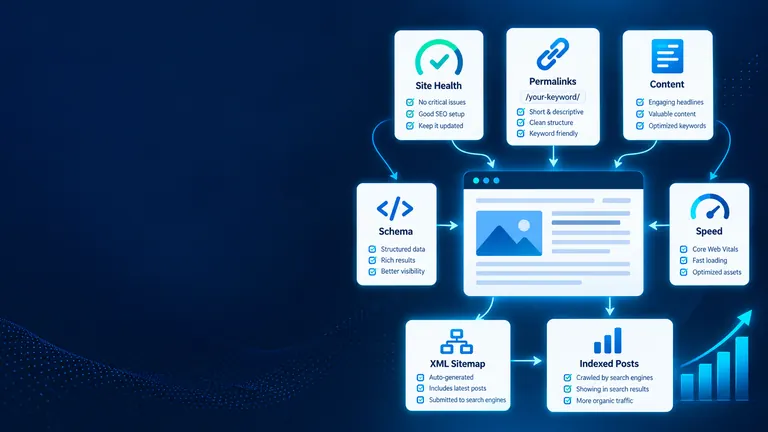
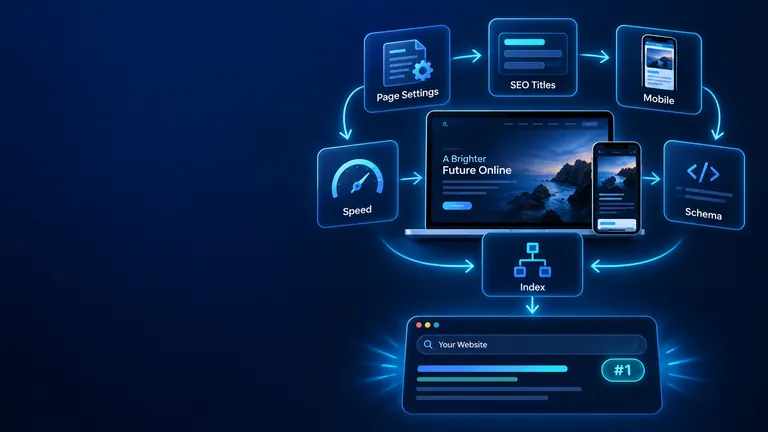
Organic SEO is the programme this page describes. These are the specialisms that sit inside it — each with its own page covering how it works, what it costs you to ignore, and how we deliver it.
Core SEO
4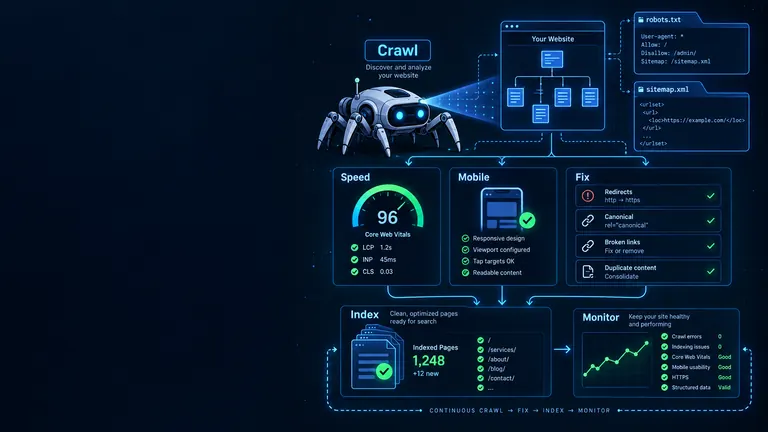

AI & Answer Search
3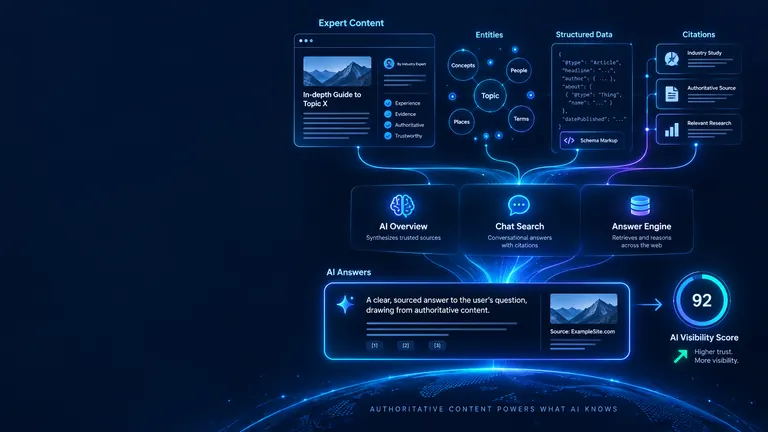

Local SEO
3
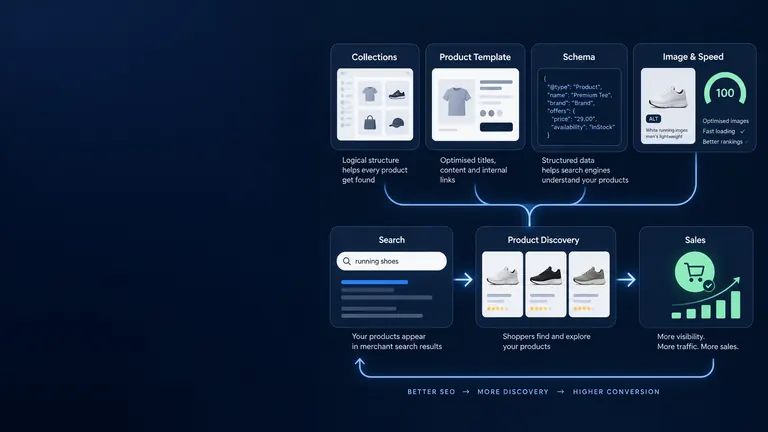
Ecommerce & Platforms
5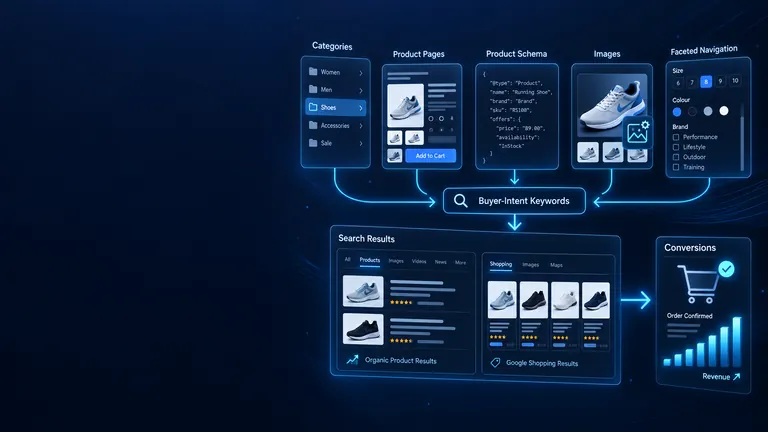

Growth & Scale
4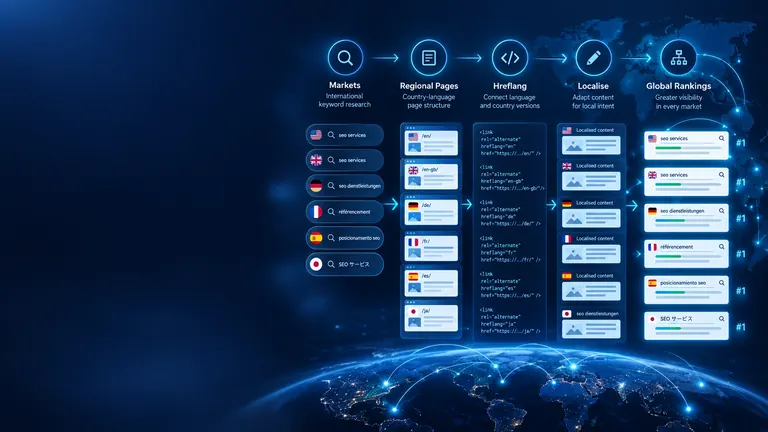

For Agencies
1
SEO FAQs: the questions we get asked most
Straight answers on timing, cost and what SEO can realistically achieve now.
Further reading
Go deeper on this
The thinking behind the work. These guides go deeper on the methods this page describes — written by the team that runs them.
 SEO
SEOThe Complete Guide to SEO in 2026
The complete guide to SEO in 2026: how Google ranks pages, technical SEO, content, links, local and AI search, a 6-month roadmap and how to measure ROI.
Read the guide Technical SEO
The Technical SEO Audit Playbook for 2026
A step-by-step technical SEO audit playbook for 2026: crawling, indexing, site architecture, JavaScript, Core Web Vitals, structured data and prioritisation.
Read the guide Content Marketing
Content Clusters & Topical Authority: 2026 Guide
How to build content clusters and topical authority in 2026: pillar pages, cluster research, internal linking, content briefs, updates and measuring results.
Read the guide