SERP features are any elements on a search engine results page other than a standard organic listing — for example AI Overviews, featured snippets, People Also Ask boxes, local map packs, image and video results, and shopping ads. They change how many clicks the classic organic results receive.
On this page
The main types of SERP features
- AI Overview — an AI-generated summary at the top of the page with links to its sources.
- Featured snippet — a highlighted excerpt answering the query directly, shown as a paragraph, list or table.
- People Also Ask — expandable related questions, each with a short answer and source link.
- Local pack (map pack) — a map with three business listings from Google Business Profiles.
- Knowledge panel — a box of facts about an entity such as a brand, person or place.
- Image pack and video results — rows or carousels of images and videos, often from YouTube.
- Top stories — recent news articles for newsworthy queries.
- Shopping results — product listings with prices, both paid and free.
- Sitelinks — extra links to sections of a site under its main result, usually for brand searches.
- Rich results — organic listings enhanced with star ratings, prices or event details via structured data.
- Discussions and forums — threads from Reddit, Quora and other communities.
- Related searches — suggested queries, usually at the bottom of the page.
Paid vs organic SERP features
Text ads and Shopping ads are paid. AI Overviews, featured snippets, People Also Ask, knowledge panels and rich results are organic — you earn them through content and structured data. Local packs are organic but driven by your Google Business Profile rather than your website.
How to win SERP features
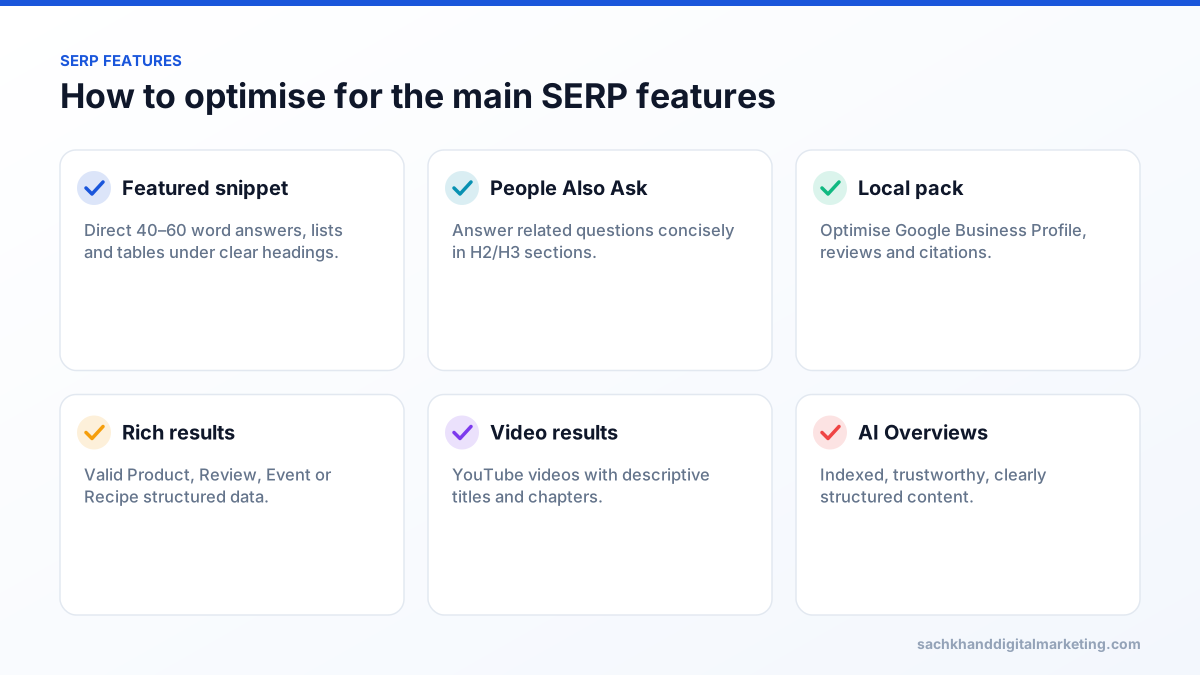
- Answer the question directly in the first 40–60 words under a clear heading for featured snippets and AI Overviews.
- Use lists and tables where the query asks for steps, types or comparisons.
- Add accurate structured data (Product, Review, Event, Organization) for rich results.
- Optimise your Google Business Profile and reviews for the local pack.
- Publish video on YouTube for queries that already show video results.
Features that have been reduced
Google has scaled some features back. Since 2023, FAQ rich results are shown mainly for authoritative government and health sites, and How-to rich results have been removed. FAQ content is still valuable on the page and for AI answers — it just no longer guarantees an expanded listing.
SERP features and what they require
| Feature | Paid or organic | Structured data needed? | Main requirement |
|---|---|---|---|
| Featured snippet | Organic | No | A concise, well-formatted answer on a ranking page |
| People Also Ask | Organic | No | Clear answers to related questions |
| AI Overview | Organic | No | Indexed page eligible for snippets, trustworthy content |
| Local pack | Organic | No (Business Profile) | Verified, optimised Google Business Profile |
| Product rich results | Organic | Yes (Product) | Accurate price, availability and reviews |
| Review stars | Organic | Yes (Review/AggregateRating) | Eligible content types following review guidelines |
| Sitelinks | Organic | No | Clear site structure and brand searches |
| Shopping ads | Paid | Merchant Center feed | Product feed and Shopping campaign |
How to find which SERP features you can win
- Search your most valuable keywords in an incognito window and note which features appear.
- Use rank tracking or SEO tools that report SERP features by keyword.
- Check Search Console’s Search appearance filter for rich result types you already earn.
- Prioritise features on high-value keywords where you already rank on page one.
Example: winning a featured snippet
For the query “what is a meta description”, a page that includes an H2 “What is a meta description?” followed by a single clear sentence of around 40–50 words, then details and examples below, is well positioned for a paragraph snippet. For “how to change a title tag in WordPress”, a numbered list of steps is more likely to be shown. Match the format to the query.
Common mistakes
- Adding structured data that does not match visible content, which can lead to manual actions.
- Expecting FAQ rich results on ordinary business sites; they are now limited mainly to authoritative government and health sites.
- Writing long introductions before answering the question.
- Ignoring video when results pages show video carousels.
Frequently asked questions
What is a SERP?
SERP stands for search engine results page: the page a search engine shows after you enter a query.
Which SERP feature gets the most clicks?
It varies by query, but for local searches the map pack is dominant, and for informational searches AI Overviews and featured snippets capture much of the attention at the top of the page.
Do SERP features reduce organic traffic?
They can. Features that answer the question on the page lead to more zero-click searches, which is why winning the feature itself has become part of SEO.
Can I choose which SERP features my site appears in?
Not directly. Search engines decide which features to show, but you can make pages eligible with clear formatting, accurate structured data, a strong Google Business Profile and content that matches the query.
Want experts to handle this for you?
Our specialists turn these fundamentals into rankings, leads and revenue. Start with a free, no-obligation audit of your site.