Organic search results are the unpaid listings a search engine shows because it judges them the most relevant and useful answers to a query. They appear alongside, but separately from, paid ads, and no one can pay Google to place a page in them.
On this page
- Organic vs paid results
- How organic results are ranked
- Why organic results matter
- What has changed
- How to measure organic performance
- Organic vs paid vs local results
- How to improve your organic rankings
- Understanding organic click-through rate
- What is “zero-click” search?
- Common mistakes
- Frequently asked questions
Organic vs paid results
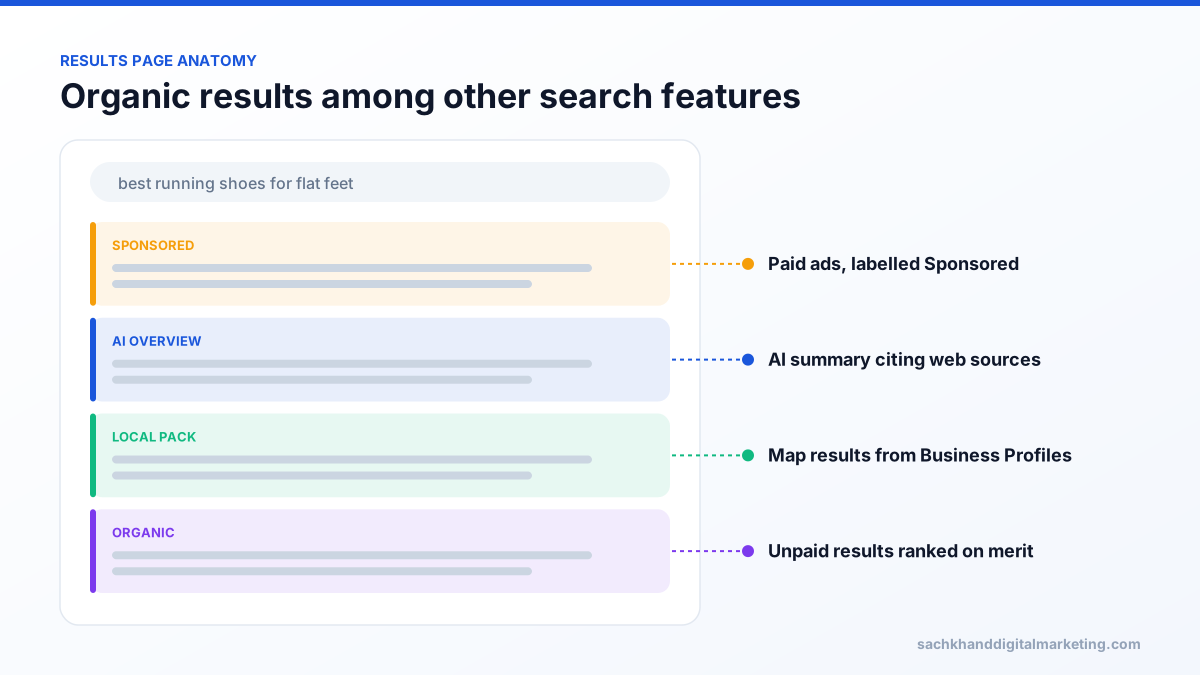
A typical Google results page mixes several kinds of listing. Paid ads carry a “Sponsored” label and are placed through an auction. Organic results have no label; their order is decided by Google’s ranking systems. Many pages also include SERP features such as AI Overviews, map packs and People Also Ask boxes, some of which draw on organic content.
How organic results are ranked
Google evaluates indexed pages against the query using signals that broadly fall into five groups:
- Meaning — what the searcher actually wants, including synonyms and intent.
- Relevance — how well the page content matches that need.
- Quality — expertise, trustworthiness and whether other reputable sites reference it.
- Usability — mobile friendliness, speed and page experience.
- Context — location, language and search settings.
Why organic results matter
Organic listings still attract the majority of clicks on most searches, and that traffic does not stop when a budget runs out. Users also tend to trust them more than ads for research-stage queries. The trade-off is time: organic visibility is earned through SEO, not bought.
What has changed
AI Overviews, featured snippets and other features mean more searches end without a click. The first organic result now often sits below an AI summary, ads and a map pack. That makes it more important to target queries where the click still happens, and to structure content so it is cited inside AI answers too.
How to measure organic performance
Use the Performance report in Google Search Console to see organic clicks, impressions, click-through rate and average position by query and page, and your analytics platform to see what organic visitors do once they arrive.
Organic vs paid vs local results
| Organic | Paid (ads) | Local pack | |
|---|---|---|---|
| Source | Website pages | Advertiser campaigns | Google Business Profiles |
| Cost per click | Free | Paid | Free |
| Label | None | Sponsored | Map with listings |
| How to win | SEO | Bidding and ad quality | Local SEO and reviews |
How to improve your organic rankings
- Check that the page is indexed using URL Inspection in Search Console.
- Confirm the page matches the search intent of the results that currently rank.
- Improve the title tag and H1 to reflect the main topic clearly.
- Expand content to answer related questions more completely than competing pages.
- Add internal links from relevant, strong pages on your site.
- Improve page speed and mobile usability.
- Earn links and mentions from reputable, relevant websites.
Understanding organic click-through rate
Higher positions generally receive more clicks, but the share varies greatly depending on the features on the page. A result in position one below an AI Overview, several ads and a map pack may receive fewer clicks than position one on a page with no features. Search Console’s Performance report shows the actual click-through rate for each query and page, which is the best benchmark for your own site.
What is “zero-click” search?
A zero-click search ends without the user clicking any result, because the answer is shown directly on the results page in a featured snippet, knowledge panel or AI Overview. Zero-click searches are most common for quick facts, definitions, weather and conversions. For businesses, the response is to focus on queries where people still need to click, such as comparisons, pricing, services and purchases, and to be the cited source when answers are shown.
Common mistakes
- Tracking a handful of rankings instead of total organic impressions and clicks.
- Ignoring branded vs non-branded organic traffic.
- Targeting informational keywords without a path to conversion.
- Expecting organic results immediately after publishing.
Frequently asked questions
What is the difference between organic and paid search results?
Paid results are ads marked Sponsored that advertisers pay for per click. Organic results are unpaid and ranked by Google based on relevance and quality.
Can you pay Google to rank higher organically?
No. Google does not accept payment for organic rankings. You can only improve organic positions through SEO: better content, technical health and authority.
What is organic traffic?
Organic traffic is the visitors who reach your site by clicking an unpaid search result, rather than an ad, a social post or a direct link.
How long does it take to rank in organic search results?
New pages on established sites can rank within weeks for less competitive searches. Competitive terms, especially on newer sites, usually take several months of content and authority building.
Want experts to handle this for you?
Our specialists turn these fundamentals into rankings, leads and revenue. Start with a free, no-obligation audit of your site.