SEO (search engine optimization) is the practice of improving a website so it ranks higher in the unpaid, organic results of search engines such as Google and Bing. It covers technical health, content quality and relevance, and the authority a site earns from links and mentions elsewhere on the web.
On this page
What SEO means in plain terms
When someone types a question into Google, the search engine decides which pages best answer it and in what order to show them. SEO is the work of making your pages the ones it chooses. Unlike paid ads, you do not pay per click for organic rankings, which is why SEO is usually the lowest-cost source of traffic over the long run — although it takes longer to build.
You will see it spelled two ways: search engine optimization (US) and search engine optimisation (UK and Australia). They mean the same thing.
How SEO works: crawl, index, rank
- Crawling — search engine bots such as Googlebot follow links to discover pages.
- Indexing — the pages they can read and consider useful are stored in the search index.
- Ranking — when a search happens, the engine orders indexed pages by relevance, quality, usability and hundreds of other signals.
SEO influences all three steps: making pages easy to crawl, worth indexing and the best match for the query.
The main types of SEO
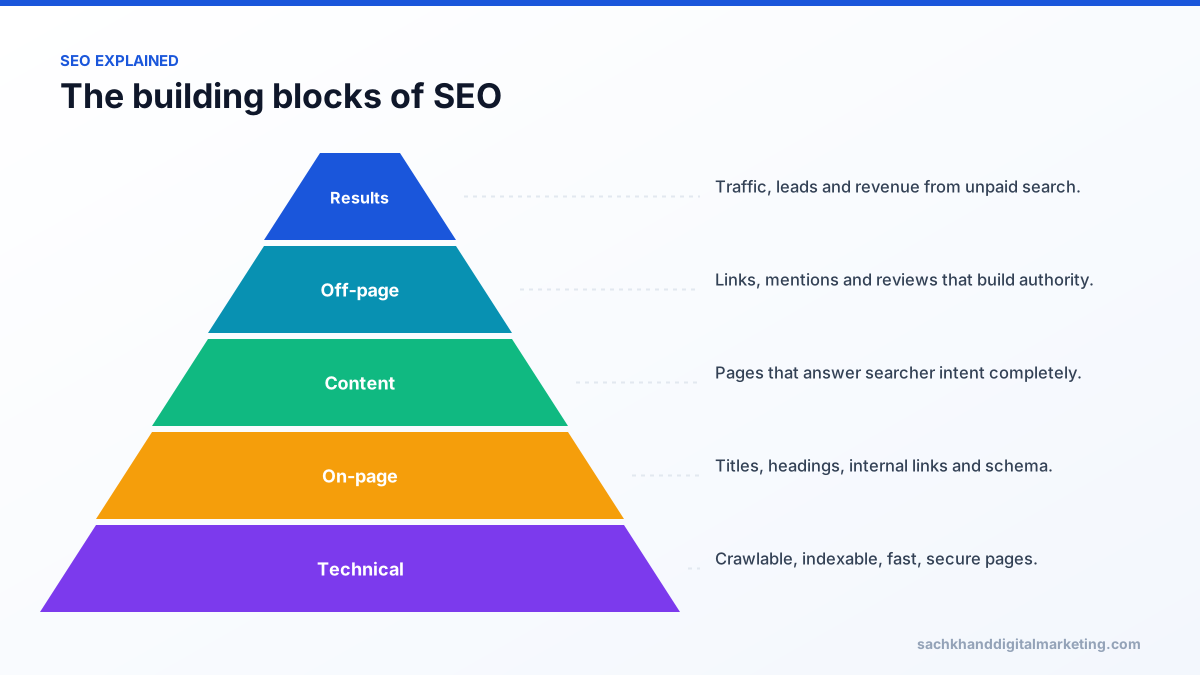
- Technical SEO — site speed, mobile usability, crawlability, indexing controls, structured data and site architecture.
- On-page SEO — the content itself, title tags, headings, meta descriptions, internal links and keyword targeting.
- Off-page SEO — backlinks, brand mentions, reviews and digital PR that signal authority.
- Local SEO — Google Business Profile, reviews and location pages for businesses serving a specific area.
- AI search optimization — structuring content so it is cited in AI Overviews, ChatGPT and other answer engines.
What SEO means for a business
For a business, SEO means being found by people at the exact moment they are looking for what you sell. A plumber ranking for “emergency plumber near me” or a retailer ranking for “women’s running shoes” is capturing demand that already exists. The value is not the ranking itself but the enquiries, sales and revenue those visits produce.
SEO vs SEM
SEO earns unpaid visibility. SEM (search engine marketing) usually refers to paid search ads, although some people use it as an umbrella for both. Most businesses get the best results by using paid search for immediate demand while SEO builds a compounding organic channel.
How long SEO takes
Technical fixes can show results within weeks, but most sites see meaningful ranking and traffic growth between three and twelve months, depending on competition, the site’s starting authority and how much content and link work is done. Anyone promising guaranteed first-page rankings in days is a red flag.
Key SEO ranking factors at a glance
| Factor group | Examples | How to improve it |
|---|---|---|
| Relevance | Topic match, search intent, keywords in titles and headings | Map one clear intent to each page and answer it fully |
| Quality and expertise | Original insight, accuracy, author experience, E-E-A-T | Use real expertise, examples and sources |
| Authority | Backlinks, brand mentions, reviews | Earn coverage with useful assets and digital PR |
| Usability | Mobile experience, Core Web Vitals, HTTPS | Fix speed and layout issues on key templates |
| Context | Searcher location, language, device | Local pages, Google Business Profile, hreflang |
How to get started with SEO: 7 steps
- Set up measurement: verify Google Search Console and install analytics with conversion tracking.
- Fix technical basics: make sure important pages are indexable, fast and mobile-friendly.
- Research keywords: find the searches your customers use and group them by intent.
- Map keywords to pages: one primary keyword per page, creating pages for important gaps.
- Optimise on-page elements: titles, headings, meta descriptions, internal links and images.
- Publish helpful content: guides, comparisons and FAQs that demonstrate expertise.
- Build authority: earn links and mentions, and for local businesses, reviews and citations.
Common SEO myths
- “SEO is a one-time project.” Competitors, algorithms and your own site change constantly.
- “More keywords on the page means higher rankings.” Keyword stuffing hurts readability and can be treated as spam.
- “Meta keywords tags help Google.” Google has ignored the meta keywords tag for many years.
- “You can pay Google for better organic rankings.” Organic results cannot be bought.
- “AI has killed SEO.” AI answers rely on indexed, trusted web content, which SEO produces.
Useful SEO tools
- Google Search Console and Bing Webmaster Tools for search performance and indexing.
- Google Analytics for traffic behaviour and conversions.
- PageSpeed Insights for Core Web Vitals.
- Crawlers such as Screaming Frog or Sitebulb for technical audits.
- Keyword and backlink tools for research and competitor analysis.
For a complete strategy, read our complete guide to SEO in 2026.
Frequently asked questions
What does SEO stand for?
SEO stands for search engine optimization (or search engine optimisation in British English). It is the process of improving a website to increase its visibility in unpaid search engine results.
Is SEO free?
Organic clicks are free, but SEO itself takes time and skill: content creation, technical work and link building. Businesses either invest their own time or pay an agency or consultant.
What is an example of SEO?
Rewriting a product page so its title tag, heading and content match what shoppers actually search for, fixing slow page speed and earning links from relevant industry sites are all examples of SEO.
Is SEO still relevant with AI search?
Yes. Google AI Overviews and AI assistants rely heavily on pages that are already well indexed and trusted. Strong SEO is the foundation for being cited in AI answers as well as ranking in classic results.
What are the three main types of SEO?
The three core types are technical SEO (making sites crawlable, indexable and fast), on-page SEO (content, titles, headings and internal links) and off-page SEO (links, mentions and reviews that build authority). Local SEO and AI search optimisation build on these.
Want experts to handle this for you?
Our specialists turn these fundamentals into rankings, leads and revenue. Start with a free, no-obligation audit of your site.