SEM (search engine marketing) is the practice of promoting a website in search engine results pages. In most modern usage it means paid search advertising — ads bought on platforms such as Google Ads and Microsoft Advertising — although some marketers use SEM as an umbrella term that also includes SEO.
On this page
Search engine marketing defined
Search engine marketing puts your business in front of people while they are actively searching. Advertisers choose the keywords they want to appear for, write ads, set a budget, and pay when someone clicks — the pay-per-click (PPC) model. The ads appear above and below the organic results, labelled “Sponsored”.
Does search engine marketing include SEO?
It depends who you ask. Originally SEM described all efforts to gain search visibility, paid and unpaid. Over time the industry settled on a narrower meaning:
- SEO — earning unpaid, organic rankings.
- SEM — buying visibility through paid search ads.
When you see “SEO/SEM” or “SEO and SEM marketing” in a job title or agency proposal, it usually means both channels managed together.
How SEM works
Every time a search happens, the ad platform runs an auction among advertisers bidding on matching keywords. On Google Ads, the winner is not simply the highest bidder. Position is decided by Ad Rank, which combines your bid with the expected click-through rate, ad relevance, landing page experience and the ad assets you use. A highly relevant ad can outrank a competitor paying more per click.
Key SEM terms
- Keywords and match types — the searches you want to trigger your ad.
- CPC (cost per click) — what you pay for each click.
- Quality Score — Google’s 1–10 diagnostic of keyword, ad and landing page quality.
- Conversion rate and CPA — the share of clicks that become leads or sales, and what each one costs.
- ROAS — revenue generated for each unit of ad spend.
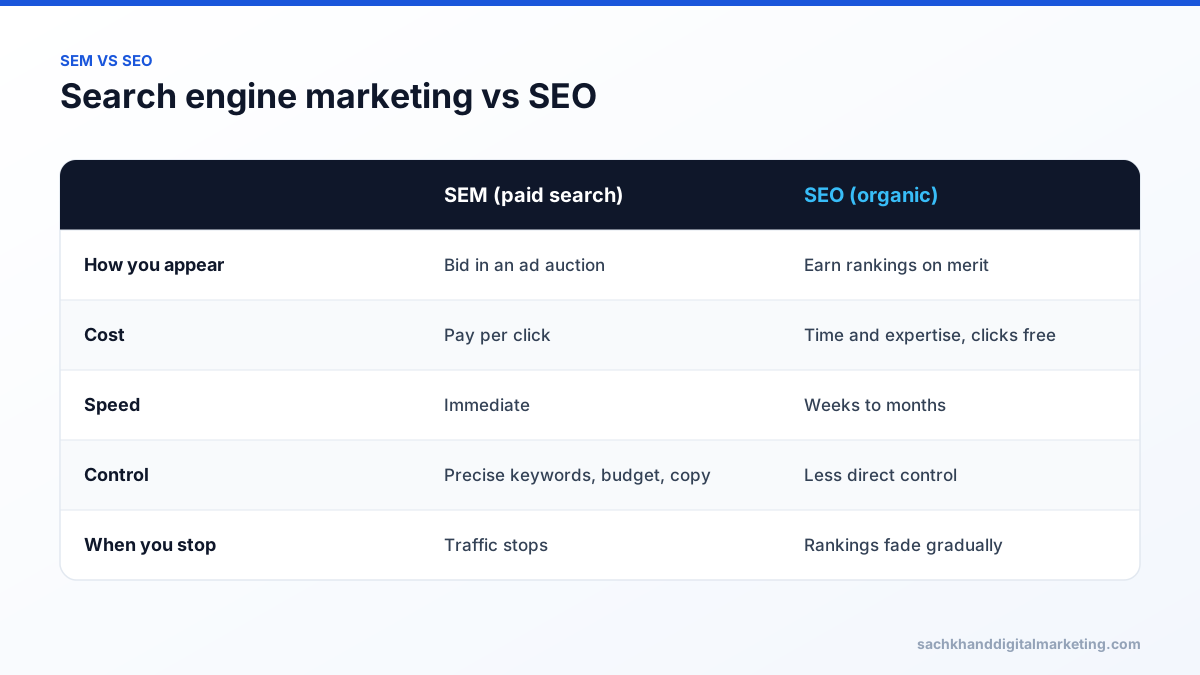
SEM vs SEO: which is better?
| SEM (paid search) | SEO | |
|---|---|---|
| Speed | Traffic the day ads go live | Builds over months |
| Cost | Pay for every click | Clicks are free; the work is not |
| When you stop | Traffic stops immediately | Rankings decline gradually |
| Best for | Launches, promotions, testing keywords | Long-term, compounding growth |
Neither is better on its own. Paid search data shows which keywords convert, which tells SEO what to prioritise, while strong organic rankings reduce how much you need to spend on ads for the same terms.
The parts of an SEM campaign
- Keyword research: identify searches with commercial intent and estimate costs.
- Campaign structure: organise campaigns and ad groups by product, service or theme.
- Ad copy: responsive search ads with multiple headlines and descriptions.
- Assets: sitelinks, callouts, calls, locations and images that enlarge ads.
- Bidding: automated strategies such as target CPA or target ROAS.
- Landing pages: relevant, fast pages that convert.
- Conversion tracking: purchases, leads and calls measured accurately.
Key SEM metrics and formulas
| Metric | Formula | What it tells you |
|---|---|---|
| Click-through rate (CTR) | Clicks ÷ impressions × 100 | How relevant and appealing ads are |
| Cost per click (CPC) | Cost ÷ clicks | Price of traffic |
| Conversion rate | Conversions ÷ clicks × 100 | How well landing pages convert |
| Cost per acquisition (CPA) | Cost ÷ conversions | Price of a lead or sale |
| Return on ad spend (ROAS) | Conversion value ÷ cost | Revenue generated per unit spent |
A simple SEM example
A roofing company budgets $3,000 a month on Google Ads. At an average cost per click of $12 it receives 250 clicks. If 10% of visitors request a quote, that is 25 leads at $120 each. If one in four quotes becomes a $6,000 job, the campaign generates about six jobs and $36,000 in revenue. Improving the landing page conversion rate from 10% to 15% would produce roughly 37 leads for the same budget, which is why SEM and conversion optimisation go hand in hand.
SEM platforms
- Google Ads, covering Google Search and partner sites.
- Microsoft Advertising, covering Bing, Yahoo and partners.
- Retail and marketplace search ads, such as Amazon Sponsored Products, for ecommerce.
Common SEM mistakes
- No negative keywords, so budget is spent on irrelevant searches.
- Sending all ads to the homepage instead of relevant landing pages.
- Tracking form views or page visits instead of real leads.
- Judging campaigns before bidding algorithms have enough data.
- Ignoring the search terms report.
Our complete Google Ads guide covers SEM strategy in depth.
Frequently asked questions
What is SEM in simple words?
SEM is paying search engines like Google to show your ads when people search for keywords related to your business. You typically pay each time someone clicks your ad.
Is SEM the same as Google Ads?
Google Ads is the largest SEM platform, but SEM also includes Microsoft Advertising (Bing) and, in the broader definition, organic SEO work.
What is the difference between SEO and SEM?
SEO earns free organic rankings over time, while SEM usually means paid search ads that deliver visibility immediately for as long as you keep paying.
Is SEM paid or organic?
In current usage SEM usually means paid search advertising. Some marketers still use it as an umbrella term covering both paid search and organic SEO.
Want experts to handle this for you?
Our specialists turn these fundamentals into rankings, leads and revenue. Start with a free, no-obligation audit of your site.