PPC (pay-per-click) is an online advertising model in which advertisers pay a fee each time someone clicks one of their ads, rather than paying for the ad to be shown. It is used on search engines such as Google and Bing, and on platforms like Amazon, LinkedIn and Meta.
On this page
- How pay-per-click advertising works
- What a PPC campaign is made of
- Pay-per-click payment: how billing works
- PPC vs CPM vs CPA
- When PPC makes sense
- How to set up a PPC campaign: step by step
- PPC platforms compared
- Working out a PPC budget
- Quality Score and why it saves money
- Common PPC mistakes
- Frequently asked questions
How pay-per-click advertising works
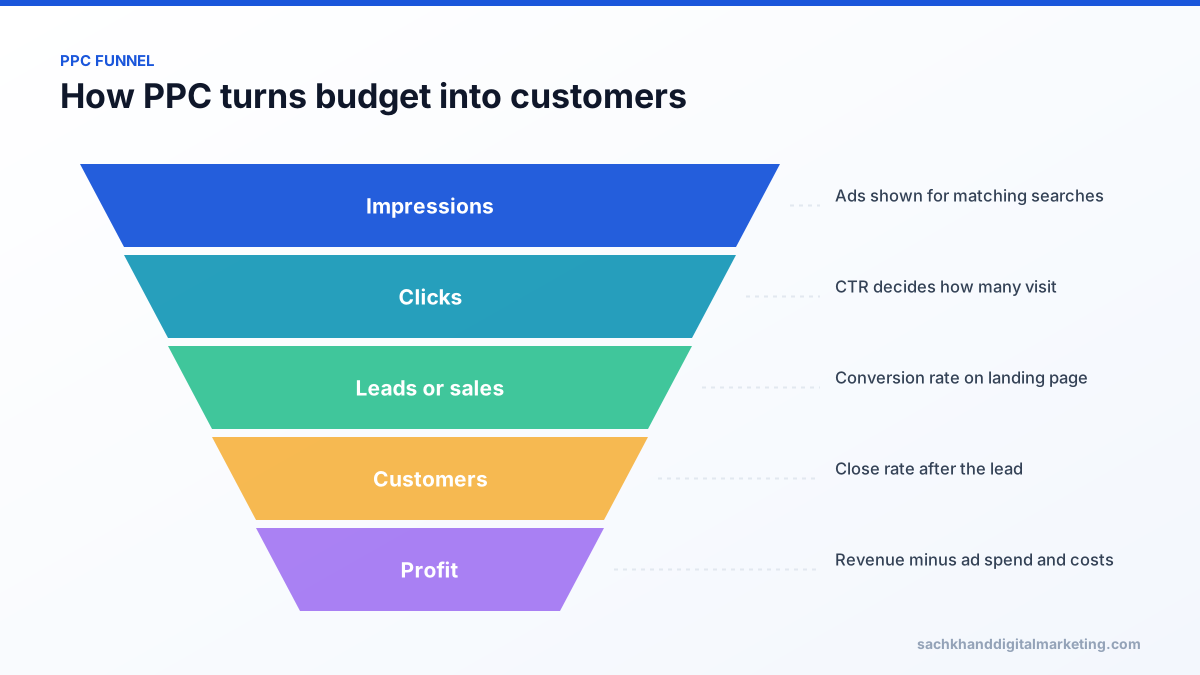
In a PPC campaign you choose who should see your ads — by keyword on search engines, or by audience on social platforms — and set the maximum you are willing to pay per click. When a user searches or browses, the platform runs an instant auction to decide which ads appear and in what order. You are only charged if the user clicks.
On Google Ads you rarely pay your full maximum bid. The actual cost per click is usually lower — roughly what you need to hold your position above the next advertiser, given each ad’s quality.
What a PPC campaign is made of
- Campaign — budget, location, schedule and bidding strategy.
- Ad groups — tightly themed sets of keywords.
- Keywords and negatives — searches to target and searches to exclude.
- Ads — headlines, descriptions and assets such as sitelinks and call buttons.
- Landing pages — where the click goes; they decide whether it converts.
- Conversion tracking — so the platform, and you, know which clicks produce leads or sales.
Pay-per-click payment: how billing works
Most platforms offer two ways to pay. With automatic payments, your card is charged after you reach a billing threshold or at the end of each month, whichever comes first. With manual (prepaid) payments, you add funds in advance and ads stop when the balance runs out. Your daily budget controls spend: Google Ads can spend up to twice the average daily budget on a busy day, but not more than the daily budget multiplied by the average number of days in a month over a billing month.
PPC vs CPM vs CPA
- PPC / CPC — pay per click. Best when traffic to a page is the goal.
- CPM — pay per thousand impressions. Common for awareness and display.
- CPA — bid towards a target cost per acquisition; the platform optimises for conversions.
When PPC makes sense
PPC is ideal when you need results quickly, want to test which keywords convert before investing in SEO, run seasonal offers, or compete for searches where organic results are pushed far down the page. It becomes expensive when campaigns lack negative keywords, conversion tracking or relevant landing pages — the three most common reasons budgets are wasted.
How to set up a PPC campaign: step by step
- Define the goal: leads, sales, calls or bookings, and the target cost per acquisition.
- Set up conversion tracking before spending anything.
- Research keywords with commercial intent and list negative keywords.
- Structure campaigns by service, product category or location.
- Write ads that match search intent, include benefits and a clear call to action.
- Build landing pages that match the ad message and make converting easy.
- Choose a bidding strategy and daily budget.
- Launch, then review weekly: search terms, negatives, ad performance and conversion rates.
PPC platforms compared
| Platform | Targeting basis | Best for |
|---|---|---|
| Google Ads | Search keywords, audiences, Shopping feeds | High-intent searches, ecommerce, local services |
| Microsoft Advertising | Bing and partner search keywords | Additional search reach, often lower CPCs |
| Meta Ads | Interests, behaviours, broad audiences | Creating demand, ecommerce, lead generation |
| LinkedIn Ads | Job title, company, industry | B2B lead generation |
| Amazon Ads | Product searches on Amazon | Brands selling on Amazon |
Working out a PPC budget
Start from what a customer is worth. If an average sale brings $800 of gross profit and you want at least a 2:1 return, you can afford up to $400 in ad cost per customer. If one in five leads becomes a customer, your maximum cost per lead is $80. With a 10% landing page conversion rate, that allows an average cost per click of up to $8. Comparing that figure with estimated CPCs for your keywords shows quickly whether PPC can be profitable, and which conversion rates need improving.
Quality Score and why it saves money
Google’s Quality Score rates keywords from 1 to 10 based on expected click-through rate, ad relevance and landing page experience. The same factors influence Ad Rank, so more relevant ads and better landing pages can win higher positions at lower cost than competitors who simply bid more.
Common PPC mistakes
- Using broad keywords without negatives or conversion-focused bidding.
- Running ads without accurate conversion tracking.
- Sending traffic to generic pages.
- Changing bids and budgets daily, disrupting automated bidding.
- Ignoring mobile users and call extensions for local services.
Frequently asked questions
What does PPC stand for?
PPC stands for pay-per-click, an advertising model where you pay each time someone clicks your ad.
How much does PPC cost?
It depends on the keyword and industry. Clicks can cost under a dollar in low-competition niches and well over fifty dollars in legal, insurance or finance. You control the total with daily budgets and bids.
Is PPC the same as SEM?
PPC is the pricing model; SEM is the channel. Most SEM (paid search) is sold on a pay-per-click basis, which is why the terms are often used interchangeably.
What is a good click-through rate for PPC?
It varies by industry, position and campaign type. Search ads for specific, high-intent keywords usually achieve much higher CTRs than broad or display campaigns, so compare against your own campaigns and competitors in the same space.
Want experts to handle this for you?
Our specialists turn these fundamentals into rankings, leads and revenue. Start with a free, no-obligation audit of your site.