A short-tail keyword (also called a head term) is a broad search query of one to three words, such as “shoes” or “SEO services”. Short-tail keywords have high search volume but vague intent and intense competition, which makes them hard to rank for and less likely to convert than more specific long-tail keywords.
On this page
- Short-tail keyword examples
- Short-tail vs long-tail keywords
- Should you target short-tail keywords?
- How short-tail and long-tail work together
- Short-tail, mid-tail and long-tail examples by industry
- How to research long-tail variations of a short-tail keyword
- When short-tail keywords are worth targeting
- Common mistakes
- A worked example: building from short-tail to long-tail
- Short-tail keywords in paid search
- Quick reference
- Frequently asked questions
Short-tail keyword examples
- “running shoes”
- “digital marketing”
- “car insurance”
- “plumber”
- “SEO”
Their long-tail equivalents narrow the intent: “best running shoes for flat feet”, “digital marketing agency for dentists”, “emergency plumber open now in Houston”.
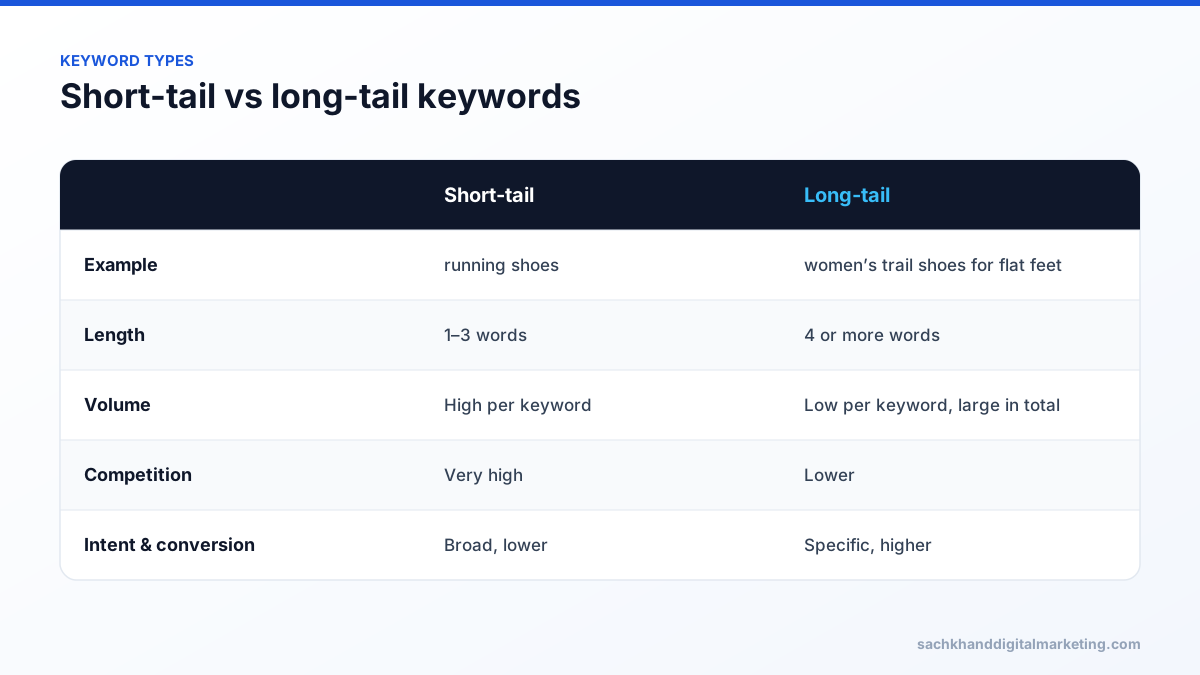
Short-tail vs long-tail keywords
| Short-tail | Long-tail | |
|---|---|---|
| Length | 1–3 words | Usually 4+ words |
| Search volume | High | Low per keyword, large in total |
| Competition | Very high | Lower |
| Intent | Broad, often unclear | Specific |
| Conversion rate | Lower | Higher |
Should you target short-tail keywords?
Usually not first. A new or smaller site gains traffic faster by ranking for dozens of specific long-tail terms, which build the topical authority needed to compete for head terms later. Short-tail keywords make sense for:
- Homepages and top-level category pages on established sites.
- Brands with strong authority in their niche.
- Paid search campaigns where you can control match types and exclusions.
How short-tail and long-tail work together
The most effective structure is a hub page targeting a broader term, supported by detailed pages on long-tail subtopics that link back to it. The supporting pages rank quickly and pass relevance to the hub; over time the hub becomes competitive for the short-tail primary keyword. See website structure for how to organise it.
Short-tail, mid-tail and long-tail examples by industry
| Industry | Short-tail | Mid-tail | Long-tail |
|---|---|---|---|
| Dental | dentist | cosmetic dentist Leeds | how much do veneers cost in Leeds |
| Ecommerce | sofas | grey corner sofa | small grey corner sofa bed with storage |
| B2B software | CRM | CRM for small business | best CRM for a 10-person real estate team |
| Home services | plumber | emergency plumber Houston | emergency plumber for burst pipe open now Houston |
How to research long-tail variations of a short-tail keyword
- Type the short-tail keyword into Google and note autocomplete suggestions.
- Check People Also Ask questions and related searches at the bottom of the page.
- Use a keyword tool’s “questions” and “matching terms” reports.
- Review Search Console queries for longer searches already bringing impressions.
- Read forums, reviews and customer emails for natural phrasing.
When short-tail keywords are worth targeting
- Your site already has strong authority in the topic.
- The page is a broad category or homepage that genuinely covers the whole topic.
- You are running paid search with tight match types and negatives.
- Brand awareness, not immediate conversion, is the goal.
Common mistakes
- Building a new site’s strategy around one or two highly competitive head terms.
- Judging keywords only by search volume.
- Creating separate thin pages for every tiny long-tail variation instead of one comprehensive page.
- Bidding on broad short-tail terms in PPC without conversion tracking.
A worked example: building from short-tail to long-tail
A furniture retailer wants to rank for “sofas”, a short-tail keyword dominated by national brands and marketplaces. Instead of targeting it directly on day one, the retailer maps a structure:
- Category page: “Sofas” (long-term short-tail target).
- Subcategories: “Corner sofas”, “Sofa beds”, “Leather sofas” (mid-tail).
- Filtered pages with demand: “Grey corner sofas”, “Small sofa beds” (mid to long-tail).
- Guides: “How to choose a sofa for a small living room”, “Sofa fabric guide for pet owners” (long-tail, informational).
The long-tail and mid-tail pages rank sooner, bring buyers with specific needs and link back to the main category, building the authority needed to compete for “sofas” over time.
Short-tail keywords in paid search
In PPC, short-tail keywords can generate large volumes of expensive, low-intent clicks. If you bid on them, use conversion-focused bidding, strong negative keyword lists, specific ad copy and landing pages, and watch the search terms report closely. Many advertisers get better returns by starting with specific phrases and expanding only once conversion data shows what works.
Quick reference
| Question | Short answer |
|---|---|
| What is a short-tail keyword? | A broad one-to-three-word search term |
| Main advantage | High search volume and brand exposure |
| Main drawback | Intense competition and vague intent |
| Best page type | Homepage or top-level category |
| Better starting point for new sites | Mid-tail and long-tail keywords |
Frequently asked questions
What is a short-tail keyword example?
“Shoes”, “hotels” and “SEO services” are short-tail keywords: broad, one to three words, high volume and highly competitive.
Are short-tail keywords good for SEO?
They bring high volume but are hard to rank for and convert less well. Most sites should build authority with long-tail keywords before competing for short-tail terms.
What is the opposite of a short-tail keyword?
A long-tail keyword: a longer, more specific search phrase with lower volume, less competition and clearer intent.
How many words is a long-tail keyword?
Long-tail keywords are usually four or more words, but the defining feature is specificity and lower search volume rather than an exact word count.
Want experts to handle this for you?
Our specialists turn these fundamentals into rankings, leads and revenue. Start with a free, no-obligation audit of your site.