Topical authority is earned by covering a subject in depth, not by publishing one long article. Build a pillar page that answers the broad topic, support it with cluster articles that each answer one specific question, link them together deliberately, and keep the cluster updated. Well-built clusters help every page in them rank, make your site easier for Google to understand and increase the chance of being cited in AI answers.
On this page
- What is topical authority?
- The pillar and cluster model
- How to choose cluster topics
- How to build a cluster, step by step
- Internal linking rules for clusters
- How long should a pillar page be?
- How many articles make a cluster?
- Keep clusters fresh: update, merge and prune
- Why clusters help in AI search
- Measuring cluster performance
- Common mistakes
- Example: a content cluster for a dental clinic
- A simple content brief template
- Tools that help
- Frequently asked questions
Publishing isolated blog posts on random topics rarely builds lasting search visibility. Sites that rank consistently for competitive subjects tend to cover those subjects comprehensively, with a clear structure that shows search engines and readers how everything fits together. That is what content clusters and topical authority are about. This guide explains the model, how to research and plan a cluster, how to link it, and how to measure whether it is working. Topic cluster SEO and a clear internal linking strategy are how a site builds topical authority, and this guide walks through both.
What is topical authority?
Topical authority is the degree to which a website is recognised as a reliable, comprehensive source on a subject. It is not a single metric Google publishes. It is the combined effect of covering a topic in depth, answering related questions well, demonstrating real expertise and earning references from others in the field. Google has said its systems aim to identify sites and creators with expertise on specific topics, and in practice sites with deep, well-organised coverage of a subject often rank more easily for new content on that subject.
The pillar and cluster model
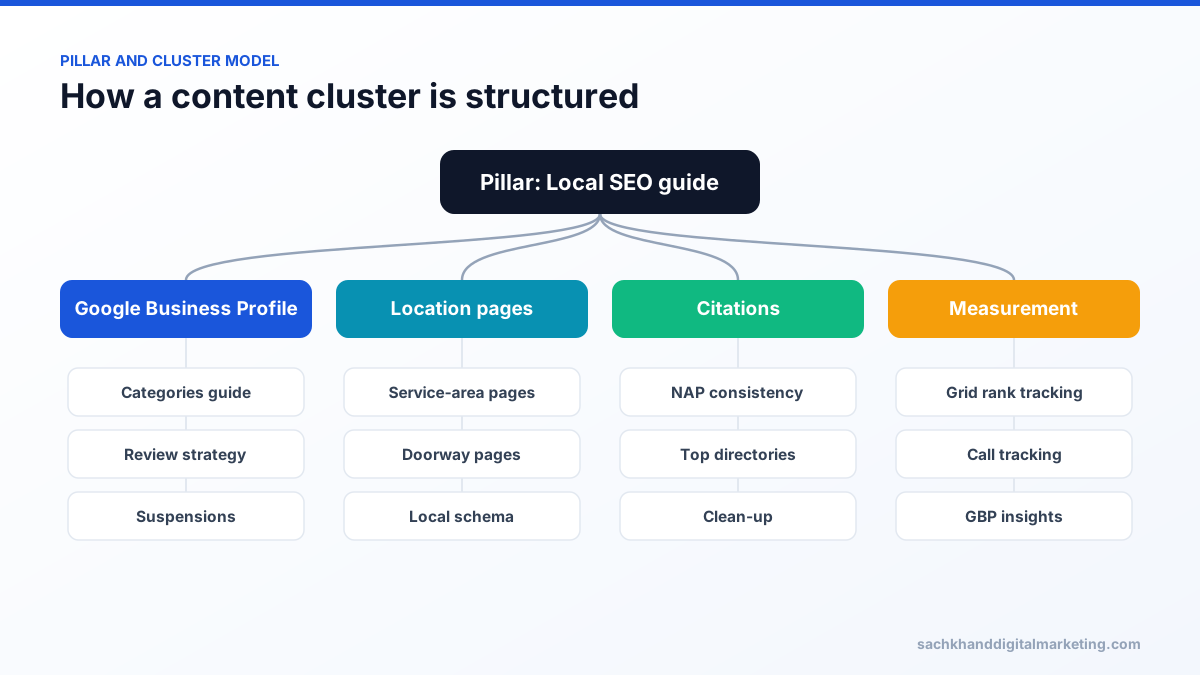
- Pillar page: a comprehensive page covering a broad topic, such as “local SEO”, that gives an overview and links to detailed resources.
- Cluster articles: focused pages that each answer one specific question or subtopic in depth, such as “how to choose Google Business Profile categories”.
- Internal links: every cluster article links to the pillar; the pillar links to every article; related articles link to each other.
The model helps in three ways. Readers can navigate from overview to detail. Search engines see a coherent structure and understand relationships between pages. And link authority flows around the cluster, so strong pages lift newer ones.
How to choose cluster topics
Start with topics that connect to revenue and where you have real expertise. For a service business, that usually means clusters around each core service. For ecommerce, clusters around major categories and buying decisions. Good cluster topics:
- Are broad enough to support at least eight to fifteen useful subtopics.
- Match services or products you want to sell.
- Are subjects where you can add first-hand experience, data or examples.
- Have search demand across the journey, from research to purchase.
How to build a cluster, step by step
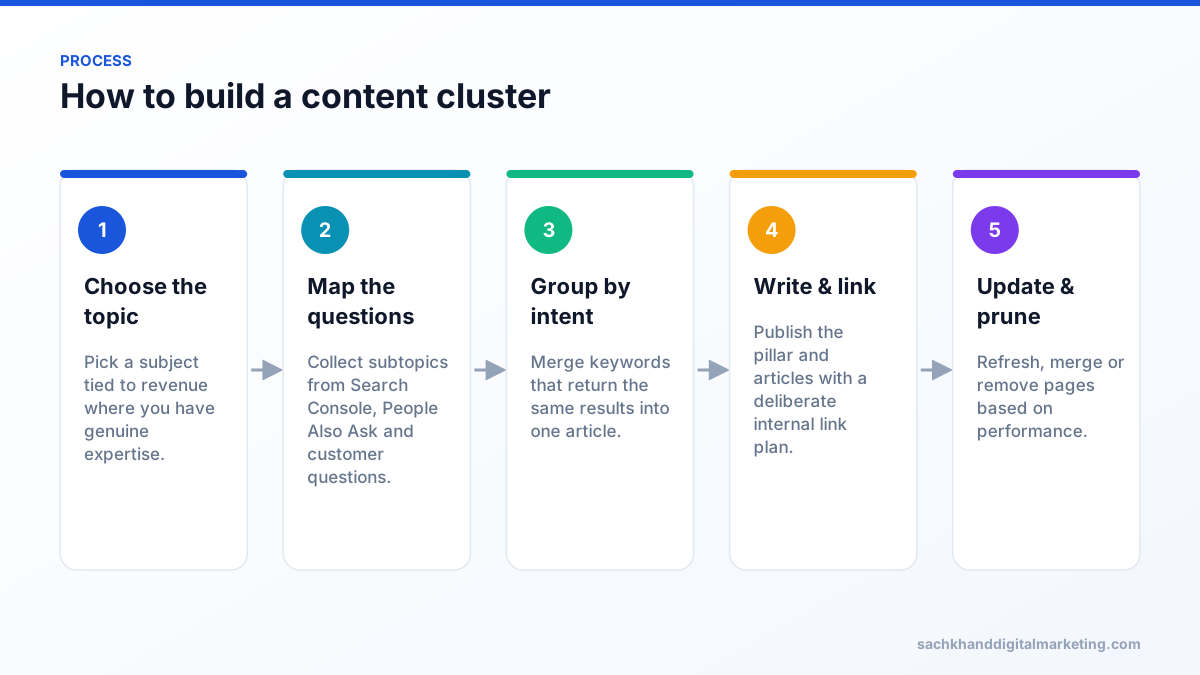
1. Map the questions people ask
Collect subtopics from Search Console queries, keyword tools, People Also Ask boxes, related searches, forums, sales calls and customer support tickets. Aim for a complete list of what someone needs to know about the topic.
2. Group keywords by intent, not wording
Keywords that return mostly the same search results should be answered by one article. Keywords with different results need separate pages. This “SERP overlap” approach prevents keyword cannibalisation, where two of your pages compete for the same query.
3. Decide the page type for each group
| Intent | Page type | Example |
|---|---|---|
| Broad overview | Pillar guide | The complete guide to local SEO |
| How-to | Step-by-step article | How to verify a Google Business Profile |
| Definition | Glossary entry | What is a local pack? |
| Comparison | Comparison article | Local Services Ads vs Google Ads |
| Commercial | Service or product page | Local SEO services |
4. Write detailed content briefs
- Primary keyword and search intent.
- The question the article must answer in the first paragraph.
- Required subtopics and questions, based on the results that currently rank.
- Information gain: what original insight, data or examples you will add.
- Internal links to include and anchor text.
- Author with relevant expertise and any sources to cite.
5. Publish in a sensible order
Publish the pillar and the most commercially important articles first, then fill in supporting articles. Update the pillar as each new article goes live so links are added immediately.
Internal linking rules for clusters
- Every cluster article links to the pillar near the top or in context.
- The pillar links to every cluster article from the relevant section, not only from a list at the bottom.
- Related cluster articles link to each other where it helps the reader.
- Cluster articles link to the relevant service or product page with descriptive anchor text.
- Use varied, natural anchor text that describes the destination page.
- Add breadcrumbs so hierarchy is clear.
How long should a pillar page be?
As long as it needs to be to give a genuinely useful overview, and no longer. Many strong pillar pages run to 2,000–4,000 words, but length is a result of coverage, not a target. A pillar that tries to answer every detail itself will compete with its own cluster articles; summarise each subtopic and link to the article for depth.
How many articles make a cluster?
There is no fixed number. Small niche topics may be covered well with five or six articles; broad commercial topics may need thirty or more. Stop adding articles when new ones would repeat existing content rather than answer genuinely different questions.
Get a prioritised action plan from our specialists, free.
Keep clusters fresh: update, merge and prune
Clusters decay as facts change and competitors publish. Review each cluster at least twice a year:
- Update articles with outdated information, declining clicks or new questions appearing in Search Console.
- Merge thin or overlapping articles into one stronger page and redirect the old URLs.
- Prune pages with no traffic, links or strategic value by improving, merging or removing them.
Why clusters help in AI search
AI Overviews and answer engines look for sources that answer questions clearly and are corroborated across a site and the web. A well-organised cluster gives these systems many precise answers to cite, consistent definitions and clear entity relationships. Combined with genuine expertise and author information, clusters increase the chance your brand appears in AI-generated answers. Learn more in our GEO playbook.
Measuring cluster performance
Measure clusters as a group, not just article by article. In Search Console, filter by URL path or page groups to track combined impressions, clicks and the number of ranking queries. In analytics, track assisted conversions from cluster articles to service or product pages. Healthy clusters show a growing number of ranking queries, rising impressions for the pillar and more conversions on linked commercial pages.
Common mistakes
- Publishing many articles that target the same intent.
- Linking cluster articles only from a blog index, not from the pillar.
- Choosing topics unrelated to what you sell.
- Producing generic content with no original insight.
- Never updating the cluster after publication.
Example: a content cluster for a dental clinic
| Page | Type | Primary intent |
|---|---|---|
| Dental implants: complete patient guide | Pillar | Understand implants end to end |
| How much do dental implants cost? | Cluster | Pricing research |
| Dental implants vs bridges vs dentures | Cluster | Comparison |
| Dental implant procedure step by step | Cluster | Process and recovery |
| Are dental implants painful? | Cluster | Objection handling |
| Bone grafts for implants explained | Cluster | Specific sub-treatment |
| Dental implant financing options | Cluster | Affordability |
| Dental implants in [city] | Service page | Book a consultation |
Every cluster article links to the pillar and to the local service page, and the pillar links to every article from the relevant section.
A simple content brief template
- Working title and URL.
- Primary keyword, secondary keywords and search intent.
- Reader: who they are and what they already know.
- The answer: the one to two sentence answer that must appear first.
- Outline: H2s and H3s based on the questions that ranking pages and People Also Ask cover.
- Information gain: original data, examples, quotes or visuals to include.
- Internal links: pillar, sibling articles and commercial page, with suggested anchor text.
- Expert and sources: who reviews it and which sources to cite.
- Call to action: the next step for the reader.
Tools that help
- Google Search Console for existing queries and cannibalisation checks.
- Keyword research tools for volume, difficulty and keyword clustering by SERP overlap.
- A crawler such as Screaming Frog to visualise internal links and find orphan pages.
- A content inventory spreadsheet mapping every URL to a cluster, keyword and last update date.
Frequently asked questions
What is a content cluster?
A content cluster is a group of pages about one topic: a pillar page covering the broad subject and several cluster articles answering specific subtopics, all linked together.
How many articles make a content cluster?
There is no fixed number. Small topics can be covered in five or six articles, while broad commercial topics may need thirty or more. Stop when new articles would repeat existing content.
How long should a pillar page be?
Long enough to give a complete overview and link to detailed articles. Many pillar pages are 2,000 to 4,000 words, but coverage and usefulness matter more than word count.
Does topical authority help with AI search?
Yes. Deep, well-structured coverage of a subject gives AI Overviews and answer engines clear, consistent answers to cite, increasing the chance your content appears in AI-generated results.
How do I avoid keyword cannibalisation in a cluster?
Group keywords by search intent using search result overlap, assign one primary keyword to each page, and merge articles that target the same intent.
Want a content engine that builds authority for you?
Talk to our team about your goals. We will show you where the biggest wins are, starting with a free, no-obligation audit.