Generative engine optimisation (GEO) is the work of getting your brand mentioned and cited inside AI-generated answers. It builds on SEO: be indexed and crawlable, publish clear, specific, evidence-rich content with genuine expertise, structure pages so passages can be quoted, strengthen your brand as a recognisable entity with consistent facts across the web, and earn coverage on sources AI systems trust. Measure citations, mentions and AI referral traffic, not just rankings.
On this page
- What is GEO?
- Why GEO matters now
- How generative engines choose sources
- The GEO playbook
- Does schema markup help with GEO?
- What does not work
- How to measure GEO
- GEO for local businesses
- A GEO audit checklist
- Example prompts to track
- When your brand is described incorrectly
- GEO roles and responsibilities
- Frequently asked questions
Generative AI has changed what “being found” means. When a buyer asks Google AI Mode, ChatGPT or Perplexity which agency, software or supplier to consider, the answer names a few brands and cites a few sources. If you are not among them, you may never be considered. Generative engine optimisation (GEO) is the discipline of earning those mentions and citations. This playbook explains how generative engines choose sources and the practical steps to improve your visibility. Sometimes called GEO SEO or LLM SEO, generative engine optimisation overlaps with AI Overviews optimization — and it is what our GEO services are built around.
What is GEO?
Generative engine optimisation is the practice of improving how often and how favourably a brand or website appears in responses generated by AI systems such as Google AI Overviews, AI Mode, ChatGPT, Gemini, Copilot and Perplexity. The term was popularised by a 2023 academic paper that tested content changes and found that techniques such as adding citations, quotations from relevant sources and statistics improved visibility in generative engine responses.
GEO is closely related to answer engine optimisation and builds directly on SEO. Most generative engines retrieve information from search indexes before writing an answer, so pages that are not indexed or trusted rarely appear.
Why GEO matters now
- Zero-click answers: AI Overviews and AI Mode answer many informational questions directly, reducing clicks to classic results.
- Shortlists instead of lists: AI answers often recommend three to five options. Being left out means not being considered.
- Higher-intent visits: people who click through from an AI answer have often already been told why your brand fits.
- Brand perception: AI systems summarise what the web says about you. Inconsistent or outdated information can be repeated to buyers.
How generative engines choose sources
Each engine works differently, but most follow a similar pattern: interpret the prompt, retrieve candidate pages from a search index, select passages that are relevant, clear and trustworthy, then generate an answer and cite supporting sources. Signals that tend to matter:
- Relevance of specific passages to the prompt.
- Clarity and specificity: definitions, numbers, steps and direct answers.
- Authority and trust of the site and author.
- Freshness, especially for fast-changing topics.
- Corroboration: whether other trusted sources say the same thing.
- Entity understanding: how clearly the engine understands who your brand is and what it does.
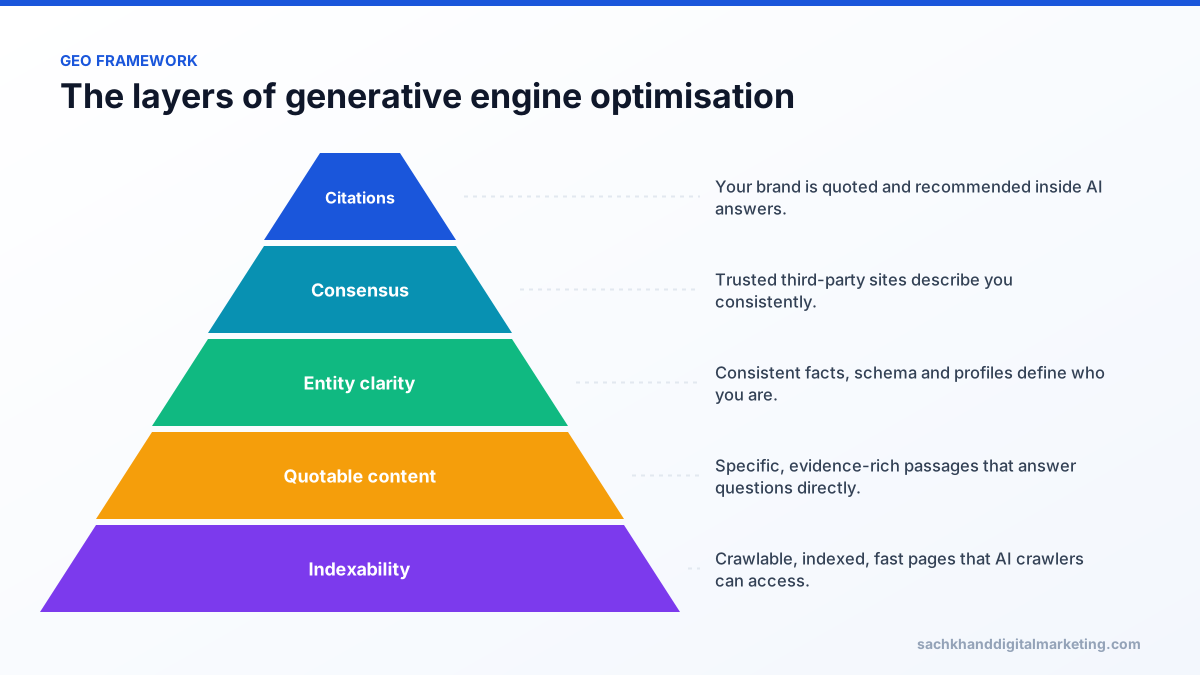
The GEO playbook
Step 1: Make sure AI systems can access your content
- Important pages indexed in Google and Bing, with sitemaps submitted to both.
- Robots.txt reviewed so search-related AI crawlers such as OAI-SearchBot and PerplexityBot are not blocked unintentionally.
- Key content present in HTML rather than only loaded by JavaScript.
- No nosnippet or restrictive max-snippet directives on pages you want quoted.
Step 2: Create quotable, evidence-rich content
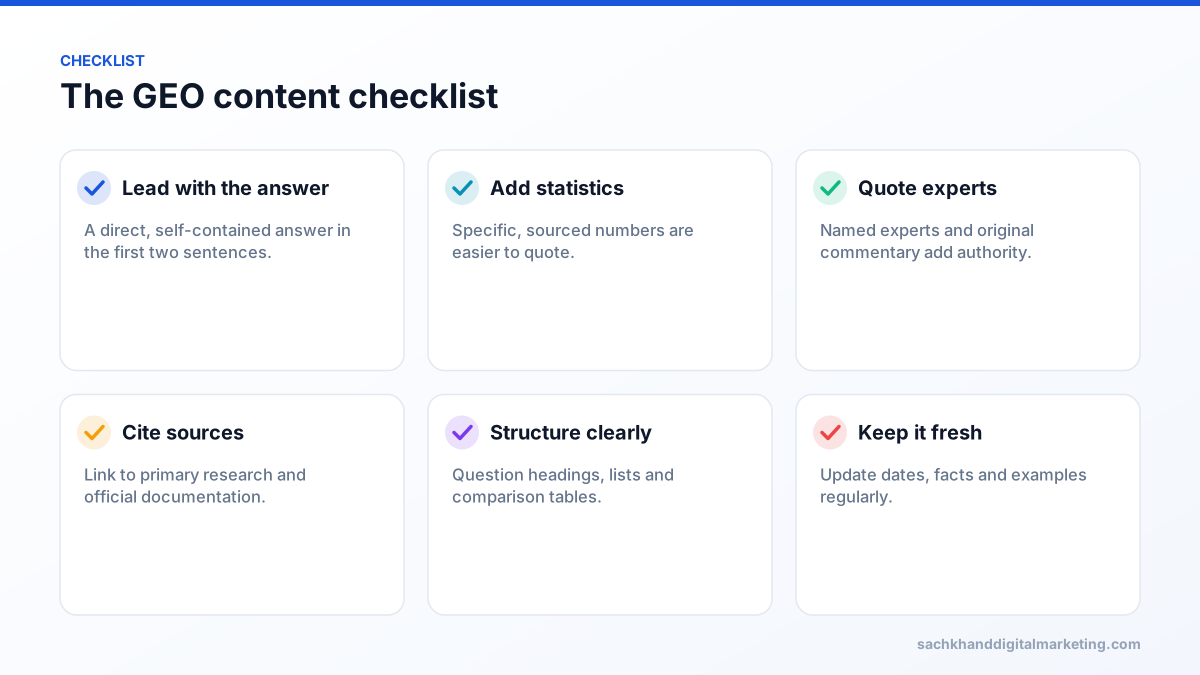
Write each section so it can stand alone as an answer. Open with a direct response, follow with detail and evidence, and use headings that mirror the questions buyers ask. Include specific figures with sources, named examples and expert commentary. Pages that simply restate what everyone else says give AI systems no reason to cite them.
Step 3: Strengthen your brand as an entity
- Use consistent names, descriptions, services, locations and founders across your website, Google Business Profile, LinkedIn, directories and press.
- Add Organization structured data with
sameAslinks to official profiles. - Create clear About, team and service pages that state facts plainly.
- Keep information such as pricing, locations and offerings current everywhere.
Step 4: Earn third-party coverage and consensus
AI answers lean on sources beyond your own website: industry publications, comparison and review sites, community discussions, podcasts and news coverage. Digital PR, expert commentary, partnerships, awards and genuine customer reviews all increase the chance your brand is described, and recommended, consistently.
Step 5: Cover the buyer’s questions completely
Map the prompts buyers use at each stage, from “what is” to “best X for Y” and “X vs Y”, and make sure you have honest, detailed content for each. Build these into content clusters so the site shows depth on your core topics.
Step 6: Keep content fresh
Update statistics, screenshots, prices and examples regularly, show visible last-updated dates, and remove or correct outdated pages that could be quoted incorrectly.
Does schema markup help with GEO?
Structured data helps search engines understand entities and page content, which supports accurate retrieval and eligibility for rich results. It does not guarantee AI citations on its own. Use it to describe your organisation, articles, products, local business details and authors accurately, alongside strong content.
What does not work
- Publishing large volumes of AI-generated pages with no original value, which can fall foul of Google’s scaled content abuse policy.
- Hidden text or prompts aimed at manipulating AI systems.
- Fake reviews or self-promotional “best of” lists with no transparency.
- Ignoring classic SEO and expecting AI visibility anyway.
Get a prioritised action plan from our specialists, free.
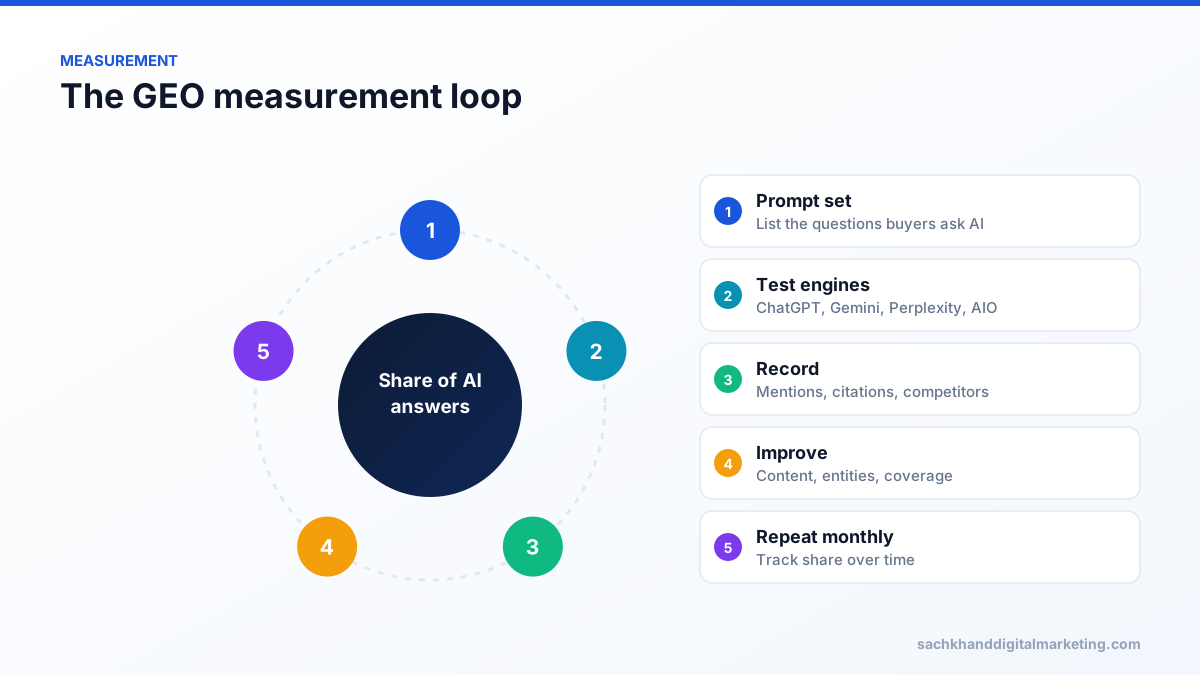
How to measure GEO
| Measure | How to track it |
|---|---|
| Brand mentions in AI answers | Regular testing of a fixed prompt set across engines, or AI visibility tools |
| Citations and linked sources | Record which of your URLs are cited and for which prompts |
| Share of voice vs competitors | Compare how often each brand appears for the same prompts |
| AI referral traffic and conversions | Analytics segments for chatgpt.com, perplexity.ai, gemini.google.com and copilot.microsoft.com |
| Accuracy of brand descriptions | Check what engines say about your services, pricing and locations |
GEO for local businesses
AI assistants increasingly answer “best dentist near me” style questions. For local businesses, a complete Google Business Profile, strong review volume and quality, consistent citations and location pages with genuine detail are the foundations of local AI visibility. See our Google Business Profile checklist.
A GEO audit checklist
| Area | Questions to answer |
|---|---|
| Access | Are key pages indexed in Google and Bing? Are search-related AI crawlers allowed? |
| Visibility | For your top 30 buyer prompts, which engines mention or cite you? Which competitors appear? |
| Accuracy | Do AI engines describe your services, locations, pricing and differentiators correctly? |
| Content | Do priority pages open with direct answers and include specific, sourced facts? |
| Entity | Are brand facts consistent across your website, Business Profile, LinkedIn, directories and press? |
| Third-party trust | Are you mentioned in industry publications, reviews and comparison content? |
| Measurement | Is AI referral traffic tracked and reported with conversions? |
Example prompts to track
- “What is the best [service] company in [city] for [audience]?”
- “[Your brand] vs [competitor]: which is better for [use case]?”
- “How much does [service] cost in [location]?”
- “Is [your brand] legit / reliable?”
- “What should I look for when choosing a [service provider]?”
- “Alternatives to [competitor]”
Keep the prompt set stable so month-to-month comparisons are meaningful, and add new prompts in a separate list.
When your brand is described incorrectly
- Find the likely sources: outdated directory listings, old press, review sites or your own old pages.
- Correct information at the source and update your website with clear, current facts.
- Publish authoritative pages that state the correct information plainly, such as pricing, service areas or company history.
- Earn fresh coverage that reflects the current facts.
- Re-test prompts after engines have had time to recrawl.
GEO roles and responsibilities
GEO spans teams: SEO handles indexing, structure and schema; content teams produce evidence-rich pages; PR earns third-party coverage; brand and marketing keep facts consistent; and analytics tracks AI visibility and referrals. Assign an owner for the prompt tracking process so it happens every month.
Frequently asked questions
Is GEO different from SEO?
GEO builds on SEO. SEO aims to rank pages in search results, while GEO aims to have a brand mentioned and cited inside AI-generated answers. Most generative engines retrieve from search indexes, so strong SEO is the foundation for GEO.
Does schema markup help with GEO?
It helps search engines understand your organisation and content accurately, which supports retrieval, but it does not guarantee citations. Clear, evidence-rich content and third-party trust matter more.
How do I know if GEO is working?
Track a consistent set of prompts across AI engines each month and record mentions, citations and competitor appearances. Combine this with AI referral traffic and conversions in analytics.
How long does GEO take?
Improvements to indexed pages can be reflected within weeks for engines that retrieve live results. Building entity strength and third-party consensus usually takes several months.
Should I block AI crawlers?
Blocking training crawlers is a business decision, but blocking search-related AI crawlers or Googlebot can remove you from AI answers. Review robots.txt carefully and treat each user agent separately.
Want to get cited in AI Overviews and answer engines?
Talk to our team about your goals. We will show you where the biggest wins are, starting with a free, no-obligation audit.