Answer engine optimisation (AEO) is the practice of making your content the source AI assistants and answer engines quote. Be crawlable by the bots these tools use, answer questions directly in clear, well-structured passages, back claims with evidence and first-hand expertise, keep facts about your brand consistent across the web and earn mentions on sites these engines already trust. Track AI referral traffic and citations alongside classic rankings.
On this page
- What is an answer engine?
- AEO, GEO and SEO: what is the difference?
- How the main answer engines find sources
- What makes content likely to be cited
- Technical foundations for AEO
- Optimising for conversational prompts
- How to measure AEO
- Don’t forget the basics
- A 60-day AEO action plan
- Example: turning a page into a quotable answer
- Content types answer engines cite most often
- Common AEO mistakes
- Frequently asked questions
Millions of people now ask ChatGPT, Perplexity, Microsoft Copilot and Google’s AI features for answers they used to search for. Instead of ten links, they get a written response with a handful of cited sources. Being one of those sources is the new front page. Answer engine optimisation (AEO) is the discipline of earning that position, and it rewards many of the same things good SEO does, with some important differences. If you want to rank in ChatGPT, improve Perplexity SEO and get cited by AI answers, answer engine optimization is the discipline that decides it.
What is an answer engine?
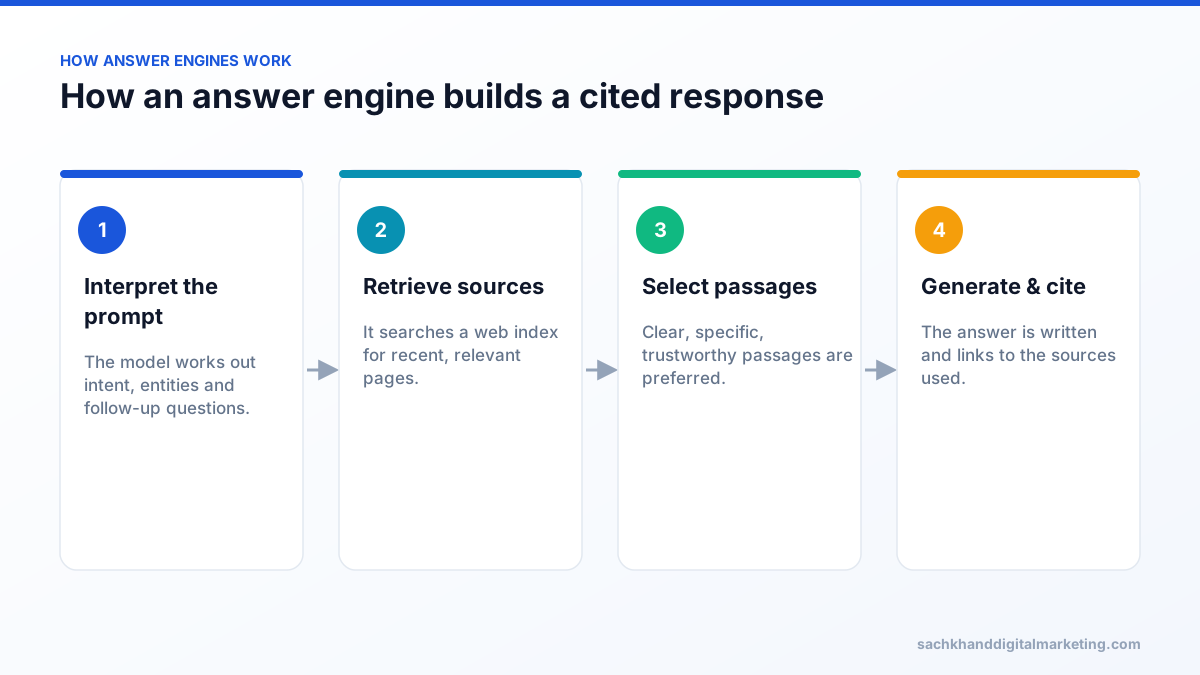
An answer engine is a search experience that responds with a synthesised answer rather than a list of links. Most modern answer engines combine a large language model with live retrieval from a web index, then cite the pages they used. Examples include ChatGPT search, Perplexity, Microsoft Copilot, Google’s AI Overviews and AI Mode, and Gemini.
AEO, GEO and SEO: what is the difference?
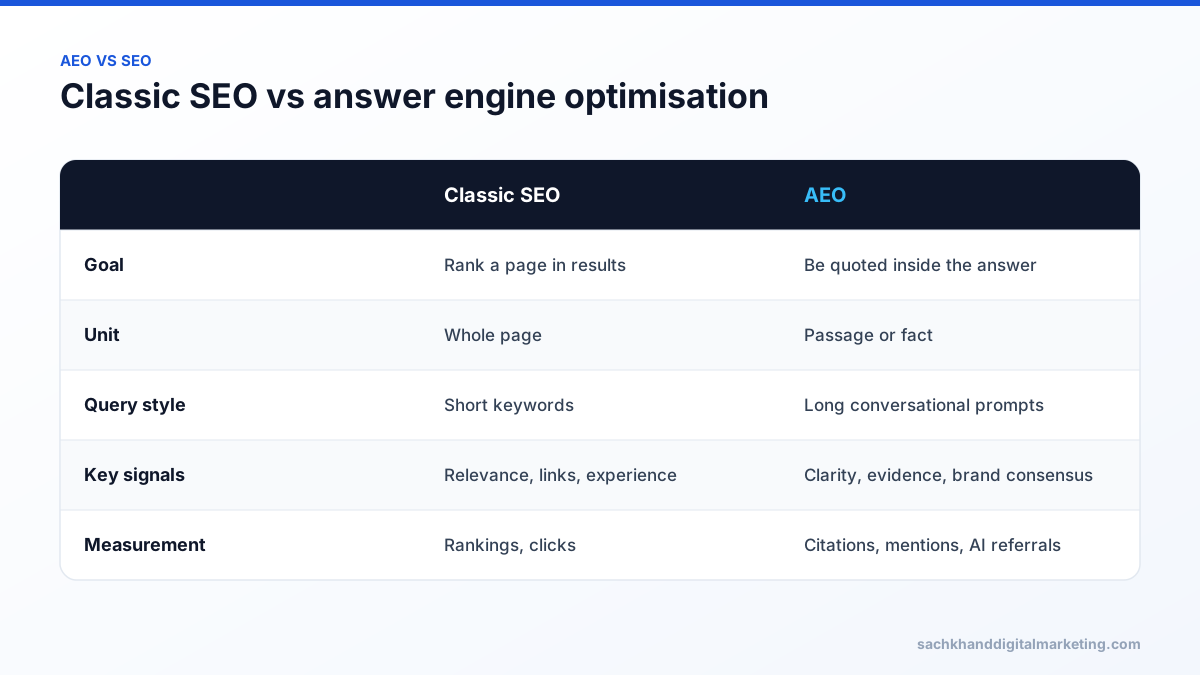
The terms overlap and are often used interchangeably. A useful distinction:
- SEO optimises pages to rank in search results.
- AEO optimises content to be selected as the direct answer, including featured snippets, voice answers and AI-cited passages.
- GEO (generative engine optimisation) focuses specifically on visibility inside generative AI responses. See our GEO playbook.
How the main answer engines find sources
| Engine | Where sources come from | What that means for you |
|---|---|---|
| Google AI Overviews and AI Mode | Google’s search index | A page must be indexed and eligible for a snippet; strong SEO is the foundation |
| ChatGPT search | Web search results plus OpenAI’s own search crawler | Be indexed in major search engines and allow OAI-SearchBot |
| Microsoft Copilot | Bing’s index | Verify your site in Bing Webmaster Tools and keep it indexed |
| Perplexity | Its own crawler and web search | Allow PerplexityBot and keep content fresh and specific |
AI companies use different user agents for different purposes. For example, OpenAI’s GPTBot relates to model training while OAI-SearchBot is used for ChatGPT search, and Google-Extended controls use of content for Gemini models but does not affect AI Overviews, which rely on Googlebot. Blocking the wrong bot can remove you from AI answers without you noticing.
What makes content likely to be cited
1. Answer the question directly
Put a clear, self-contained answer in the first sentences under a descriptive heading. Answer engines extract passages, so each section should make sense on its own without relying on earlier context.
2. Be specific and evidence-based
Specific numbers, definitions, steps, prices, dates and named examples are easier to quote than vague claims. Cite sources for statistics and link to primary research.
3. Add information others do not have
Original data, case examples, expert commentary and first-hand testing give an engine a reason to cite you rather than one of a dozen near-identical pages.
4. Structure for extraction
- Question-style H2 and H3 headings that match how people ask.
- Short paragraphs, numbered steps and bulleted lists.
- Comparison tables for “X vs Y” topics.
- FAQ sections that answer follow-up questions concisely.
- Structured data such as Organization, Article, Product and LocalBusiness to clarify entities.
5. Demonstrate expertise and trust
Named authors with relevant experience, clear business information, transparent sourcing, updated dates and a strong reputation all make content safer for an engine to recommend.
6. Build brand consensus across the web
Answer engines are more confident recommending brands that trusted sources describe consistently. Keep your name, services, locations and key facts identical across your website, Google Business Profile, directories, social profiles and press. Earn mentions in industry publications, comparison articles, reviews and community discussions.
Technical foundations for AEO
- Make sure important content is in the HTML, not only rendered by JavaScript.
- Keep pages indexed in both Google and Bing; submit sitemaps to both.
- Use IndexNow (supported by Bing and others) to notify engines of updates quickly.
- Keep pages fast and free of intrusive interstitials that block content.
- Avoid nosnippet or restrictive max-snippet directives on pages you want quoted.
Optimising for conversational prompts
Prompts are longer and more specific than keywords: “Which accounting software is best for a UK freelancer who invoices in euros?” rather than “accounting software”. To cover them:
- Create content for specific audiences, use cases and constraints.
- Answer comparison and “best for” questions honestly, including when you are not the right fit.
- Collect real questions from sales calls, support tickets and forums.
- Include pricing ranges, requirements and limitations, which prompts often ask about.
Get a prioritised action plan from our specialists, free.
How to measure AEO
- AI referral traffic: in analytics, segment sessions from chatgpt.com, perplexity.ai, copilot.microsoft.com and gemini.google.com.
- Prompt tracking: maintain a list of important prompts and regularly record whether your brand is mentioned or cited, and which competitors appear.
- Search Console: AI Overview clicks and impressions are included in web search totals, so watch trends for question-style queries.
- Brand mentions: monitor mentions across publications and communities that engines draw on.
- Assisted conversions: ask new leads how they found you; “ChatGPT recommended you” is becoming a common answer.
Don’t forget the basics
AEO is built on SEO. Pages that are not indexed, load slowly, lack expertise or sit on a site with no authority rarely become sources for any engine. Strong technical SEO, helpful content and genuine reputation remain the foundation. Our guide to the future of AI SEO covers the bigger strategic picture.
A 60-day AEO action plan
| Timeframe | Actions |
|---|---|
| Week 1 | List 30–50 prompts buyers use; record which brands each engine mentions and cites today |
| Week 2 | Check robots.txt for AI crawlers; verify indexing in Google Search Console and Bing Webmaster Tools |
| Weeks 3–4 | Rewrite top pages with direct answers, question headings, specific facts, tables and FAQs |
| Weeks 5–6 | Align brand facts across website, Business Profile, LinkedIn and directories; add Organization schema |
| Weeks 7–8 | Pitch expert commentary and data to industry publications; update comparison and “best for” content |
| Ongoing | Re-test prompts monthly and track AI referral traffic and leads |
Example: turning a page into a quotable answer
Before: a service page opens with three paragraphs about the company’s history and mentions pricing only in a PDF.
After: the page opens with “A residential solar installation in Texas typically costs $X–$Y before incentives, and most systems pay back in N–M years”, cites the data source, then covers what affects cost in a table, installation steps, warranties and FAQs. Each section can be quoted independently, and the facts are specific enough to be useful in an answer.
Content types answer engines cite most often
- Definitions and explainers with a clear one-to-two sentence definition.
- How-to guides with numbered steps.
- Comparisons with honest pros, cons and “best for” recommendations.
- Pricing and cost guides with ranges and the factors that change them.
- Original research and statistics with methodology.
- Glossaries of industry terms, such as our SEO glossary.
Common AEO mistakes
- Blocking search-related AI crawlers in robots.txt by accident.
- Hiding key facts inside PDFs, images or JavaScript widgets.
- Writing marketing copy instead of direct answers.
- Publishing inconsistent prices, locations or services across different sites.
- Measuring only Google rankings and ignoring AI referrals.
Frequently asked questions
What is answer engine optimization?
Answer engine optimisation (AEO) is the practice of structuring and strengthening content so AI assistants, answer engines and featured snippets select it as the direct answer to a question, often with a citation.
What is the difference between GEO and AEO?
They overlap. AEO focuses on being chosen as the direct answer in any answer-style result, including snippets and voice. GEO focuses specifically on visibility and citations inside generative AI responses.
How do I get my website cited by ChatGPT?
Make sure your site is indexed in major search engines and not blocking OAI-SearchBot, answer questions directly with specific, evidence-backed content, show real expertise, and earn consistent mentions of your brand on trusted websites.
Can I track AI citations?
Partly. Segment referral traffic from AI tools in analytics, regularly test important prompts and record mentions, and use AI visibility tools where available. Search Console includes AI Overview data within overall web search totals.
Does schema markup help AEO?
Structured data helps search engines understand entities and page content, which supports eligibility and accuracy, but it does not guarantee citations. Clear, trustworthy content matters most.
Want your brand cited across ChatGPT, Perplexity and Google AI?
Talk to our team about your goals. We will show you where the biggest wins are, starting with a free, no-obligation audit.