An AI Overview is an AI-generated summary that Google shows at the top of some search results pages. Powered by a customised Gemini model, it answers the query in a few sentences or bullet points and links to the web pages it drew information from, so users can explore further.
On this page
- How AI Overviews work
- AI Overview vs AI Mode
- What AI Overviews mean for SEO
- How to appear in AI Overviews
- Can you opt out?
- AI Overview vs featured snippet
- Queries that often trigger AI Overviews
- How to check whether you appear in AI Overviews
- Content example that is easy to cite
- Common misconceptions
- Frequently asked questions
How AI Overviews work
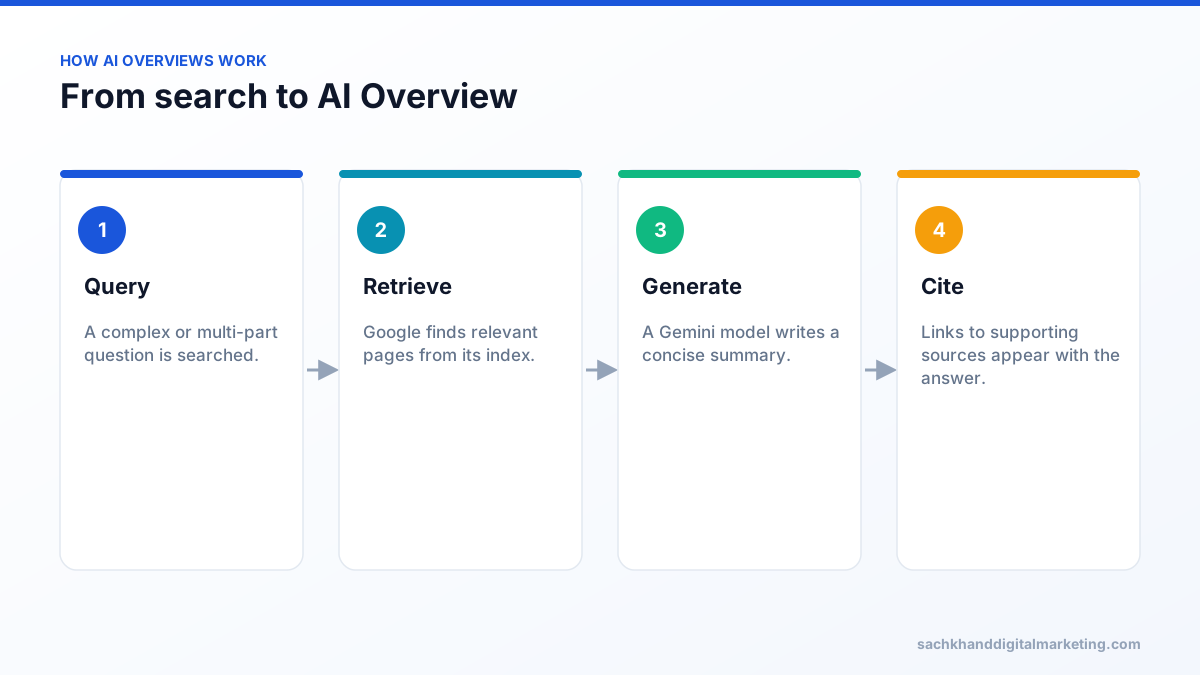
When Google’s systems decide a generative summary would be especially helpful — typically for complex, multi-part or research-style questions — they create an AI Overview using information from pages in Google’s index. Links to supporting sources appear within and beside the summary. Not every search triggers one; simple navigational and many commercial queries usually do not.
AI Overviews grew out of Google’s Search Generative Experience (SGE) experiment, launched to all US users in May 2024, and have since expanded to more than 200 countries and territories.
AI Overview vs AI Mode
An AI Overview appears inside the normal results page, above the organic listings. AI Mode is a separate, conversational search experience where the whole result is AI-generated and users can ask follow-up questions. Both cite web sources, and both draw on similar signals.
What AI Overviews mean for SEO
- Fewer clicks on informational queries — when the answer is on the page, many users do not click.
- New visibility — being cited as a source puts your brand in the most prominent position on the page.
- Measurement — clicks and impressions from AI Overviews are included in the web search totals in Google Search Console, not reported separately.
How to appear in AI Overviews
Google says there are no special requirements or markup: to be eligible, a page must be indexed and eligible to show a snippet in Search. Beyond that, the pages that tend to be cited:
- Answer the question directly and early, under a clear heading.
- Cover the topic thoroughly, including the follow-up questions users are likely to ask.
- Demonstrate real expertise and first-hand experience.
- Are well structured with lists, tables and descriptive headings.
- Are technically sound: crawlable, fast and not blocked by nosnippet directives.
Can you opt out?
Users cannot turn AI Overviews off in standard search. Site owners can limit how their content is used in them with nosnippet, data-nosnippet or max-snippet, but these also restrict normal snippets and can reduce visibility.
AI Overview vs featured snippet
| Featured snippet | AI Overview | |
|---|---|---|
| Content | Extract quoted from one page | AI-written summary drawing on several pages |
| Sources | One | Several, linked |
| Typical queries | Simple facts, definitions, steps | Complex, multi-part or exploratory questions |
| How to appear | Concise answer formatted to match the query | Indexed, trustworthy, well-structured content |
Queries that often trigger AI Overviews
- “How to” questions with several steps or considerations.
- Comparisons, such as “heat pump vs furnace for cold climates”.
- Planning and research questions with multiple factors.
- Questions combining several constraints, such as budget, location and use case.
They appear less often for simple navigational searches and many transactional searches, where users want a specific website or product listing.
How to check whether you appear in AI Overviews
- Build a list of your important informational and comparison queries.
- Search them in Google, noting which trigger AI Overviews and which sources are cited.
- Use SEO tools that track AI Overview presence and citations.
- Watch Search Console trends for question-style queries, since AI Overview impressions and clicks are counted within web search totals.
Content example that is easy to cite
Question heading: “How long does a heat pump last?”
Direct answer: “Most air-source heat pumps last around 15 to 20 years with annual servicing, depending on climate and usage.”
Supporting detail: factors that shorten or extend lifespan, warning signs of failure and a maintenance checklist.
This pattern of a direct answer followed by specific, useful detail is what makes a passage easy to quote.
Common misconceptions
- “There is special AI Overview schema.” Google says no special markup is required.
- “Only top-ranking pages are cited.” Cited pages often rank well, but not always in the top positions.
- “AI Overviews mean SEO no longer matters.” They depend on the same indexing and quality signals.
Frequently asked questions
What is an AI Overview on Google?
It is an AI-generated summary at the top of some Google search results that answers the query and links to the sources used.
Can I turn off AI Overviews?
Searchers cannot disable them in standard Google Search. Selecting the “Web” filter shows only traditional links.
Do AI Overviews reduce website traffic?
They can reduce clicks for simple informational questions, but pages cited within AI Overviews gain prominent visibility and often higher-quality visits.
Does structured data help appear in AI Overviews?
Google says no special structured data is required for AI Overviews. Structured data can still help search engines understand your content, but clear, trustworthy, well-organised content matters most.
Want experts to handle this for you?
Our specialists turn these fundamentals into rankings, leads and revenue. Start with a free, no-obligation audit of your site.