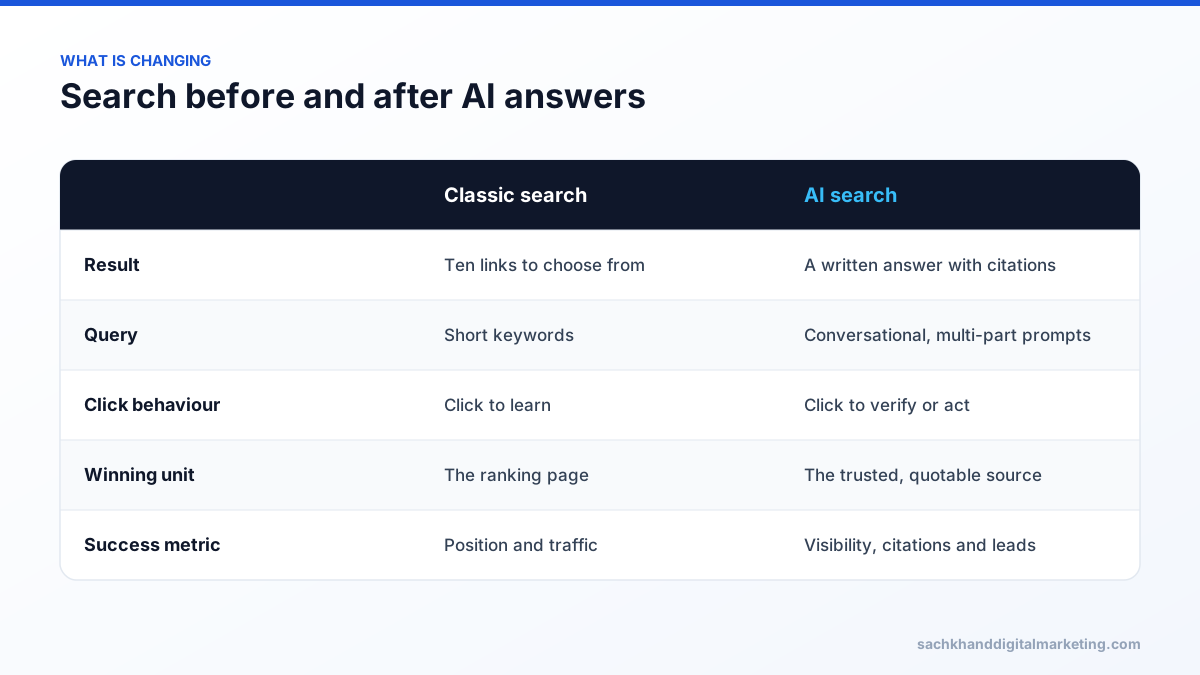
AI is changing where and how people search, not whether they search. Google AI Overviews and AI Mode, ChatGPT and other assistants answer more questions directly, so informational clicks fall while the value of being cited, trusted and recommended rises. The winning strategy combines strong technical SEO, genuinely expert content with original insight, a clearly defined brand entity, content structured to be quoted and measurement that looks beyond rankings.

On this page
- From SGE to AI Overviews and AI Mode
- What this means for traffic
- What still works, and matters more
- What stops working
- A practical AI SEO strategy
- Will AI search replace traditional SEO?
- How we approach AI SEO
- Timeline: how search has changed
- Skills SEO teams need now
- How to use AI in your own SEO work responsibly
- Questions to ask about your own strategy
- Frequently asked questions
Every few years someone declares that SEO is dead. AI search has revived the claim with more force than ever, because Google now answers many questions with AI Overviews and AI Mode, and millions of people ask ChatGPT and other assistants instead of searching. The reality is more nuanced and more useful: search behaviour is spreading across more surfaces, the value of generic content is collapsing, and the value of being a trusted, clearly defined source is rising. This article explains what is changing and how to build an SEO strategy that stays visible. This guide looks at the future of SEO as AI Overviews SEO and AI Mode SEO change how people search and which sources get cited.
From SGE to AI Overviews and AI Mode
Google first tested generative answers in 2023 as the Search Generative Experience (SGE) in Search Labs. In May 2024 it launched AI Overviews to all US users and has since expanded them to more than 200 countries and territories. In 2025 Google introduced AI Mode, a conversational search experience where the whole result is AI-generated with links to sources. At the same time, ChatGPT added web search, and assistants such as Perplexity, Copilot and Gemini became mainstream research tools.
What this means for traffic
- Informational queries lose clicks. Simple “what is” and “how to” questions are often answered on the results page.
- Commercial and local queries still drive visits. People still click to compare, check prices, read reviews, book and buy.
- Citations bring qualified traffic. Visitors who click a cited source have often already read why it is relevant.
- Brand demand matters more. When AI recommends a shortlist, brands that are already known and trusted benefit most.
What still works, and matters more
1. Entity optimisation
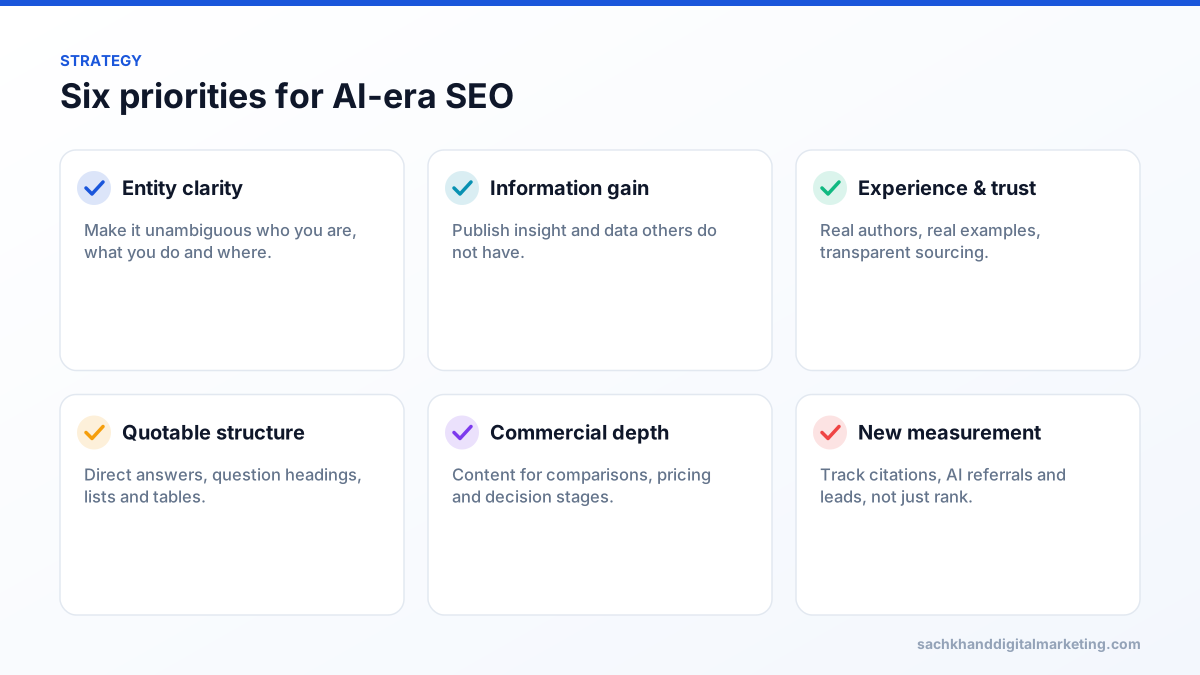
Search engines and language models understand the world as entities, people, organisations, places and products, and the relationships between them. Make your brand entity unmistakable: consistent name, description, services, locations and leadership across your website, Google Business Profile, LinkedIn, directories and press; Organization structured data with links to official profiles; and clear About and service pages.
2. Information gain
AI can summarise what is already published. It cannot invent your customer data, your test results or your expert judgement. Content that adds something new, such as original research, real project examples, pricing data, templates, or clear opinions grounded in experience, becomes the material AI answers need to cite.
3. Conversational, long-tail coverage
Prompts are longer and more specific than keywords. Cover the detailed questions buyers ask at each stage, including comparisons, “best for” scenarios, costs, limitations and implementation details. Content clusters are an effective way to organise this depth.
4. E-E-A-T as the currency of trust
Experience, expertise, authoritativeness and trust (E-E-A-T) is the framework Google’s quality raters use to evaluate content. Named authors with relevant credentials, first-hand detail, accurate sourcing, clear business information and a positive reputation all make content safer to rank and to quote.
5. Content structured to be quoted
- A direct answer in the first sentences of each section.
- Descriptive, question-style headings.
- Short paragraphs, numbered steps and lists.
- Tables for comparisons and specifications.
- Concise FAQs for follow-up questions.
6. Technical excellence
AI features rely on the same crawling and indexing foundations as classic search. Fast, crawlable, well-structured pages with important content in HTML remain essential. Google states there is no special markup required for AI Overviews: a page must be indexed and eligible to show a snippet.
What stops working
- Thin, generic content that restates what already ranks.
- Mass-produced AI content with no original value, which can violate Google’s scaled content abuse policy.
- Keyword-first writing that ignores the real question behind a search.
- Manipulative links, which are increasingly ignored.
- Traffic-only reporting that misses visibility inside AI answers.
A practical AI SEO strategy
- Audit your AI visibility. Test the prompts buyers use in Google AI Mode, ChatGPT, Gemini and Perplexity. Record whether you are mentioned, cited or described accurately.
- Fix technical access. Check indexing in Google and Bing and review robots.txt for AI crawlers.
- Clarify your entity. Align brand facts across the web and add Organization schema.
- Upgrade priority pages. Add direct answers, evidence, expert input and clearer structure to your most valuable content.
- Fill decision-stage gaps. Create honest comparison, pricing and “best for” content.
- Build third-party trust. Earn coverage, reviews and mentions on sources AI systems use.
- Measure differently. Track AI citations, AI referral traffic and leads alongside rankings.
Will AI search replace traditional SEO?
Not in any foreseeable way. AI answers depend on retrieving information from the web, and the pages they retrieve are the ones that are indexed, relevant and trusted, which is what SEO produces. What AI replaces is low-value content and the idea that ranking alone equals success. The businesses that adapt will be those that combine classic SEO discipline with clear expertise and a reputation worth citing.
Get a prioritised action plan from our specialists, free.
How we approach AI SEO
At Sachkhand Digital Marketing we treat AI visibility as an extension of SEO rather than a separate channel: technical foundations first, then content with genuine information gain, entity clarity, digital PR and measurement that includes AI answers. Learn more about our AI SEO services and our GEO playbook.
Timeline: how search has changed
| Year | Milestone | What it meant for SEO |
|---|---|---|
| 2015 | RankBrain introduced | Machine learning began interpreting queries |
| 2019 | BERT applied to Search | Better understanding of natural language and context |
| 2022 | Helpful content system launched | Content made mainly for search engines was demoted |
| 2023 | Search Generative Experience tested | Generative answers previewed in Search Labs |
| 2024 | AI Overviews launched; helpful content folded into core ranking | AI summaries appeared for many queries |
| 2025 | AI Mode introduced | Conversational, AI-first search experience |
Skills SEO teams need now
- Entity and structured data expertise to define brands, people and products clearly.
- Research and data analysis to produce original insight worth citing.
- Digital PR to earn coverage and brand mentions.
- Technical SEO for crawling, rendering and performance.
- Conversion optimisation so fewer, higher-intent visits still grow revenue.
- AI visibility measurement across multiple engines.
How to use AI in your own SEO work responsibly
- Use AI to speed up research, outlines, clustering and first drafts, not to replace expertise.
- Have subject-matter experts review and add first-hand insight.
- Fact-check every statistic and claim against primary sources.
- Avoid publishing large volumes of lightly edited AI content.
- Disclose AI assistance where readers would reasonably expect it.
Questions to ask about your own strategy
- Would an AI answer about our category mention us today?
- What do we know or have that competitors do not, and is it published?
- Are our brand facts consistent everywhere they appear?
- Which of our pages would a journalist or expert cite?
- Do we measure leads and revenue from organic and AI referrals, or just rankings?
Frequently asked questions
What is AI SEO?
AI SEO is the practice of optimising a website to stay visible in AI-driven search experiences, including Google AI Overviews and AI Mode, and AI assistants such as ChatGPT, alongside classic search results. It combines technical SEO, expert content, entity optimisation and new measurement.
Will AI search replace SEO?
No. AI search retrieves information from indexed, trusted web pages, which is exactly what SEO builds. AI changes which content wins and how success is measured, not whether search optimisation matters.
How do I get my brand cited in Google AI Overviews?
Make sure pages are indexed and eligible for snippets, answer questions directly with specific and trustworthy information, show real expertise, structure content clearly and build authority through links and mentions.
Do AI Overviews reduce website traffic?
They can reduce clicks for simple informational questions. Commercial, local and decision-stage searches still drive visits, and pages cited in AI answers can receive highly qualified traffic.
Is AI-generated content bad for SEO?
Google does not penalise content for being AI-assisted. It targets content created mainly to manipulate rankings without adding value. AI-assisted content that is accurate, reviewed by experts and genuinely helpful can perform well.
Ready to get cited inside Google AI Overviews and ChatGPT?
Talk to our team about your goals. We will show you where the biggest wins are, starting with a free, no-obligation audit.