SEO in 2026 is about being the most useful, trustworthy answer wherever people search: Google’s classic results, AI Overviews, maps and AI assistants. Get the technical foundations right so pages can be crawled and indexed, map one clear search intent to every page, build genuinely helpful content with first-hand expertise, earn authority through links and mentions, and measure success in leads and revenue rather than rankings alone.
On this page
- What SEO means in 2026
- How Google Search actually works
- The four pillars of a modern SEO strategy
- Pillar 1: Technical foundations
- Pillar 2: Content and search intent
- Pillar 3: Authority and backlinks
- Pillar 4: Local and AI visibility
- How to sequence the work
- How long does SEO take?
- How much does SEO cost?
- Measuring SEO properly
- Common SEO mistakes that waste budget
- Doing SEO in-house vs hiring help
- Frequently asked questions
Search engine optimisation has never been more valuable, or more misunderstood. Google still processes billions of searches every day, but results pages now include AI Overviews, map packs, videos, forums and shopping listings, and many people also ask AI assistants for recommendations. The fundamentals that win in this environment are not tricks. They are the same things that make a business genuinely worth recommending: a site search engines can read, content that answers real questions better than anyone else, and a reputation other people vouch for. This SEO guide 2026 starts with the basics — what is SEO and how SEO works — then covers technical SEO, content, links, local and AI search.
This guide walks through how search works in 2026, the four pillars of a modern SEO strategy, how to sequence the work, what it costs and how long it takes, and how to measure whether it is paying off.
What SEO means in 2026
SEO (search engine optimisation) is the practice of improving a website so it earns more visibility in unpaid search results. In 2026 “search results” covers more surfaces than ever:
- Classic organic listings, the ten blue links that still take the largest share of clicks on most commercial searches.
- AI Overviews and AI Mode, where Google summarises an answer and cites a handful of sources.
- The local pack, the map with three businesses that dominates “near me” and service searches.
- Other SERP features such as featured snippets, People Also Ask, videos, images and discussion forums.
- AI assistants such as ChatGPT, Gemini, Perplexity and Copilot, which draw heavily on well-indexed, trusted web content.
The practical consequence is that you are no longer optimising for a single ranking position. You are optimising to be the source search systems trust enough to show, quote and recommend.
How Google Search actually works
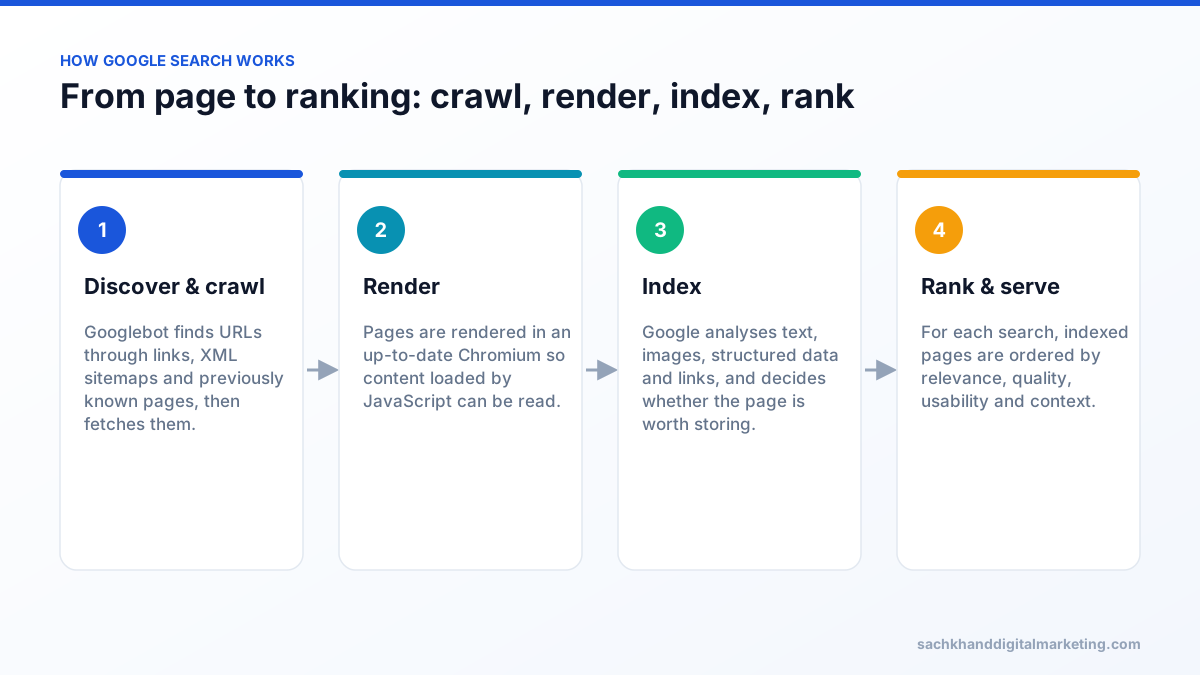
Google describes its process in three stages, and it helps to think about a fourth one in between.
Crawling
Googlebot discovers URLs by following links from pages it already knows and by reading XML sitemaps. It then requests those URLs from your server. If pages are blocked by robots.txt, return errors, are buried many clicks deep or have no internal links pointing to them, they may be crawled rarely or not at all.
Rendering
Google renders pages using an up-to-date version of Chromium, which means it can execute JavaScript. Rendering can be deferred, though, and heavy client-side rendering still causes content and links to be missed or delayed. Server-side rendering or static HTML for important content remains the safest approach.
Indexing
Google analyses the rendered page: text, headings, images, structured data, canonical tags and links. It groups duplicates, picks a canonical version and decides whether the page is useful enough to store. “Crawled, currently not indexed” in Google Search Console usually means Google saw the page and did not think it added enough value.
Ranking
When someone searches, Google’s ranking systems order indexed pages using hundreds of signals, which Google groups broadly into the meaning of the query, relevance of the content, quality and trustworthiness, usability and context such as location and language.
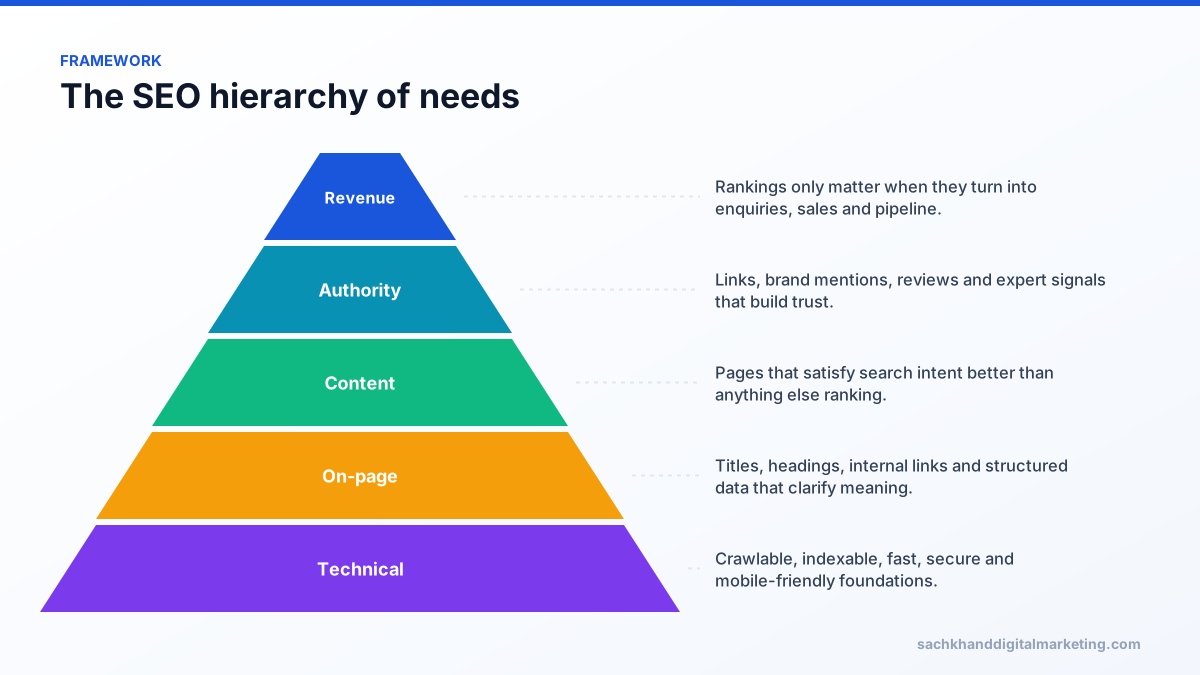
The four pillars of a modern SEO strategy
Pillar 1: Technical foundations
Technical SEO makes sure search engines can find, crawl, render and index the pages that matter, and that users get a fast, secure experience. For most business websites the essentials are:
- Indexing control. Important pages indexable and in the XML sitemap; thin, duplicate and utility pages kept out with noindex, canonicals or robots rules as appropriate.
- Clean site architecture. Key pages within about three clicks of the homepage and linked contextually from related pages. See website structure.
- Performance. Passing Core Web Vitals for LCP, INP and CLS on mobile.
- Mobile parity. Google uses mobile-first indexing, so the mobile version must contain the same content, links and structured data.
- HTTPS and correct status codes. 301 redirects for moved pages, genuine 404 or 410 responses for removed ones, no redirect chains.
- Structured data. Organization, LocalBusiness, Product, Article and BreadcrumbList markup that matches visible content.
Blocking a URL in robots.txt does not remove it from Google. Google cannot see a noindex tag on a page it is not allowed to crawl, so the URL can still appear in results. Use noindex (or an X-Robots-Tag header) and allow crawling until it drops out.
For a structured approach, follow our technical SEO audit playbook.
Pillar 2: Content and search intent
Content is where most rankings are won or lost. The key shift of the last few years is that Google rewards pages that are genuinely helpful and demonstrate real experience, and its core ranking systems now incorporate what used to be the separate “helpful content” system. Content written mainly to capture search traffic, or produced at scale with little added value, is increasingly filtered out.
Start with intent, not keywords
Every search has a job to be done. Before writing, look at what already ranks and classify the intent:
| Intent | Example search | What usually ranks |
|---|---|---|
| Informational | how does solar panel installation work | Guides, explainers, videos |
| Commercial investigation | best CRM for small business | Comparisons, reviews, listicles |
| Transactional | buy standing desk | Product and category pages |
| Local | emergency plumber near me | Map pack, local service pages |
| Navigational | google search console login | The brand’s own page |
Then assign one primary keyword and intent to each URL. Two pages chasing the same query usually split relevance and rank worse than one strong page.
Make content that deserves to rank
- Answer the question early. A concise, direct answer near the top helps readers, featured snippets and AI Overviews.
- Add information gain. Original data, examples from your own work, screenshots, pricing ranges, templates or expert quotes that do not exist on competing pages.
- Show experience and expertise. Named authors with relevant credentials, first-hand detail, clear sourcing and up-to-date facts support E-E-A-T (experience, expertise, authoritativeness and trust).
- Cover the topic completely. Address the follow-up questions a searcher will have, without padding.
- Structure for scanning. Descriptive headings, short paragraphs, lists, tables and visuals.
Build topical authority with clusters
A single article rarely makes a site an authority. A pillar page that covers a broad topic, supported by detailed articles on each subtopic and linked together, shows search engines depth and helps every page in the cluster rank. Our guide to content clusters and topical authority explains how to plan one.
On-page essentials
- A unique, descriptive title tag of roughly 50–60 characters, leading with the main topic.
- One clear H1 and a logical H2/H3 structure.
- A compelling meta description to win the click.
- Short, readable URLs.
- Descriptive image alt text and compressed, correctly sized images.
- Internal links with descriptive anchor text to and from related pages.
Pillar 3: Authority and backlinks
Links from other reputable sites remain one of the strongest signals that your content is trustworthy. What has changed is how aggressively Google ignores manipulative links. Since its link spam updates, links that are bought, exchanged at scale or placed on networks built only to pass ranking value are largely neutralised, so they waste budget even when they do not trigger a penalty.
Links that still work are the ones that would exist even if search engines did not:
- Digital PR: original research, surveys, data studies and expert commentary that journalists want to cite.
- Linkable assets: free tools, calculators, templates and definitive guides.
- Industry relationships: suppliers, partners, associations, sponsorships and events.
- Local citations and press for businesses that serve a specific area.
- Unlinked brand mentions turned into links with a polite request.
Avoid anything that falls under link spam, including private blog networks and paid links without a rel="sponsored" attribute.
Pillar 4: Local and AI visibility
Local SEO
For any business that serves customers in a specific area, the local pack often drives more calls than the first organic result. Google ranks local results on relevance, distance and prominence. The biggest levers are a complete, accurate Google Business Profile, a steady flow of genuine reviews, consistent business details across the web and location pages with real local substance. Our local SEO playbook and Google Business Profile checklist cover this in depth.
AI Overviews and answer engines
Google says there is no special markup required to appear in AI Overviews: a page must be indexed and eligible to show a snippet. The pages that tend to be cited are well structured, answer questions directly, demonstrate expertise and are corroborated by other sources. Beyond Google, AI assistants recommend brands that are consistently described and mentioned across trusted sites. Read more in our guides to generative engine optimisation and answer engine optimisation.
Get a prioritised action plan from our specialists, free.
How to sequence the work
SEO tasks compound, so order matters. A sensible sequence for most businesses:
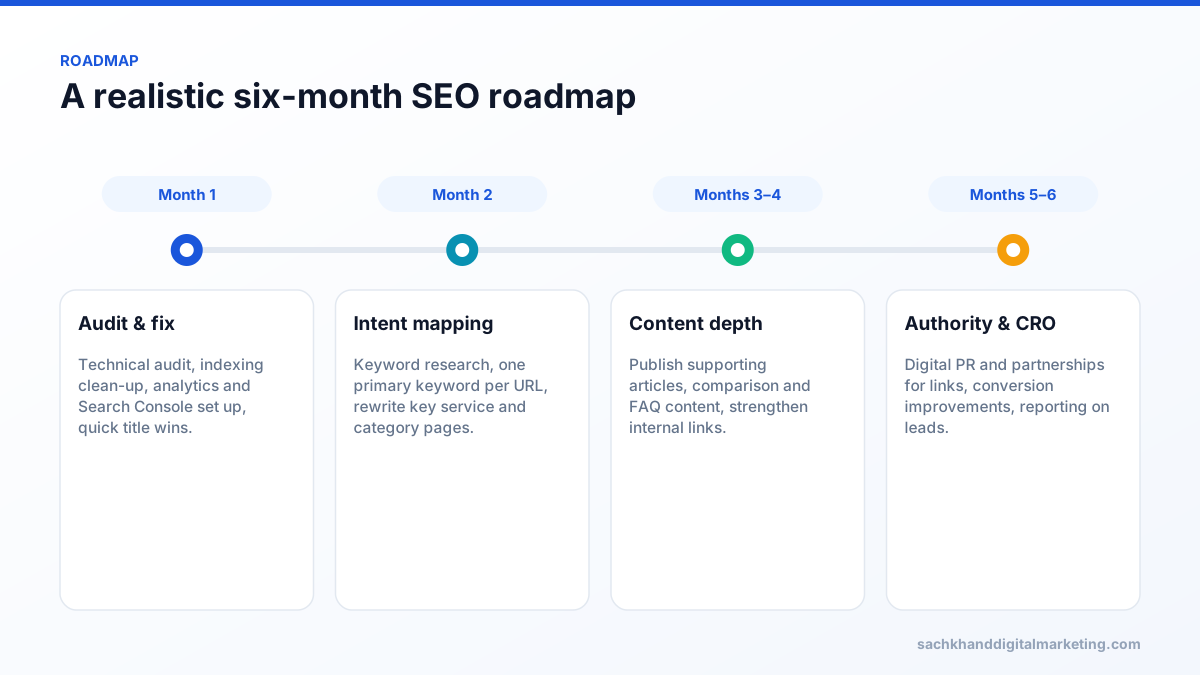
- Measure first. Set up Google Search Console, analytics with conversion tracking and a baseline of rankings, traffic and leads.
- Fix what blocks everything else. Indexing errors, broken redirects, slow templates and duplicate content.
- Improve pages that already have impressions. Pages ranking in positions 5–20 are the fastest wins; better titles, content depth and internal links can move them quickly.
- Fill content gaps. Create pages for high-value queries you have no page for.
- Build authority. Launch link-earning campaigns once there is content worth linking to.
- Improve conversion. More traffic is wasted if pages do not turn visitors into enquiries.
How long does SEO take?
Technical fixes and title improvements can show results within a few weeks once pages are recrawled. New content on an established site often ranks within one to three months. Competitive commercial terms on newer sites typically take six to twelve months of consistent work. The biggest variables are the site’s existing authority, how competitive the space is and how much content and link-building effort goes in.
Filter Search Console’s Performance report to queries where your average position is between 8 and 20 and impressions are high. These “striking distance” keywords are usually the quickest traffic gains available.
How much does SEO cost?
Costs depend on scope and competition. As a rough guide, small local businesses often invest a few hundred to around $1,500 a month, established businesses in competitive markets commonly spend $2,000–$10,000 a month, and large ecommerce or enterprise programmes go well beyond that. Be wary of very cheap packages; they typically rely on automated reports, low-quality links or thin content that does not move rankings.
Measuring SEO properly
Rankings are a diagnostic, not a goal. A useful SEO report connects visibility to business outcomes:
| Metric | Where to find it | Why it matters |
|---|---|---|
| Impressions and clicks | Search Console | Visibility and demand captured |
| Non-branded organic traffic | Search Console, analytics | Growth beyond people who already know you |
| Organic conversions and leads | Analytics, CRM | Whether traffic is the right traffic |
| Organic revenue or pipeline | Ecommerce platform, CRM | Return on investment |
| Indexed pages and Core Web Vitals | Search Console | Technical health |
| AI citations and brand mentions | Manual checks, AI visibility tools | Presence in AI answers |
Common SEO mistakes that waste budget
- Publishing large volumes of generic content that adds nothing new.
- Targeting the same keyword with several pages.
- Buying cheap links or joining link schemes.
- Ignoring technical issues because they are invisible to visitors.
- Changing URLs without 301 redirects during a redesign.
- Reporting on rankings and traffic but never on leads or revenue.
- Stopping after three months, just as compounding results begin.
Doing SEO in-house vs hiring help
Many small businesses can handle Google Business Profile, basic on-page improvements and regular content themselves. Specialist help pays off for technical audits and migrations, competitive link building, large content programmes and when the opportunity cost of your time is high. Whichever route you choose, insist on clear goals, a written plan and reporting tied to business results.
Frequently asked questions
Is SEO still worth it in 2026 with AI search?
Yes. Google still sends the majority of website traffic for most businesses, and AI Overviews and AI assistants rely on well-indexed, trusted web pages. Strong SEO is what gets a brand cited in AI answers as well as ranked in classic results.
What is the most important SEO ranking factor?
There is no single factor. Relevance to the search intent and genuinely helpful, trustworthy content matter most, supported by technical accessibility and authority signals such as links and brand mentions.
How long does SEO take to work?
Technical and on-page fixes can show results within weeks. New content on established sites often ranks within one to three months, while competitive terms on newer sites usually take six to twelve months.
Can I do SEO myself?
Yes, especially for local businesses: optimise your Google Business Profile, fix titles and headings, publish helpful content and set up Search Console. Specialist help is valuable for technical issues, migrations and competitive link building.
What are the main types of SEO?
Technical SEO, on-page SEO, content, off-page SEO (links and mentions), local SEO and, increasingly, optimisation for AI Overviews and answer engines.
Want this handled by specialists who do it every day?
Talk to our team about your goals. We will show you where the biggest wins are, starting with a free, no-obligation audit.