Content converts when it speaks to one clear reader about a problem they care about, shows the specific outcome they will get, removes doubt with proof and makes the next step obvious. Start with customer research rather than guesswork, use proven structures such as PAS and AIDA, lead with benefits backed by features, replace vague claims with specifics, place social proof where decisions happen and write calls to action that describe what the reader gets.

On this page
- Start with research, not writing
- 1. Write for one reader
- 2. Use proven structures: PAS and AIDA
- 3. Benefits over features, with features as proof
- 4. Specificity beats vague claims
- 5. Headlines that earn attention
- 6. Social proof at the point of decision
- 7. Microcopy removes friction
- 8. One clear call to action
- 9. Structure pages for scanning
- 10. Write clearly
- Balancing SEO and conversion
- Testing and improving copy
- Headline formulas you can adapt
- Writing for different page types
- A copy review checklist
- Common copywriting mistakes
- Frequently asked questions
Traffic is only valuable if people act on what they read. Many websites attract visitors with solid SEO and advertising, then lose them with copy that is vague, company-centred or confusing. Conversion copywriting fixes that. It is not about clever wordplay; it is about understanding the reader so well that the page answers their questions and objections in the order they have them. This guide covers the research, formulas and techniques that make content convert. This guide covers the copywriting frameworks that still work in 2026, including the PAS formula (problem, agitate, solve) and AIDA copywriting (attention, interest, desire, action).
Start with research, not writing
The best converting copy often uses the exact words customers use. Before writing, collect them:
- Customer interviews: ask what problem made them look for a solution, what else they considered and what nearly stopped them buying.
- Reviews: read your reviews and competitors’, especially three and four-star reviews that explain trade-offs.
- Sales and support conversations: list recurring questions and objections.
- On-site surveys: ask visitors what they are looking for or what is stopping them.
- Search queries: Search Console and keyword tools show how people describe problems.
1. Write for one reader
Copy that tries to speak to everyone persuades no one. Define a specific reader: their situation, the problem they want solved, what they have tried and what they fear. Write as if you are explaining your offer to that one person. “If you run a two-person HVAC business and spend evenings chasing unpaid invoices” lands harder than “We help businesses of all sizes improve efficiency”.
2. Use proven structures: PAS and AIDA
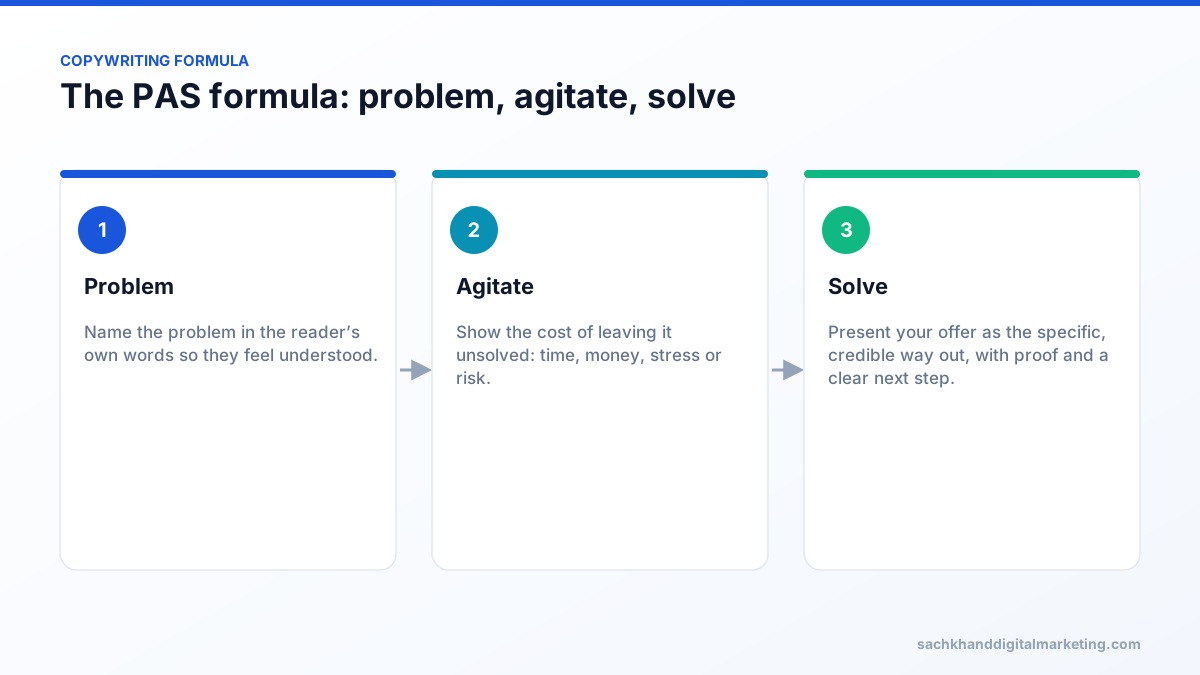
PAS (problem, agitate, solve) is ideal for services and pain-driven purchases. AIDA (attention, interest, desire, action) works well for product pages and ads: grab attention with a relevant headline, build interest with specifics, create desire with benefits and proof, then ask for the action. Both structures keep copy focused on the reader’s journey rather than the company’s history.
3. Benefits over features, with features as proof
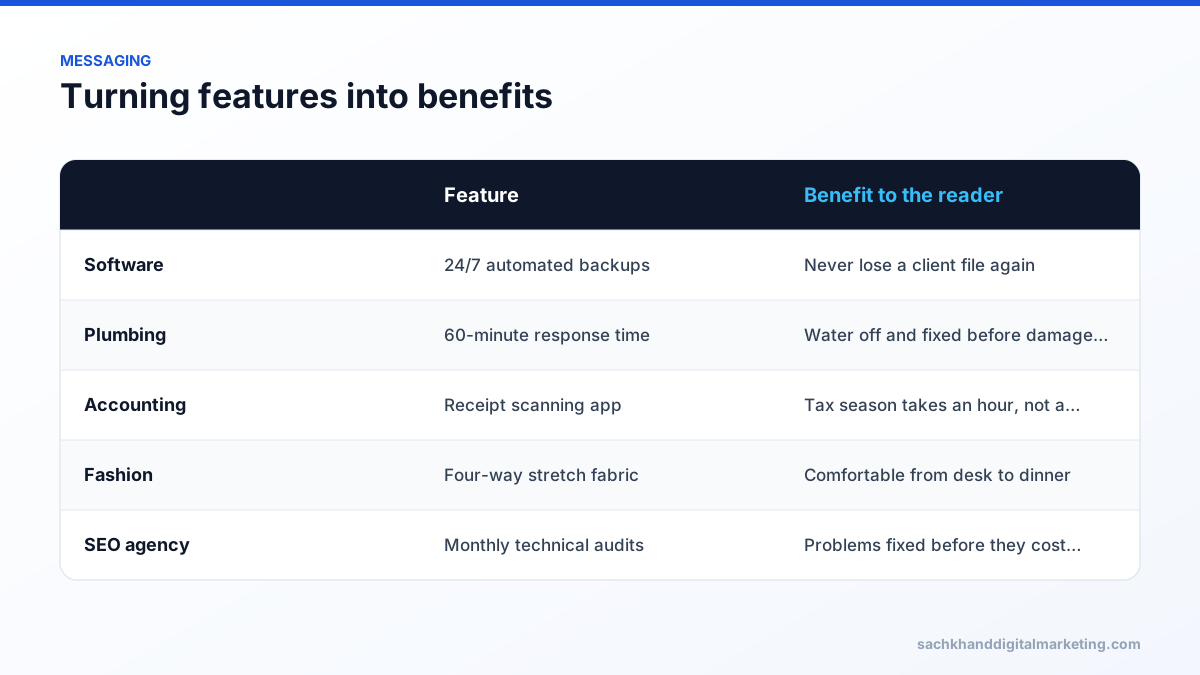
Features describe what something is. Benefits describe what it does for the reader. Lead with the benefit, then support it with the feature so the claim is credible. A quick test: after each feature, ask “so what?” until you reach an outcome the reader cares about.
4. Specificity beats vague claims
| Vague | Specific |
|---|---|
| Fast service | An engineer at your door within 60 minutes, 24/7 |
| Trusted by many customers | 4.9 stars from 380 Google reviews |
| Affordable pricing | Plans from $49 a month, cancel anytime |
| Experienced team | Certified technicians with 12 years average experience |
| Great results | Organic leads up 64% in six months for a dental clinic |
Specific details are more believable, more memorable and more likely to be quoted by search engines and AI answers. Only use numbers you can substantiate.
5. Headlines that earn attention
- Outcome headlines: “Fill your appointment book from Google”.
- Problem headlines: “Tired of paying for clicks that never call?”
- Specific promise: “Book a certified electrician in under 60 minutes”.
- Audience call-out: “SEO for dentists who want more implant patients”.
Match headlines to the intent of the search or ad that brought the visitor, and support them with a subheading that adds proof or detail.
6. Social proof at the point of decision
Proof is most persuasive where hesitation happens: next to pricing, forms and buy buttons. Use reviews that address specific objections (“I was worried about the cost, but…”), results with context, recognisable client logos, certifications, guarantees and case studies. Real names, photos and details make testimonials credible.
7. Microcopy removes friction
Small pieces of text near forms and buttons often have outsized effects:
- “No credit card required” under a free trial button.
- “We reply within one business hour” near a contact form.
- “Free cancellation up to 24 hours before” on booking pages.
- Helpful form hints and clear error messages.
- Privacy reassurance next to email fields.
8. One clear call to action
Every page should have one primary action. Button text should describe what the reader gets, not what they must do: “Get my free quote” outperforms “Submit”, and “See pricing” is clearer than “Learn more”. Repeat the call to action after key sections on long pages, and reduce risk with free consultations, trials or guarantees.
Get a prioritised action plan from our specialists, free.
9. Structure pages for scanning
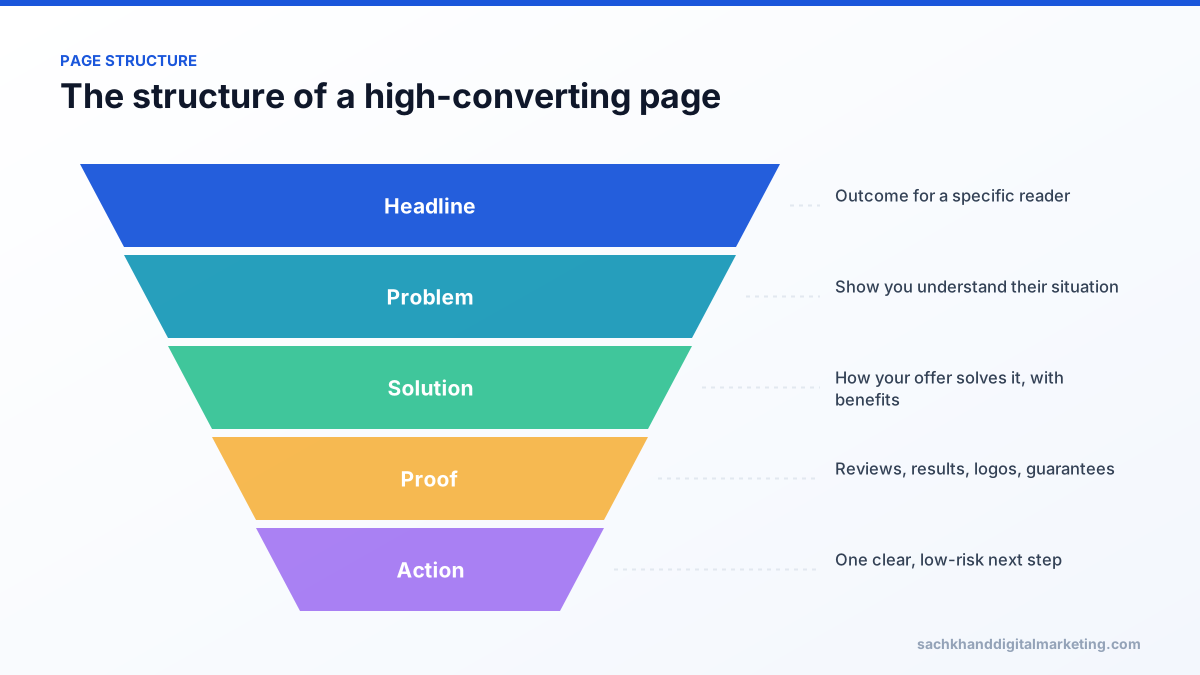
Most visitors scan before they read. Use descriptive subheadings, short paragraphs, bullet points, bold key phrases sparingly and visuals that demonstrate the product or result. Readers should be able to understand the offer from headings alone.
10. Write clearly
- Use short sentences and everyday words.
- Prefer active voice: “We fix leaks the same day” not “Leaks are fixed”.
- Cut jargon, or explain it when your audience needs it.
- Use “you” more than “we”.
- Read copy aloud; stumbles show where to edit.
Balancing SEO and conversion
SEO content and conversion copy are not in conflict. Search engines reward pages that satisfy intent, and satisfied visitors convert. Use the primary keyword naturally in the title, headline and opening, answer related questions, and keep the conversion path visible. Avoid stuffing keywords into headlines at the expense of clarity.
Testing and improving copy
Test headlines, value propositions, calls to action and proof placement with A/B tests where traffic allows, and use the 5-second test to check clarity quickly. Our CRO guide explains how to run tests properly.
Headline formulas you can adapt
| Formula | Example |
|---|---|
| [Outcome] without [pain] | Fill your diary without paying for leads |
| [Service] for [audience] who want [result] | SEO for dentists who want more implant patients |
| How to [result] in [timeframe] | How to cut your tax prep to one afternoon |
| [Number] reasons [audience] choose [brand] | 7 reasons Houston homeowners choose us for AC repair |
| Stop [pain]. Start [gain]. | Stop chasing invoices. Start getting paid on time. |
| The [adjective] way to [result] | The fastest way to launch a Shopify store that sells |
Writing for different page types
Service pages
Lead with the outcome and location or audience, explain the process, show pricing guidance, answer objections in FAQs and place reviews near the enquiry form.
Product pages
Open with the key benefit, use scannable specifications, show the product in use, address sizing, compatibility and delivery questions, and keep the add-to-cart button visible.
Landing pages for ads
Match the ad message exactly, remove navigation, focus on one offer and one form, and repeat proof and the call to action as the page progresses.
Emails
One idea per email, a subject line that promises a specific benefit, a short body and a single call to action.
A copy review checklist
- Can a stranger tell what you offer and for whom in five seconds?
- Does the headline match the intent of the traffic source?
- Is every claim specific and supported by proof?
- Are the top three objections answered?
- Is there one obvious primary call to action?
- Does the button text describe what the reader gets?
- Is the page easy to scan on mobile?
- Have you removed jargon, filler and repeated points?
Common copywriting mistakes
- Talking about “we” and company history before the reader’s problem.
- Using the same generic claims as every competitor.
- Hiding pricing or the next step.
- Writing long paragraphs that mobile readers skip.
- Using testimonials without names, details or context.
Frequently asked questions
What makes marketing copy convert?
Copy converts when it addresses a specific reader’s problem in their own words, shows concrete benefits, backs claims with proof, answers objections and makes the next step clear and low-risk.
What is the PAS copywriting formula?
PAS stands for problem, agitate, solve. You describe the reader’s problem, show the cost of leaving it unsolved, then present your offer as the credible solution.
How do I write a strong call to action?
Describe what the reader gets rather than what they must do, keep it specific, place it where the decision is made and add reassurance such as “free” or “no obligation” when true.
What is the difference between a feature and a benefit?
A feature is what a product or service has or does. A benefit is the outcome the customer gets from it. Lead with benefits and use features as proof.
Can SEO content also convert?
Yes. Pages that fully satisfy search intent, answer objections and keep a clear call to action visible tend to both rank and convert well.
Want copy that consistently outperforms benchmarks?
Talk to our team about your goals. We will show you where the biggest wins are, starting with a free, no-obligation audit.