Conversion rate optimisation (CRO) turns more of your existing traffic into leads and sales, which makes every other channel more profitable. Start with research to find where and why visitors drop off, sharpen the value proposition, remove friction from forms and checkout, add trust at the point of decision, and test changes with properly sized A/B tests. Prioritise ideas by impact, confidence and effort, and measure revenue, not just clicks.
On this page
- What is conversion rate optimisation?
- Why CRO is the cheapest growth lever
- What is a good conversion rate?
- Start with research, not opinions
- The core principles of high-converting pages
- Prioritising what to test
- Test, don’t guess: A/B testing done properly
- CRO and SEO work together
- Common CRO mistakes
- A CRO checklist by page type
- CRO tools stack
- Example test ideas that often move the needle
- Building a CRO programme
- Frequently asked questions
Most businesses try to grow by buying or earning more traffic. Conversion rate optimisation (CRO) grows revenue from the traffic you already have. Doubling a conversion rate has the same effect on leads as doubling traffic, usually at a fraction of the cost, and it makes every future SEO and advertising investment more profitable. This guide covers the research, principles and testing process behind effective CRO. If you want to improve conversion rate, this guide covers conversion rate optimisation from research to landing page optimization and A/B testing.
What is conversion rate optimisation?
A conversion is any valuable action: a purchase, a quote request, a booking, a call or a sign-up. Conversion rate is the percentage of visitors (or sessions) who complete it:
Conversion rate = conversions ÷ visitors × 100
CRO is the systematic process of increasing that percentage by understanding user behaviour, removing barriers and testing improvements.
Why CRO is the cheapest growth lever
- It compounds with every channel. A better landing page improves SEO, paid search and email results at once.
- It lowers acquisition costs. Higher conversion rates reduce cost per lead in ad platforms.
- It reveals customer insight. Tests show what messaging and offers actually persuade.
What is a good conversion rate?
There is no universal benchmark. Rates vary widely by industry, traffic source, device, price point and what counts as a conversion. Ecommerce stores often convert low single-digit percentages of sessions, while a focused lead generation landing page for high-intent search traffic can convert far higher. The most useful benchmark is your own baseline, segmented by source and device, and the trend over time.
Start with research, not opinions
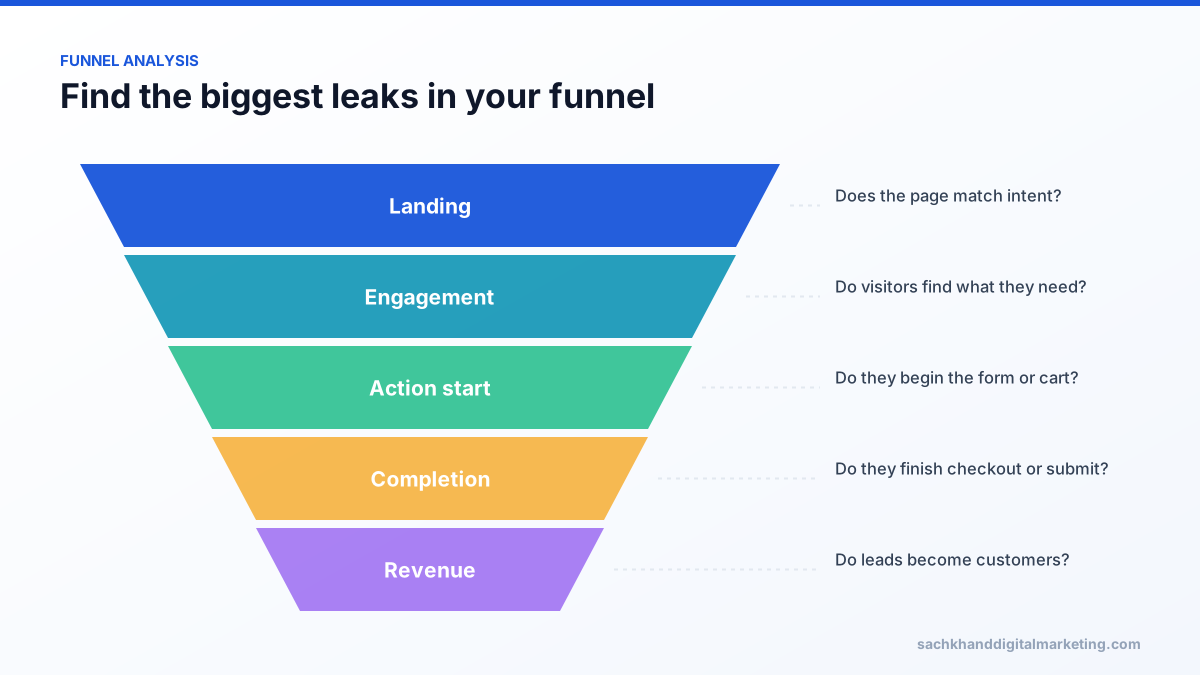
Quantitative research
- Analytics funnels: where do visitors drop off between landing, product or service view, form start and completion?
- Segments: compare mobile vs desktop, new vs returning and traffic sources.
- Landing page performance: which high-traffic pages convert poorly?
- Form analytics: which fields cause abandonment?
Qualitative research
- Heatmaps and scroll maps show what people click and how far they read.
- Session recordings reveal confusion, rage clicks and broken elements.
- On-site surveys ask “What’s stopping you from booking today?”
- Customer interviews uncover the words customers use and their real objections.
- Usability tests, including the 5-second test, measure clarity.
The core principles of high-converting pages
1. A clear value proposition
Visitors should understand immediately what you offer, who it is for and why it is better than alternatives. Lead with the outcome the customer wants, support it with specifics and proof, and match the language of the ad or search that brought them.
2. Remove friction ruthlessly
- Ask only for form fields you genuinely need at this stage.
- Offer guest checkout and common payment methods such as digital wallets.
- Show total costs, including delivery, early.
- Use clear error messages and keep entered data when errors occur.
- Make buttons large and easy to tap on mobile.
- Remove unnecessary navigation from dedicated landing pages.
3. Trust signals at the point of decision
Place reviews, guarantees, security reassurance, delivery and returns information, certifications and client logos next to the call to action and form, where hesitation happens, not only at the bottom of the page.
4. Reduce anxiety and answer objections
Use FAQs, pricing transparency, “what happens next” explanations, response time promises and risk reversal such as free consultations or money-back guarantees to address the reasons people hesitate.
5. Speed and mobile usability
Slow pages and awkward mobile layouts quietly destroy conversion rates. Meet Core Web Vitals thresholds and test key journeys on real phones.
6. Persuasive copy
Benefits over features, specific numbers over vague claims and a single clear call to action consistently outperform generic copy. Our guide to content that converts goes deeper.
Prioritising what to test
Most teams have more ideas than traffic. Score each idea on a simple framework such as ICE (impact, confidence, ease) or PIE (potential, importance, ease) and start with high scores on high-traffic, high-value pages.
| Idea | Impact | Confidence | Ease | Priority |
|---|---|---|---|---|
| Reduce quote form from 9 to 4 fields | High | High | High | Test first |
| Add reviews next to booking button | Medium | High | High | Test soon |
| Redesign entire homepage | Unknown | Low | Low | Research first |
Test, don’t guess: A/B testing done properly
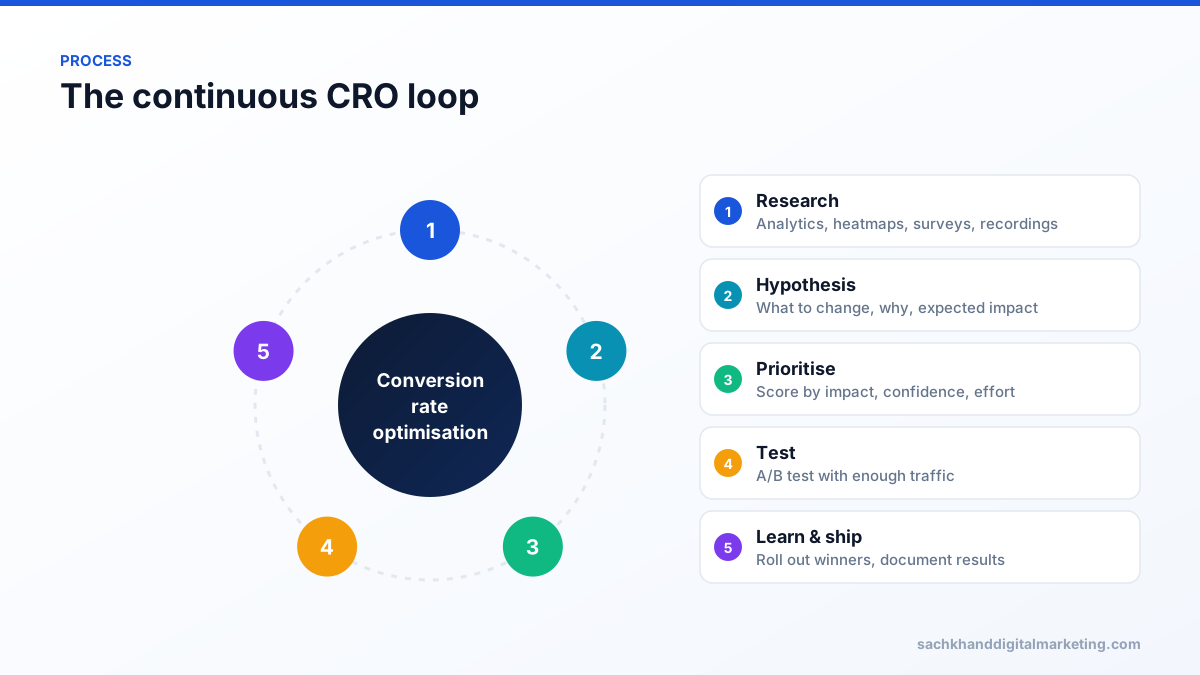
- Write a hypothesis: “Because recordings show users missing delivery costs, showing costs on the product page will increase checkout completion.”
- Calculate sample size first using your baseline conversion rate and the smallest improvement worth detecting.
- Run tests for full weeks, typically at least one to two business cycles, to capture weekday and weekend behaviour.
- Do not stop early the moment a result looks significant; early peeking inflates false positives.
- Test one main change per variant when you need to learn what caused the result.
- Measure the right goal: revenue or qualified leads, not just clicks.
- Check segments such as device and traffic source before rolling out.
If your site cannot reach statistical significance in a reasonable time, focus on larger changes backed by strong qualitative evidence, test on the highest-traffic pages, or use sequential improvements with careful before-and-after measurement.
Get a prioritised action plan from our specialists, free.
CRO and SEO work together
Good CRO should not harm SEO. Keep test variants on the same URL or use canonical tags for split URLs, avoid cloaking by showing search engines the same content as users, use 302 redirects for temporary redirect tests and end tests promptly. Content that satisfies visitors also tends to earn links and engagement that support rankings.
Common CRO mistakes
- Copying competitors’ designs without understanding your own users.
- Testing button colours before fixing the value proposition.
- Declaring winners on too little data.
- Optimising for micro-conversions that do not lead to revenue.
- Ignoring mobile users.
- Not documenting tests, so lessons are lost.
A CRO checklist by page type
| Page | What to check first |
|---|---|
| Homepage | Clear value proposition, navigation to key services or categories, trust signals, primary call to action |
| Service page | Outcome-led headline, process, pricing guidance, reviews near the form, FAQs, short form |
| Product page | Images and video, price and delivery clarity, sizing or compatibility info, reviews, sticky add-to-cart on mobile |
| Checkout | Guest checkout, express payments, no surprise costs, minimal fields, security reassurance |
| Lead form | Only essential fields, clear next steps, response time promise, privacy reassurance |
| Landing page | Message match with ad, no distractions, single offer, proof, fast load |
CRO tools stack
- Analytics: Google Analytics 4 with conversion events, funnels and segments.
- Behaviour analytics: heatmaps and session recordings.
- Surveys and feedback: on-site polls and post-purchase surveys.
- Experimentation: an A/B testing platform suited to your traffic and tech stack.
- Form analytics: field-level drop-off data.
- Performance monitoring: PageSpeed Insights and Core Web Vitals data.
Example test ideas that often move the needle
- Replace a vague headline with a specific outcome and audience.
- Move reviews and guarantees next to the primary call to action.
- Reduce form fields and make phone number optional.
- Show delivery costs and dates on product pages.
- Add a “what happens next” section below lead forms.
- Offer a lower-commitment option, such as a free consultation or sample.
- Add express checkout options on mobile.
Building a CRO programme
- Month 1: set up tracking, run research, build a prioritised backlog of ideas.
- Month 2: fix obvious usability bugs and launch the first high-impact test.
- Months 3–6: run tests continuously on priority pages, document every result.
- Quarterly: review learnings, update customer insight and re-prioritise.
The value of a CRO programme compounds: each validated insight informs landing pages, ads, emails and future product decisions.
Frequently asked questions
What is a good conversion rate?
It depends heavily on industry, traffic source, device and conversion type. Compare against your own segmented baseline and aim for consistent improvement rather than a universal benchmark.
Is CRO better than buying more traffic?
CRO usually delivers cheaper growth because it improves results from traffic you already pay for or earn, and it increases the return on every future marketing channel.
What should I test first in CRO?
Start where research shows the biggest drop-off on high-traffic, high-value pages: value proposition clarity, form length, pricing and delivery transparency, and trust signals near the call to action.
How long should an A/B test run?
Long enough to reach the sample size calculated in advance and cover at least one to two full business cycles, usually a minimum of one to two weeks. Avoid stopping early when results first look significant.
Does A/B testing affect SEO?
Not when done correctly. Show search engines the same content as users, use canonical tags or 302 redirects for split URLs, and end tests once you have a result.
Want a site engineered to convert?
Talk to our team about your goals. We will show you where the biggest wins are, starting with a free, no-obligation audit.