Ecommerce SEO grows revenue by ranking category and product pages for the searches shoppers use at every stage. Build your architecture around how customers search, invest most in category pages, make product pages unique and rich with structured data, control faceted navigation so it does not create thousands of duplicate URLs, handle out-of-stock and seasonal products without losing authority, and measure organic revenue rather than sessions.
On this page
- Why ecommerce SEO is different
- Keyword research for online stores
- Site architecture
- Category pages are your biggest opportunity
- Product pages at scale
- Tame faceted navigation
- Pagination
- Out-of-stock and discontinued products
- Structured data and free product listings
- Technical issues specific to ecommerce
- Content that supports commercial pages
- Competing with marketplaces
- AI answers and product discovery
- Seasonality and forecasting
- Measuring ecommerce SEO
- Frequently asked questions
Online stores face a unique SEO challenge. They have thousands of URLs, constantly changing inventory, filters that create near-infinite page combinations and competitors that include marketplaces with enormous authority. Yet organic search remains one of the most profitable channels for ecommerce because shoppers searching for a specific product type are already close to buying. This playbook covers the strategy and technical detail we use to grow organic revenue for online stores. This ecommerce SEO guide covers category page SEO, product page SEO and faceted navigation SEO, plus product schema and site speed.
Why ecommerce SEO is different
- Scale: templates matter more than individual pages; one fix can improve thousands of URLs.
- Duplication: product variants, filters, sorting and manufacturer descriptions create duplicate content by default.
- Inventory change: products go out of stock, get discontinued and return seasonally.
- Commercial intent: category and product pages must rank and convert.
- Competition: marketplaces, big-box retailers and affiliate publishers compete for the same results.
Keyword research for online stores
Map keywords to page types by intent, rather than creating a page for every keyword.
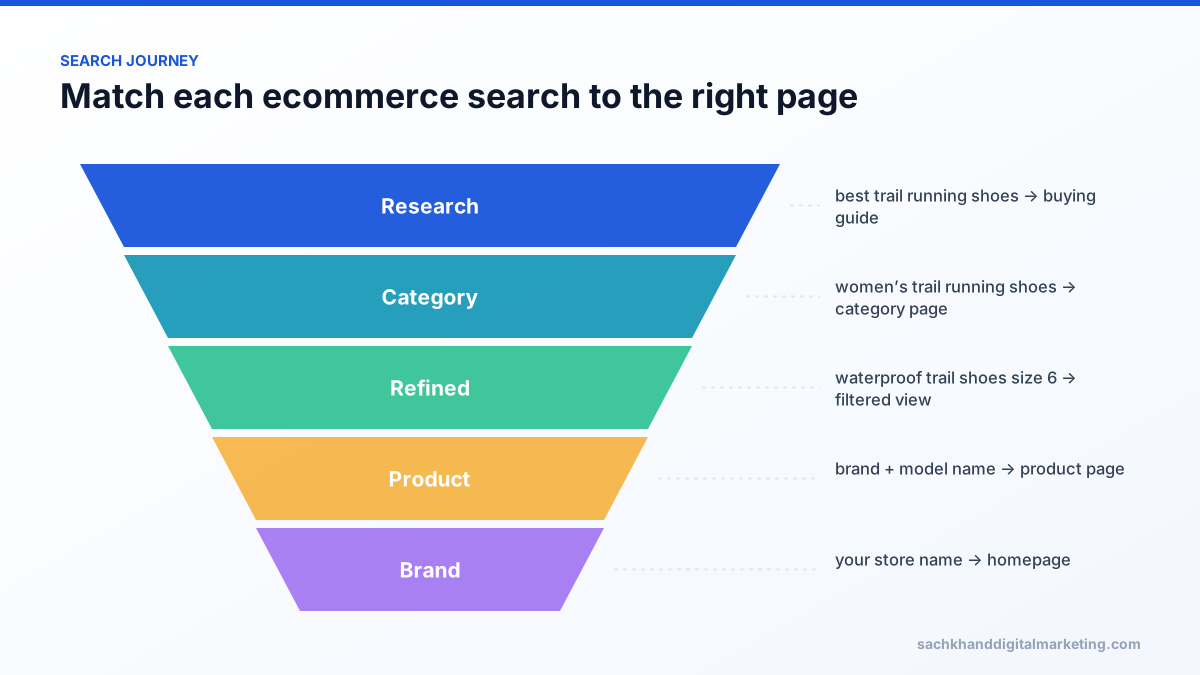
- Category keywords (“women’s running shoes”, “oak dining tables”) have the highest commercial volume and should map to category pages.
- Attribute keywords (“waterproof running shoes”, “extendable oak dining table”) may deserve their own subcategory or optimised filter page if demand is significant.
- Product keywords (brand and model names) map to product pages.
- Research keywords (“best running shoes for flat feet”, “how to choose a mattress”) map to buying guides that link to categories.
Use Search Console, keyword tools, your site search data and Google Shopping or Amazon suggestions to find the language shoppers use.
Site architecture
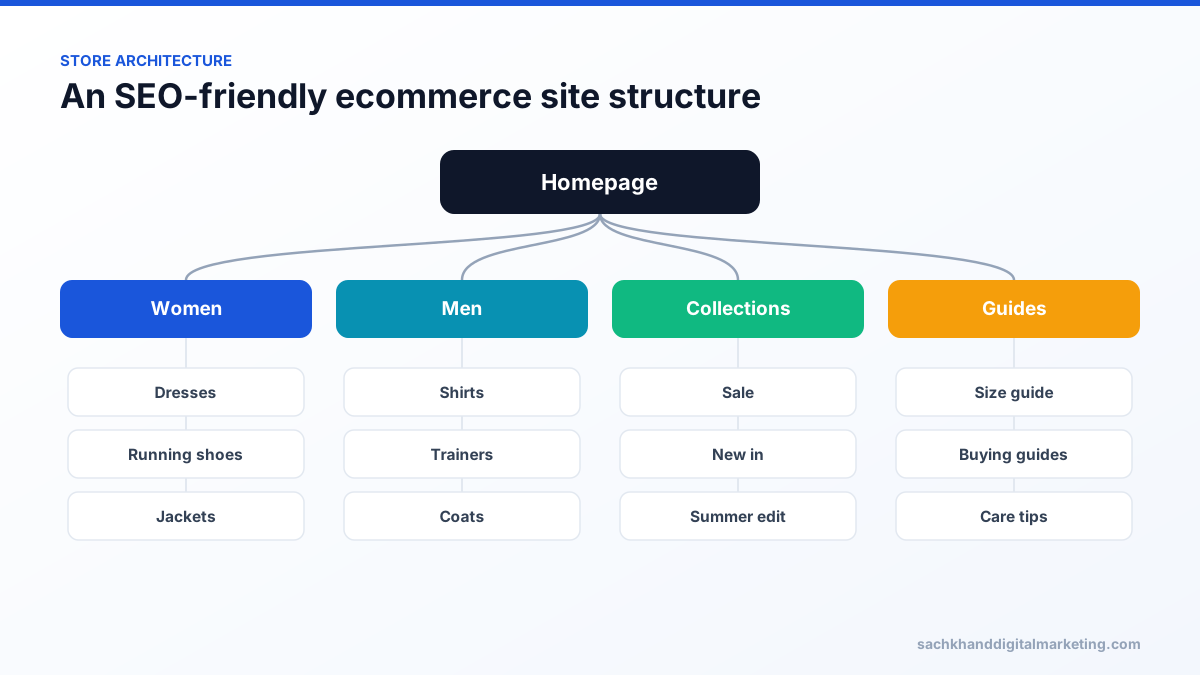
Keep the hierarchy shallow and logical, with every product reachable within a few clicks through categories. Use breadcrumbs with structured data, descriptive category names that match search language, and avoid putting products only in “collections” that are not linked from main navigation.
Category pages are your biggest opportunity
Category pages target the highest-value commercial searches, and marketplaces often compete least effectively there. Yet many stores leave them as bare product grids. To make categories rank:
- Write a unique title tag and H1 that match the main category keyword.
- Add a short introduction above the grid and more detailed buying advice below it: sizing, materials, use cases and FAQs.
- Link to relevant subcategories and popular filters with descriptive anchor text.
- Show enough products to be useful, with sensible default sorting.
- Include breadcrumbs, and ItemList or BreadcrumbList structured data where appropriate.
- Earn internal links from buying guides, blog posts and the homepage for priority categories.
Product pages at scale
Unique, useful content
Manufacturer descriptions appear on hundreds of other sites. Prioritise rewriting descriptions for best-selling and highest-margin products, adding your own details: fit notes, materials, use cases, comparison with similar products, care instructions and photos from customers. For long-tail catalogues, improve templates with structured specifications, sizing guidance and FAQs.
Variants
For products with colours or sizes, decide whether each variant has its own search demand. Usually one canonical product URL with selectable variants works best. If specific colours are searched for, separate URLs with unique content and self-referencing canonicals can make sense.
Reviews and user-generated content
Customer reviews add unique content, answer objections and can qualify for review stars in results through Product and AggregateRating structured data. Encourage photo reviews and questions from buyers.
Tame faceted navigation
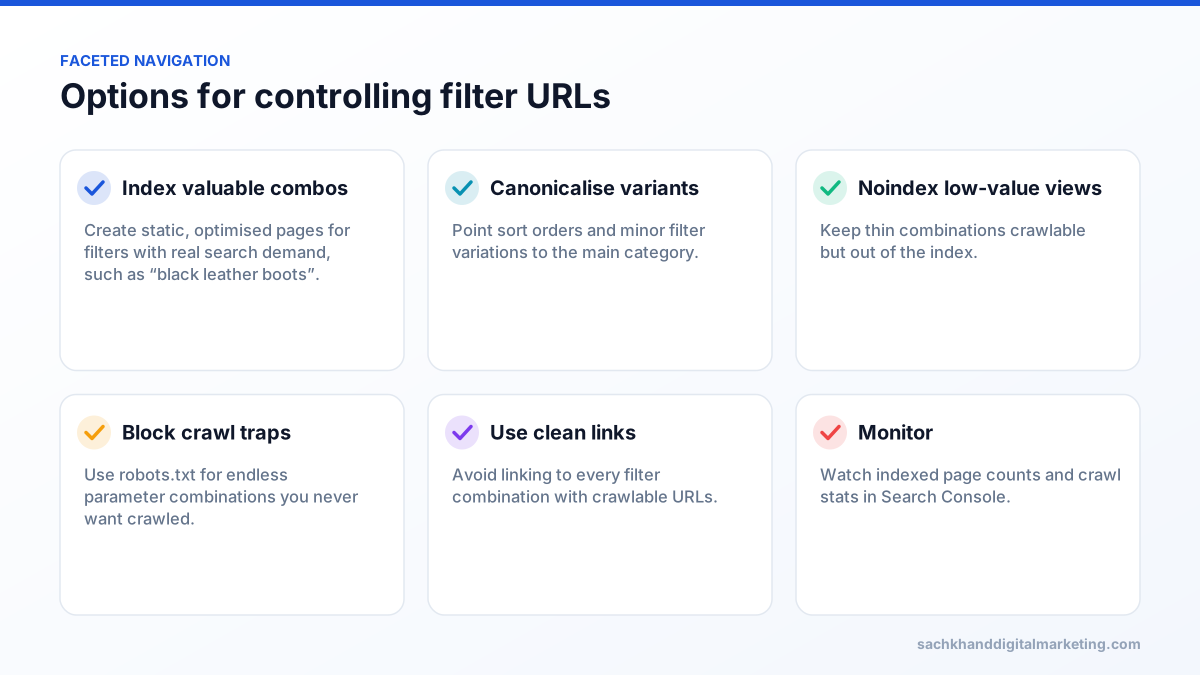
Filters for size, colour, brand, price and material help shoppers but can generate millions of crawlable URL combinations. Left unchecked, they waste crawling, create duplicate content and dilute signals.
| Filter example | Search demand? | Recommended handling |
|---|---|---|
| Category + colour (black boots) | Often yes | Indexable, optimised static URL |
| Category + brand (Nike trainers) | Often yes | Indexable brand-category page |
| Sort by price | No | Canonical to category, avoid crawlable links |
| Multiple filters (size 6 + blue + under $50) | Rarely | Noindex or block from crawling |
| Price sliders and session parameters | No | Block crawling |
Do not combine robots.txt blocking with noindex on the same URLs. If Google cannot crawl a page, it cannot see the noindex tag. Choose one approach per URL pattern.
Pagination
Google no longer uses rel="next" and rel="prev" as indexing signals. Make paginated category pages crawlable with normal links, give each page a self-referencing canonical rather than pointing all pages to page one, and make sure products deep in the catalogue are also reachable through subcategories and filters.
Out-of-stock and discontinued products
| Situation | Recommended approach |
|---|---|
| Temporarily out of stock | Keep the page live and indexable, show availability and a back-in-stock alert, update availability in structured data |
| Permanently discontinued, with a close replacement | 301 redirect to the replacement or new model |
| Discontinued, no replacement but has links or traffic | Keep a page explaining it is discontinued with links to alternatives, or redirect to the closest category |
| Discontinued, no value | Return 404 or 410 |
| Seasonal products | Keep evergreen URLs (for example /christmas-gifts/) live year-round and update them each season |
Get a prioritised action plan from our specialists, free.
Structured data and free product listings
Add Product structured data with Offer (price, currency, availability) and, where genuine, AggregateRating and Review. Keep it in sync with visible content. Connect your store to Google Merchant Center to appear in free product listings across Google Shopping and other Google surfaces, and keep feed data such as GTINs, prices and availability accurate.
Technical issues specific to ecommerce
- Duplicate URLs from products living in multiple category paths; use a single canonical product URL.
- Internal search pages indexed by accident; keep them out of the index.
- JavaScript-rendered product grids that hide links from crawlers.
- Slow templates caused by large images, apps and scripts; see our Core Web Vitals guide.
- Migrations and replatforming without complete redirect maps, one of the most common causes of lost organic revenue.
Content that supports commercial pages
Buying guides, comparisons and how-to articles capture shoppers earlier in the journey and pass internal link authority to categories. Plan them as content clusters around your most valuable categories, and link each article to the relevant category and products.
Competing with marketplaces
- Win on category depth and expertise that marketplace grids do not offer.
- Target specific and long-tail searches where specialist knowledge matters.
- Build brand demand so shoppers search for you by name.
- Earn links through digital PR, product launches and collaborations.
- Offer better photos, sizing help, delivery and returns information.
AI answers and product discovery
AI Overviews and shopping assistants increasingly help shoppers compare products. Clear product specifications, honest comparisons, genuine reviews, consistent pricing and availability data, and brand mentions across trusted publications all make it more likely your products are understood and recommended.
Seasonality and forecasting
Use Google Trends and last year’s Search Console data to plan. Update seasonal categories and guides two to three months before peak demand so they are recrawled and ranking in time, and keep evergreen seasonal URLs rather than creating new ones each year.
Measuring ecommerce SEO
| Metric | Why it matters |
|---|---|
| Non-branded organic revenue | Growth from new customers, not existing brand demand |
| Revenue per organic session by category | Whether traffic is commercially valuable |
| Category and product impressions and clicks | Visibility for commercial searches |
| Indexed product and category counts | Technical health and index bloat |
| Rich result coverage | Product structured data working |
Frequently asked questions
Should I focus on product or category pages for ecommerce SEO?
Usually category pages first. They target higher-volume commercial searches, marketplaces compete weakest there, and improving one category template can lift many products. Product pages matter most for brand and model searches.
How do I fix duplicate product descriptions?
Rewrite descriptions for your best-selling and highest-margin products first, adding your own details, specifications, FAQs and reviews. Improve templates for the long tail, and use canonical tags for true variant duplicates.
What is faceted navigation and why does it hurt SEO?
Faceted navigation is the filter system on category pages. Each filter combination can create a new URL, producing thousands of near-duplicate pages that waste crawling and dilute relevance unless you control which ones are crawled and indexed.
What should I do with out-of-stock products?
Keep temporarily out-of-stock products live with availability information. Redirect permanently discontinued products to a close replacement, or return a 404 or 410 when they have no value.
Does Product schema help ecommerce SEO?
Product structured data with accurate price, availability and review information helps Google understand products and can make listings eligible for rich results such as price and review stars.
Want your store's organic sales grown by specialists?
Talk to our team about your goals. We will show you where the biggest wins are, starting with a free, no-obligation audit.