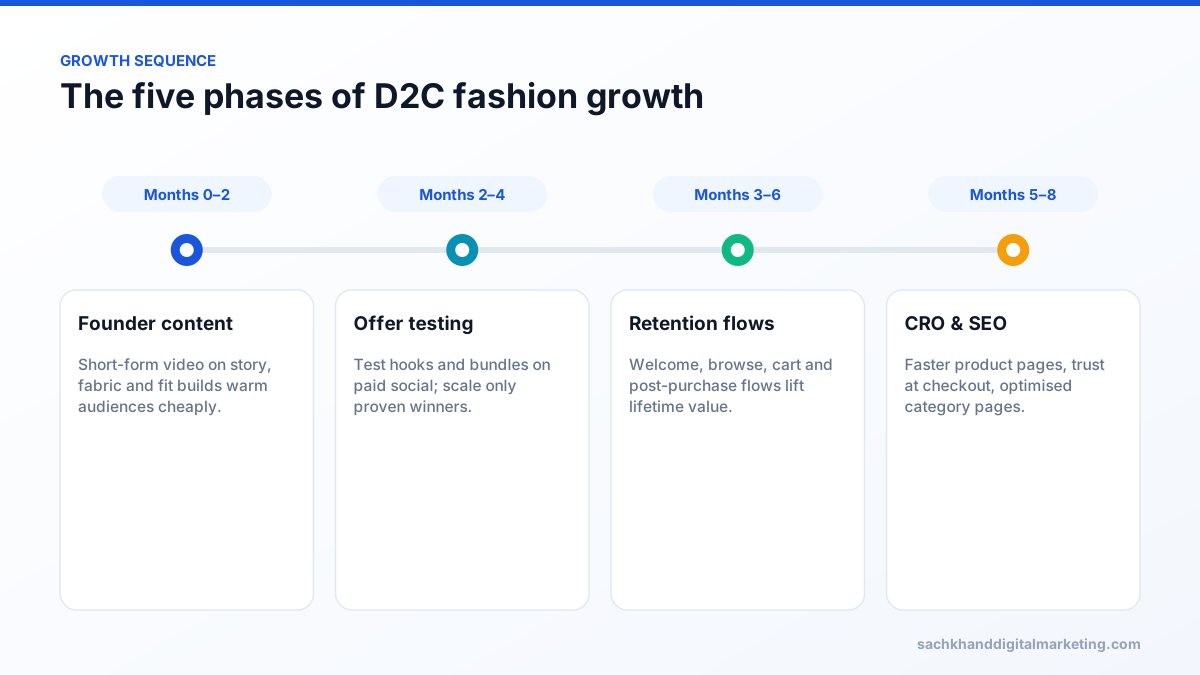
Fashion brands that grow profitably tend to run the same phases in the same order: founder-led content to build cheap awareness, disciplined offer and creative testing on paid social, email and SMS flows to lift lifetime value, conversion rate optimisation before scaling spend, and SEO on category pages for compounding organic demand. Each phase makes the next cheaper. This is a composite playbook drawn from recurring patterns, not a single audited client result.

On this page
- Phase 1: Founder-led content and authenticity
- Phase 2: Disciplined offer and creative testing
- Phase 3: The email and SMS retention machine
- Phase 4: Convert before you scale
- Phase 5: SEO for compounding organic demand
- Why the mix matters
- The metrics that show real progress
- What you can take from this playbook
- Common mistakes that stall fashion brands
- Frequently asked questions
This is a composite assembled from patterns that recur across direct-to-consumer (D2C) fashion engagements, not an audited account of one named client. Figures are representative ranges rather than a single brand’s results. We explain why we publish case material this way on our case studies page.
Launching a D2C fashion brand into a saturated market is hard. Paid social costs rise, returns eat margin, marketplaces compete on price and trends change quickly. Yet brands that get through the first year tend to run the same phases in the same order. The ones that stall usually ran them out of sequence: buying traffic before they had an offer that worked, or scaling spend before the store converted. This playbook explains the sequence, the tactics inside each phase and the metrics that show whether growth is genuinely profitable.
Phase 1: Founder-led content and authenticity
Early-stage fashion brands rarely win with expensive studio campaigns. What works is showing the people and decisions behind the product. Founder-led short-form video on TikTok, Instagram Reels and YouTube Shorts builds awareness and trust at low cost:
- Fabric sourcing, sampling and quality checks.
- Fit tests on different body types, which also reduces returns.
- Honest stories about production problems and why the brand exists.
- Styling videos showing one piece worn several ways.
- Responses to comments and customer questions.
Organic content does not need to go viral. Its job is to build a warm audience and a library of proven hooks that paid campaigns can reuse.
Phase 2: Disciplined offer and creative testing
Once there is attention, paid social generates conversion data quickly. The key is to test offers and angles, not just audiences. A typical first round tests distinct hooks, for example:
- Quality angle: premium fabric and construction at a fair price.
- Values angle: sustainable materials or ethical production.
- Offer angle: bundles such as “buy two, get one free” or a gift with purchase.
A well-constructed bundle often moves average order value more than any targeting change, and higher AOV is what makes a given cost per acquisition affordable. With broad targeting and automated campaign types now standard on Meta, creative is effectively the targeting: different hooks find different buyers. Our Meta Ads guide covers the current algorithm in detail.
Scale a winning angle only when results hold across enough spend and time to be conclusive, not after one promising week. Early winners in fashion often fade as the most eager buyers are reached first.
Phase 3: The email and SMS retention machine
As paid costs rise, profitability depends on customers buying again. Email and SMS flows turn one-time buyers into repeat revenue you do not have to purchase twice. Essential flows for fashion:
| Flow | Trigger | Purpose |
|---|---|---|
| Welcome series | Newsletter or SMS sign-up | Tell the brand story, show best sellers, convert first purchase |
| Browse abandonment | Viewed products, no cart | Remind with the viewed items and social proof |
| Cart and checkout abandonment | Left items in cart | Recover sales, answer sizing and delivery questions |
| Post-purchase | First order placed | Care and fit guidance, review request, matching items |
| Replenishment and new arrivals | Category purchased | Cross-sell related pieces and new drops |
| Win-back | No purchase in a set period | Re-engage lapsed customers |
Segment by what customers bought, sizes, price sensitivity and engagement. Well-built flows commonly account for a significant share of revenue once a store is established, because you already own the audience. See our guide to email marketing deliverability and ROI.
Phase 4: Convert before you scale
As acquisition costs rise, the cheapest growth comes from converting more of the traffic you already have. In fashion, the highest-impact changes usually sit on product and checkout pages:
- Fast-loading product pages with high-quality images and short videos.
- Detailed size guides, fit notes (“runs small”), model measurements and fabric details.
- Customer photos and reviews next to the add-to-cart button.
- Clear delivery costs, times and returns policy before checkout.
- A sticky add-to-cart bar on mobile and express payment options.
- Bundles and “complete the look” recommendations.
Individually these changes are small; together they make every existing ad dollar cheaper. Our CRO guide explains how to test them properly.
Phase 5: SEO for compounding organic demand
Paid social creates demand; search captures it. Once the brand has traction, SEO lowers blended acquisition cost:
- Category pages for searches like “linen summer dresses” or “women’s wide leg trousers” with useful copy, filters and internal links.
- Product structured data with price, availability and reviews, plus a Merchant Center feed for free product listings.
- Style and occasion content such as wedding guest outfits or capsule wardrobe guides linking to categories.
- Seasonal URLs kept evergreen and refreshed each year.
Read the full ecommerce SEO playbook for the technical detail.
Why the mix matters
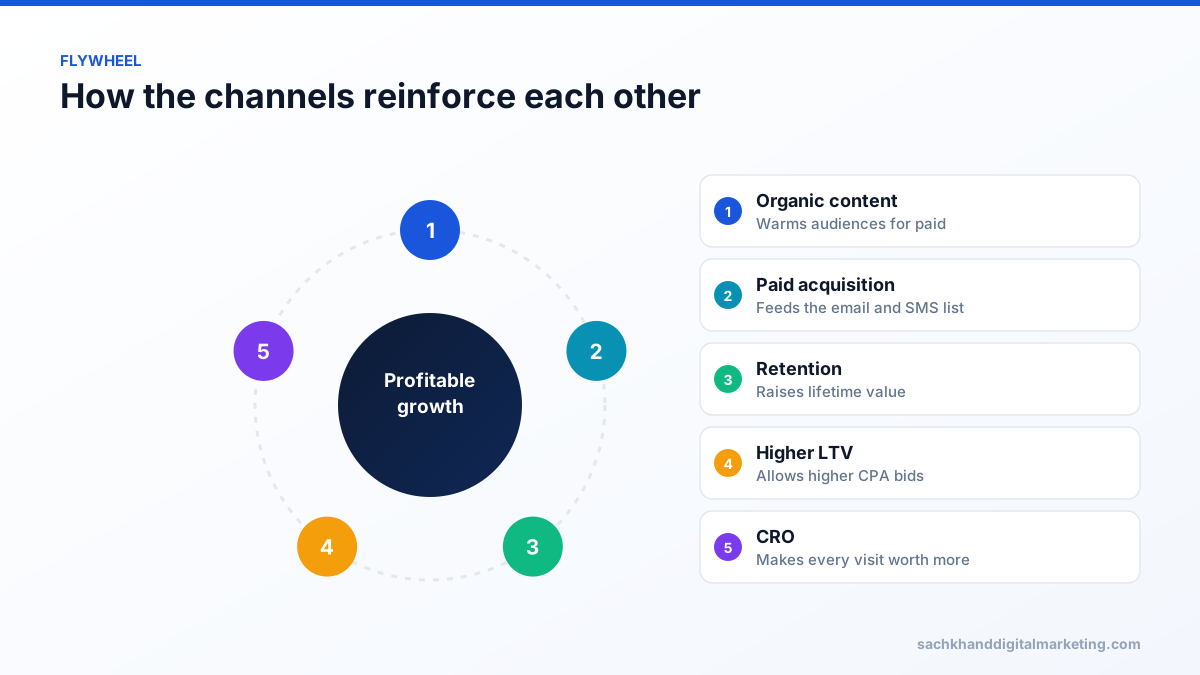
No single channel builds a durable fashion brand. Organic content lowers the cost of paid acquisition because warm audiences convert more cheaply. Paid acquisition feeds the email and SMS list. Retention lifts lifetime value, which justifies bidding more aggressively for new customers. CRO multiplies the value of every visit, and SEO captures the search demand the brand creates. Remove one lever and the economics weaken.
The metrics that show real progress
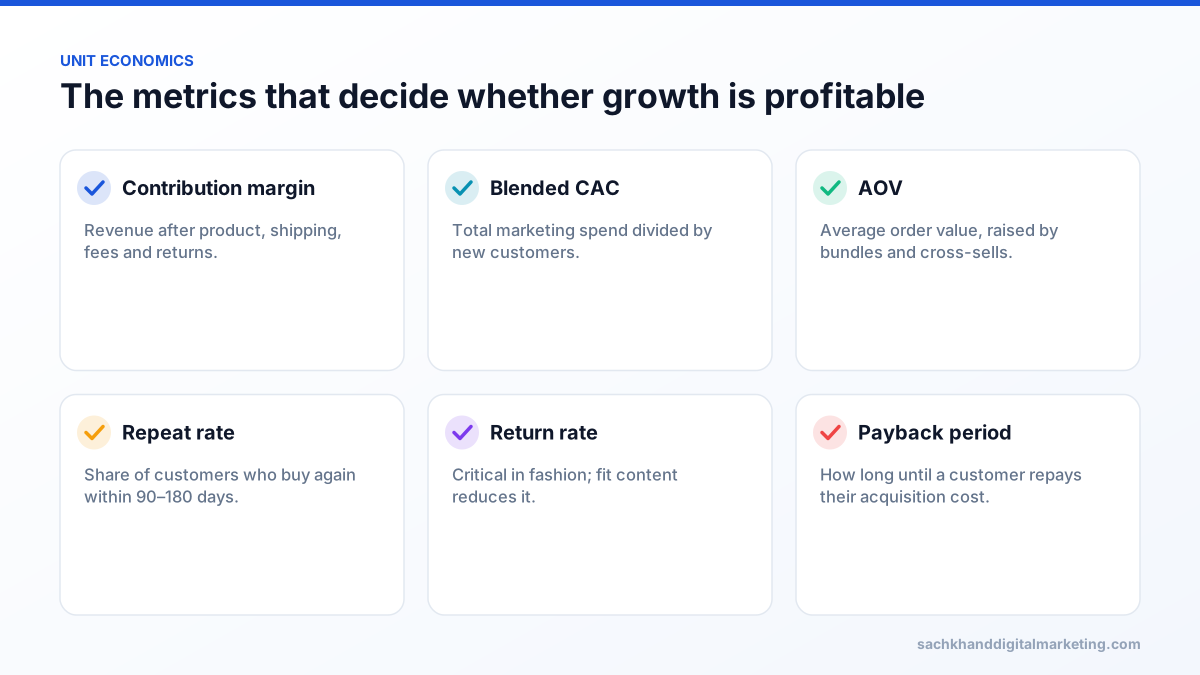
Platform-reported return on ad spend is not enough. Fashion has high return rates, so revenue can look strong while contribution margin is negative. Track blended metrics across all channels, such as marketing efficiency ratio (total revenue divided by total marketing spend), new-customer acquisition cost, repeat purchase rate and payback period. Our digital marketing ROI framework explains how to measure them.
What you can take from this playbook
- Start with story, not studio ads. Founder-led content builds cheap awareness polished creative cannot.
- Test offers, not just audiences. The right bundle or hook often moves AOV and CPA more than targeting.
- Own the relationship. Email and SMS turn one-time buyers into repeat revenue.
- Convert before you scale. CRO makes every future ad dollar cheaper.
- Build search equity. SEO on category pages compounds as the brand grows.
- Measure margin, not just ROAS. Returns and discounts decide real profitability.
Common mistakes that stall fashion brands
- Scaling ad spend before the product page converts.
- Relying on deep discounts that train customers to wait for sales.
- Ignoring fit information, driving high return rates.
- Treating email as occasional newsletters instead of automated flows.
- Launching new seasonal URLs every year and losing search equity.
- Judging success on platform ROAS alone.
Frequently asked questions
How do you scale a D2C fashion brand from zero?
Layer the funnel in order: founder-led organic content for cheap awareness, offer and creative testing on paid social, email and SMS retention flows to lift lifetime value, conversion rate optimisation before scaling spend, then SEO for compounding organic demand.
Which marketing channels work best for fashion ecommerce?
Short-form video for discovery, Meta and Google for scalable acquisition, email and SMS for retention and SEO for category and style searches. The channels work best together because each makes the others cheaper.
How much revenue can email drive for a fashion brand?
Well-built automated flows such as welcome, browse and cart abandonment, post-purchase and win-back commonly drive a significant share of revenue for established stores, at a fraction of the cost of paid acquisition.
How can fashion brands reduce return rates?
Provide detailed size guides, fit notes, model measurements, fabric information, customer photos and reviews that mention fit, and use post-purchase emails with care and styling guidance.
Is this a real client case study?
No. It is a composite playbook built from patterns that recur across D2C fashion engagements, with representative ranges rather than one brand’s audited results.
Want results like these for your brand?
Talk to our team about your goals. We will show you where the biggest wins are, starting with a free, no-obligation audit.