Email is still one of the highest-return marketing channels, but only if your messages reach the inbox. Authenticate your domain with SPF, DKIM and DMARC, meet mailbox provider rules such as one-click unsubscribe and low spam complaint rates, grow and clean your list responsibly, and let automated flows do most of the work. Segment by behaviour, and measure revenue, conversions and list health rather than open rates, which privacy features inflate.
On this page
- Deliverability is now strategic
- Automation does the heavy lifting
- Personalisation beyond first name
- Campaigns that still work
- Writing emails that get clicked
- Measure revenue, not opens
- Growing your list responsibly
- A welcome series example
- Segmentation ideas that lift results
- Deliverability troubleshooting
- Email and SEO work together
- Frequently asked questions
Email marketing has quietly become more demanding. Mailbox providers now enforce authentication and complaint rules, privacy features distort open rates, and inboxes are more crowded than ever. At the same time, email remains one of the few channels you fully own, with no algorithm deciding whether your audience sees your message. Businesses that treat deliverability as strategy and automation as the engine continue to earn strong returns. This guide explains how. This email marketing 2026 guide covers email deliverability, the Gmail and Yahoo sender requirements, SPF, DKIM and DMARC authentication, and the email automation flows that drive revenue.
Deliverability is now strategic
If emails land in spam, nothing else matters. Since February 2024, Google and Yahoo have required bulk senders (roughly those sending 5,000 or more messages a day to their users) to meet stricter standards, and Microsoft introduced similar requirements for high-volume senders to Outlook addresses in 2025. Good practice now applies to every sender.
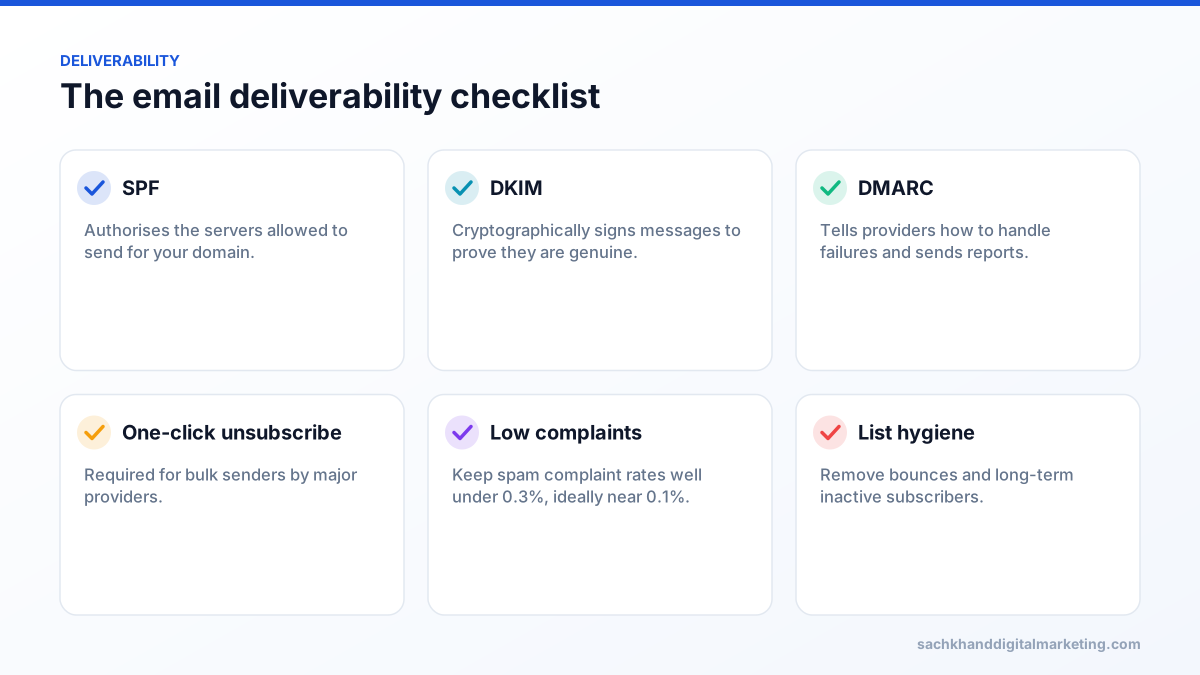
Authenticate your domain
- SPF lists the servers allowed to send email for your domain.
- DKIM adds a digital signature that proves the message was not altered.
- DMARC tells receiving servers what to do when SPF or DKIM fail and sends you reports. Start with a monitoring policy (
p=none) and move toward quarantine or reject once all legitimate sources pass. - Send from your own domain, aligned with your authentication, rather than a shared platform domain.
Make unsubscribing easy
Include a visible unsubscribe link and support one-click unsubscribe headers for marketing email. Process unsubscribes promptly. People who cannot leave easily mark messages as spam instead, which damages deliverability far more.
Keep complaints low
Google advises keeping spam rates reported in Postmaster Tools below 0.3%, and ideally below 0.1%. Send only to people who opted in, set expectations at sign-up about content and frequency, and avoid sudden spikes in volume.
Protect list health
- Use confirmed opt-in for higher-risk sign-up sources.
- Never buy or rent email lists.
- Remove hard bounces immediately.
- Run a re-engagement flow for long-term inactive subscribers, then suppress those who do not respond.
- Monitor Google Postmaster Tools and your platform’s deliverability reports.
Automation does the heavy lifting
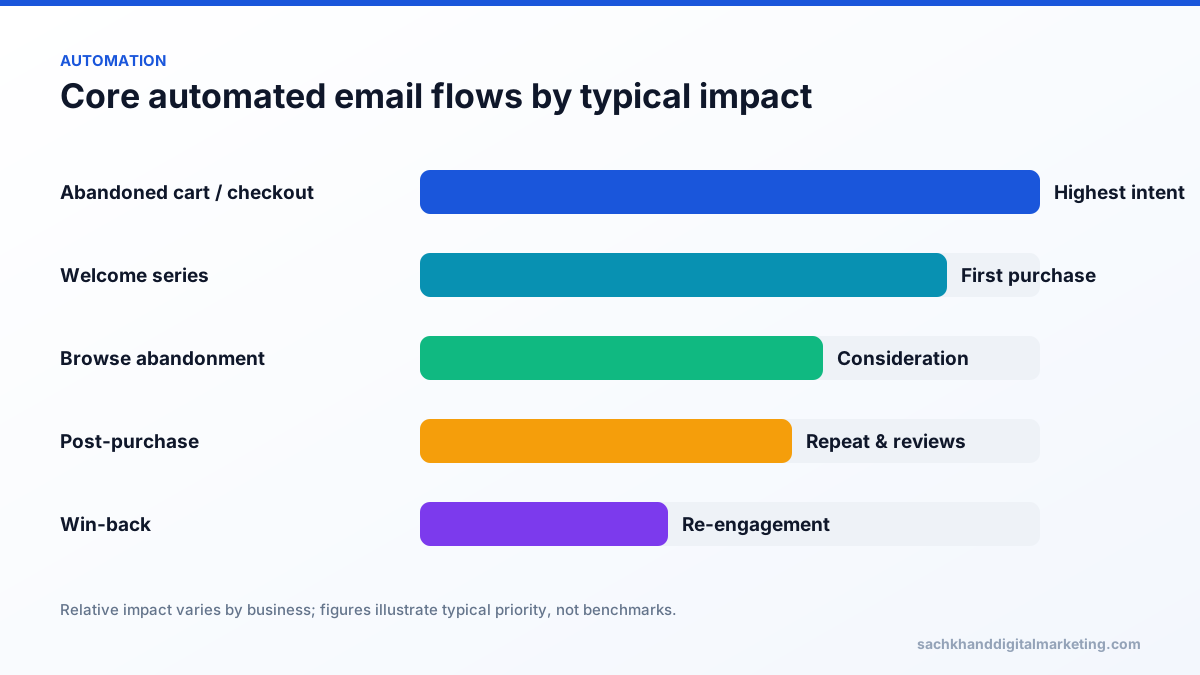
Automated flows are triggered by behaviour, so they reach people at the moment they are most likely to act. Once built, they run continuously.
| Flow | Trigger | Goal | Suggested timing |
|---|---|---|---|
| Welcome series | New subscriber | Introduce the brand, deliver the promised offer, drive first purchase | Immediately, then over 1–2 weeks |
| Abandoned cart or checkout | Items left in cart | Recover the sale and answer objections | Within hours, then 1–2 follow-ups |
| Browse abandonment | Viewed products without adding to cart | Remind and recommend | Within a day |
| Post-purchase | Order placed | Onboarding, reviews, cross-sell | After delivery |
| Lead nurture (B2B and services) | Enquiry or download | Build trust and book a call | Over several weeks |
| Win-back | No purchase or engagement for a set period | Re-engage or clean list | Based on typical purchase cycle |
Personalisation beyond first name
Real personalisation uses behaviour and preferences:
- Products or services viewed and purchased.
- Location, for local offers and events.
- Customer lifecycle stage: new, active, lapsed or VIP.
- Stated preferences collected through preference centres or quizzes.
- Engagement level, sending less frequently to less engaged subscribers.
Campaigns that still work
Alongside flows, regular campaigns keep the relationship alive: product launches, educational content, seasonal promotions, customer stories and helpful guides. Plan a calendar, segment campaigns rather than sending everything to everyone, and keep a consistent sending rhythm.
Writing emails that get clicked
- Subject lines that are specific and honest; avoid misleading hooks that drive complaints.
- Preheader text that adds to the subject line.
- One primary call to action per email.
- Mobile-first design with readable text and large buttons.
- Plain-text style for relationship and B2B emails, which often feel more personal.
Measure revenue, not opens
Apple Mail Privacy Protection, introduced in 2021, preloads email content, which records opens whether or not people read the message. Open rates are therefore unreliable as a performance measure. Focus instead on:
| Metric | Why it matters |
|---|---|
| Revenue or conversions per recipient | True commercial value of each send or flow |
| Click-through rate | Genuine engagement with content |
| Unsubscribe and spam complaint rates | Relevance and deliverability risk |
| Bounce rate | List quality |
| List growth and active subscriber share | Long-term channel health |
| Flow revenue share | How well automation is working |
Get a prioritised action plan from our specialists, free.
Growing your list responsibly
- Offer something genuinely useful: guides, discounts, early access or tools.
- Use well-timed pop-ups or embedded forms on high-intent pages.
- Collect emails at checkout and after purchases with clear consent.
- Promote sign-ups through social, events and in-store.
- Keep consent records and follow applicable privacy laws such as GDPR and CAN-SPAM.
A welcome series example
| Timing | Content | |
|---|---|---|
| 1. Welcome and offer | Immediately | Deliver the promised discount or resource, set expectations for future emails |
| 2. Brand story | Day 2 | Why the business exists, what makes it different, social proof |
| 3. Best sellers or core services | Day 4 | Most popular products or services with reviews |
| 4. Objection handling | Day 6 | FAQs, guarantees, delivery or pricing clarity |
| 5. Reminder | Day 9 | Offer expiry reminder or invitation to book |
Segmentation ideas that lift results
- Engagement: recent clickers and purchasers get more frequent sends; inactive subscribers get less.
- Purchase history: category bought, number of orders and time since last purchase.
- Value: VIP customers get early access and exclusive offers.
- Lifecycle: prospects, first-time customers, repeat customers, lapsed customers.
- Location: local events, weather-related offers, delivery cut-offs.
- Interests: preferences chosen at sign-up or in a preference centre.
Deliverability troubleshooting
| Symptom | Likely cause | What to do |
|---|---|---|
| Sudden drop in clicks across all campaigns | Spam folder placement | Check Postmaster Tools, authentication and recent complaint spikes |
| High bounce rate | Old or poorly collected list | Remove bounces, validate new sign-ups, stop sending to stale segments |
| Rising spam complaints | Unexpected content or frequency | Reduce frequency, improve segmentation, make unsubscribing obvious |
| Emails landing in Promotions tab | Normal for marketing email | Focus on engagement; avoid tricks to bypass tabs |
| DMARC failures in reports | Unauthenticated sending services | Add each legitimate service to SPF and DKIM before tightening policy |
Email and SEO work together
Email can amplify SEO content by sending new guides to subscribers, generating early engagement, shares and links. Search can grow your list by placing relevant sign-up offers on high-traffic articles. Treat both as parts of the same owned-audience strategy.
Frequently asked questions
Is email marketing still worth it in 2026?
Yes. Email is a channel you own, and automated flows in particular continue to deliver strong returns when deliverability, segmentation and measurement are handled properly.
Why do my emails go to spam?
Common causes are missing SPF, DKIM or DMARC authentication, high spam complaint rates, sending to old or purchased lists, sudden volume spikes, difficult unsubscribing and misleading subject lines.
What are the Gmail and Yahoo sender requirements?
Bulk senders must authenticate with SPF and DKIM, publish a DMARC policy, support easy one-click unsubscribe and keep spam complaint rates low, below 0.3% and ideally around 0.1%.
What email metrics matter now?
Revenue or conversions per recipient, click-through rate, unsubscribe and complaint rates, bounce rate and list health. Open rates are unreliable because of privacy features that preload emails.
Which email automation should I build first?
Start with a welcome series and abandoned cart or enquiry follow-up flows, then add browse abandonment, post-purchase and win-back flows.
Want your email channel built into a revenue engine?
Talk to our team about your goals. We will show you where the biggest wins are, starting with a free, no-obligation audit.