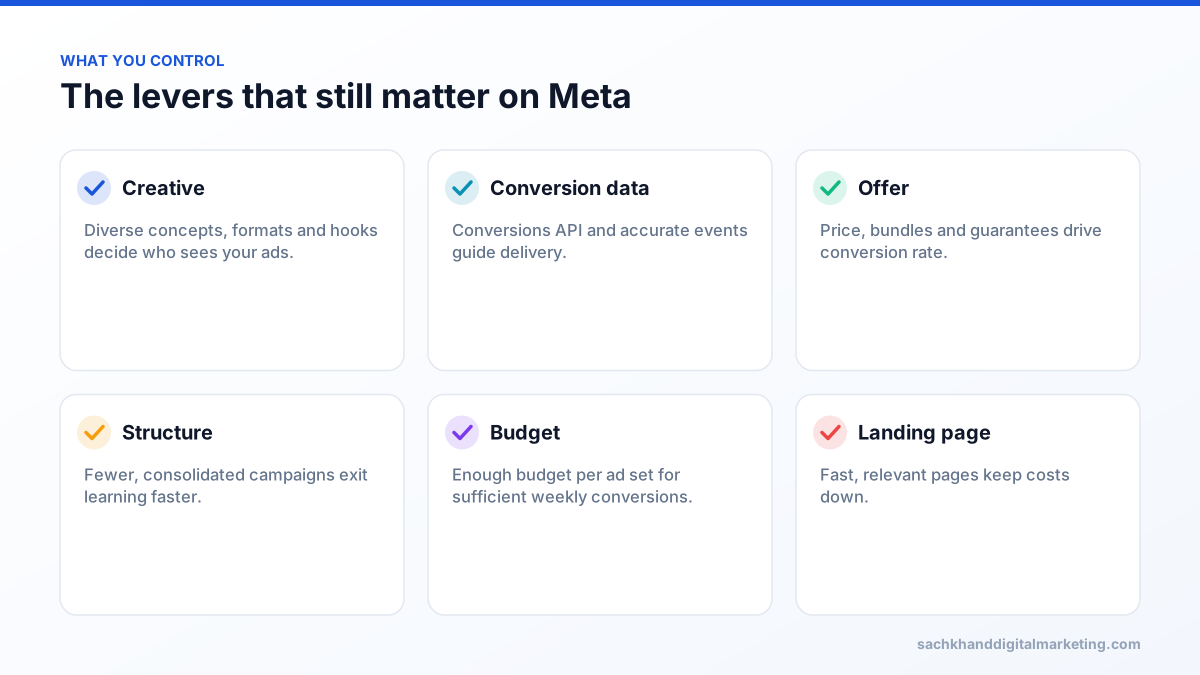
Meta’s ad delivery is now largely automated. Broad audiences and Advantage+ settings let the algorithm find buyers, so your main levers are creative, conversion data and budget structure. Feed the system accurate signals with the Conversions API, produce a steady stream of genuinely different creative concepts, consolidate campaigns so each exits the learning phase, and judge results with blended business metrics rather than platform ROAS alone.

On this page
- How Meta ad delivery works
- 1. Broad targeting has replaced interest stacking
- 2. Creative is the targeting
- 3. Advantage+ campaigns
- 4. The Conversions API is non-negotiable
- 5. Build a real creative testing system
- 6. Respect the learning phase
- 7. Creative fatigue arrives faster
- 8. Measure beyond the dashboard
- Common Meta Ads mistakes in 2026
- Recommended account structure for most advertisers
- Creative formats and when to use them
- Diagnosing performance drops
- Lead generation on Meta
- Frequently asked questions
Advertising on Facebook and Instagram looks very different from a few years ago. Detailed interest targeting, manual placements and dozens of small ad sets have given way to broad audiences, automated campaigns and machine learning that decides who sees each ad. Advertisers who fight the algorithm with old tactics tend to pay more. Those who understand what it needs, and supply it, can still acquire customers profitably. Here is how Meta’s system works in 2026 and what to do about it. This Meta Ads 2026 guide explains how the Facebook Ads algorithm now works across Facebook and Instagram Ads, Advantage Plus campaigns and the Meta Conversions API.
How Meta ad delivery works
Each time a user could see an ad, Meta runs an auction. The winning ad is chosen by total value, which combines your bid, the estimated action rate (how likely this person is to take your optimisation event) and ad quality. Machine learning models predict action rates using signals about users, ads and past conversions. Meta has also rebuilt its ad retrieval systems to evaluate far more ads for each person, which makes creative variety an even stronger delivery signal.
1. Broad targeting has replaced interest stacking
Meta has removed many detailed targeting options over time, and its Advantage+ audience settings treat your inputs as suggestions rather than hard limits. In most accounts, broad audiences with minimal restrictions now perform as well as or better than narrow interest targeting, because the algorithm can find buyers you would never have defined. Use audience controls mainly for real constraints such as location, age limits or excluding existing customers when appropriate.
2. Creative is the targeting
If the algorithm decides who sees your ads, your creative decides who responds. A video about durability attracts different buyers than one about style or price. That is why creative diversity is the most important lever:
- Different messages: problem-led, benefit-led, social proof, offer, founder story, comparison.
- Different formats: short video, static images, carousels, user-generated content and demos.
- Different creators and faces, reaching different audiences.
- Strong hooks in the first seconds of video.
- Native-looking content that fits Reels and Stories rather than polished TV-style ads.
3. Advantage+ campaigns
Advantage+ campaigns automate targeting, placements, budget allocation and creative optimisation. Meta has been consolidating its campaign setup so that Advantage+ features are applied by default for sales, app and lead objectives. They tend to work best when you have reliable conversion tracking, enough conversion volume and a good supply of creative. Our Advantage+ vs manual campaigns guide explains when to keep manual control.
4. The Conversions API is non-negotiable
Since Apple’s App Tracking Transparency and browser privacy changes, the Meta pixel alone misses a significant share of conversions. The Conversions API sends events from your server, improving data reliability and helping the algorithm optimise. Best practice:
- Run the pixel and Conversions API together with event deduplication.
- Send high-quality customer information parameters, such as hashed email and phone, with consent.
- Monitor Event Match Quality in Events Manager.
- Optimise for the deepest event with enough volume, typically purchases or qualified leads.
- For lead generation, send CRM stages back to Meta so it learns which leads become customers.
5. Build a real creative testing system
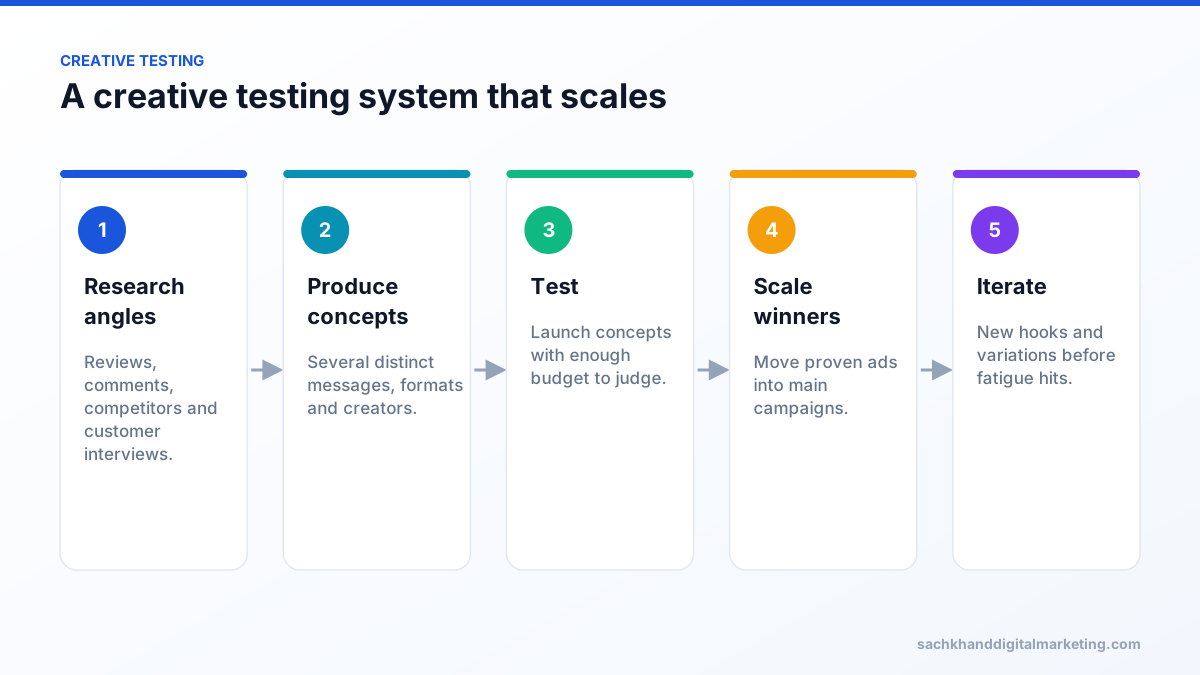
Many accounts test creative by adding random ads and hoping. A structured system produces winners predictably. Keep a backlog of angles drawn from customer research, launch several distinct concepts at a time, give each enough spend to judge, promote winners into scaling campaigns and track which angles work so future concepts build on evidence.
6. Respect the learning phase
Meta’s delivery system needs data to stabilise. Meta says ad sets typically need around 50 optimisation events within a week after a significant edit to exit the learning phase. Implications:
- Consolidate campaigns and ad sets so each gets enough conversions.
- Avoid frequent significant edits to budget, bids, targeting or creative in the same ad set.
- Increase budgets gradually, commonly 20% or less at a time, rather than doubling overnight.
- If you cannot reach enough purchase events, optimise for a higher-funnel event temporarily.
Get a prioritised action plan from our specialists, free.
7. Creative fatigue arrives faster
As the same people see an ad repeatedly, performance declines. Watch rising frequency, falling click-through rates and increasing cost per result. Refresh with new concepts rather than minor edits, and keep a steady pipeline of new creative so you are never forced to scale fatigued ads.
8. Measure beyond the dashboard
Meta’s reported ROAS can over- or under-state real impact. Compare with blended metrics such as marketing efficiency ratio and new-customer acquisition cost, use conversion lift studies where budgets allow, and read our marketing ROI framework.
Common Meta Ads mistakes in 2026
- Splitting budgets across many small ad sets that never exit learning.
- Relying on narrow interest targeting.
- Testing tiny creative variations instead of new concepts.
- Running the pixel without the Conversions API.
- Making daily edits that reset learning.
- Sending traffic to slow or generic landing pages.
Recommended account structure for most advertisers
| Campaign | Purpose | Share of budget (typical) |
|---|---|---|
| Scaling campaign (Advantage+ sales or leads) | Proven creative and offers at scale | Majority |
| Creative testing campaign | New concepts with controlled budget | 10–25% |
| Retargeting or retention (optional) | Specific offers to engaged users or customers | Small, only if incremental |
Creative formats and when to use them
- User-generated style video: authentic reviews and demos, strong for consideration.
- Founder or expert video: builds trust for considered purchases and services.
- Static images with bold claims: quick to produce, good for testing messages.
- Carousels: multiple products, steps or benefits.
- Before and after: visual transformations, within Meta’s policies.
- Offer-led creative: bundles, limited-time promotions and guarantees.
Diagnosing performance drops
| Signal | Likely cause | Action |
|---|---|---|
| Rising frequency, falling CTR | Creative fatigue | Launch new concepts |
| Good CTR, low conversion rate | Landing page or offer problem | Check page speed, message match and pricing |
| Sudden drop in reported conversions | Tracking issue | Check Events Manager, Conversions API and deduplication |
| Rising CPM across the account | Seasonal competition | Review targets and budget, focus on best creative |
| Unstable daily results | Learning phase or frequent edits | Consolidate, reduce edits, scale gradually |
Lead generation on Meta
For service businesses, instant forms generate cheap leads but often lower quality. Improve quality with higher-intent form settings, qualifying questions, clear pricing or expectations in the ad, and by sending qualified lead and sale events from your CRM back to Meta through the Conversions API so the algorithm optimises for leads that become customers.
Frequently asked questions
What changed in the Meta Ads algorithm?
Delivery is far more automated. Broad audiences and Advantage+ features let machine learning choose who sees ads, many detailed targeting options were removed, and creative diversity and server-side conversion data now have the biggest influence on results.
Should I still use detailed interest targeting on Meta?
Usually not as your main approach. Broad targeting with strong creative and accurate conversion data often performs as well or better. Use restrictions mainly for real business constraints.
Why is the Conversions API important for Meta Ads?
It sends conversion events from your server, recovering data browser pixels miss due to privacy changes, which improves measurement and helps Meta’s algorithm optimise toward real customers.
How many ads should I test on Meta?
Test several genuinely different creative concepts at a time with enough budget to judge each, rather than many small variations of the same idea.
How do I get out of the Meta learning phase?
Consolidate ad sets so each can generate around 50 optimisation events per week, avoid significant edits, and scale budgets gradually.
Want your Facebook & Instagram campaigns rebuilt for the 2026 algorithm?
Talk to our team about your goals. We will show you where the biggest wins are, starting with a free, no-obligation audit.