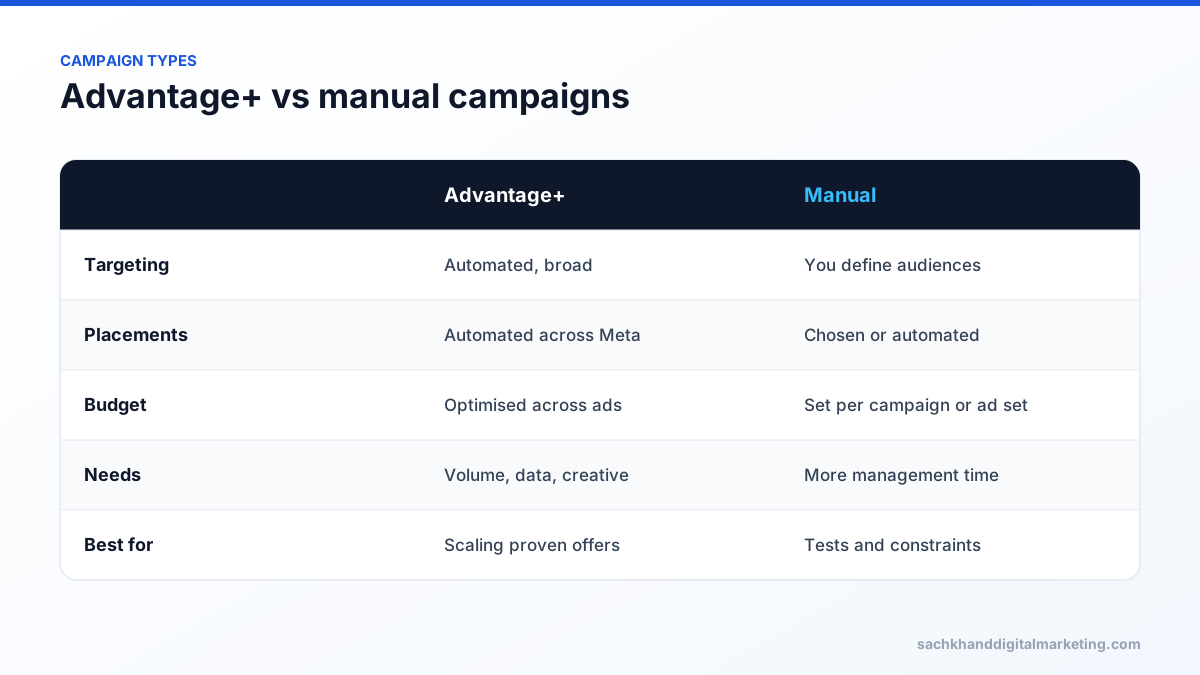
Advantage+ campaigns automate audiences, placements, budgets and creative delivery, and they usually win for advertisers with reliable conversion tracking, enough conversion volume and a steady supply of creative. Manual campaigns still make sense for strict targeting constraints, low data volume, specific tests and new-customer control. Most accounts do best with a hybrid: Advantage+ for scale, manual campaigns for testing and control, judged on blended business results.
On this page
- How Advantage+ works
- When Advantage+ usually wins
- When manual still wins
- What actually drives ROAS
- Choosing the right approach
- A hybrid structure that works for most accounts
- Guardrails for Advantage+
- Creative fatigue is faster now
- How to test Advantage+ against manual fairly
- Setting up an Advantage+ sales campaign well
- Setting up a manual testing campaign
- Scenario examples
- Reporting that keeps automation honest
- Frequently asked questions
Meta’s Advantage+ campaigns promise better results with less work by handing targeting, placements, budget allocation and creative optimisation to machine learning. Many advertisers have seen strong results; others have watched budgets drift toward existing customers or low-quality conversions. The honest answer to “Advantage+ or manual?” is that it depends on your data, creative and goals. This guide explains how each works and how to decide. This guide compares Advantage Plus vs manual setups: when Meta Advantage Plus campaigns and Advantage+ Shopping win, when Meta manual campaigns still do, and how to plan your Facebook Ads campaign structure.
How Advantage+ works
Advantage+ applies Meta’s automation across several parts of a campaign:
- Audience: finds people likely to convert, using any audience suggestions as signals rather than limits.
- Placements: distributes ads across Facebook, Instagram, Messenger and Audience Network where results are best.
- Budget: shifts spend between ads and audiences in real time.
- Creative: can apply enhancements such as cropping and text variations and test combinations.
Meta has been streamlining campaign creation so these automated features are applied by default for sales, lead and app objectives, rather than being a separate campaign type advertisers must choose.
When Advantage+ usually wins
- You have reliable conversion tracking with the pixel and Conversions API.
- Campaigns generate enough purchase or lead events each week for optimisation.
- You produce a steady flow of diverse creative.
- Your offer is proven and you want to scale efficiently.
- You sell to broad consumer audiences rather than tightly defined niches.
When manual still wins
- Strict targeting requirements: regulated industries, specific professions, geographic service areas or legal age restrictions.
- Low conversion volume: automation struggles without data, so manual structure or higher-funnel optimisation may perform better at first.
- Controlled tests: testing a new offer, audience hypothesis or landing page needs isolated variables.
- New-customer focus: when automation keeps spending on people who already know you, manual exclusions or customer settings provide more control.
- Specific placement needs: for example, creative designed only for Stories.
What actually drives ROAS
Campaign type matters less than the inputs both types rely on:
| Input | Why it matters |
|---|---|
| Conversion data quality | Automation optimises toward the events you send; inaccurate or shallow events lead it astray |
| Creative diversity | Different concepts reach different buyers and delay fatigue |
| Offer strength | Price, bundles and guarantees shape conversion rate more than settings |
| Landing page | Speed and relevance decide how many clicks convert |
| Budget concentration | Consolidated budgets exit learning and stabilise faster |
Choosing the right approach
A hybrid structure that works for most accounts
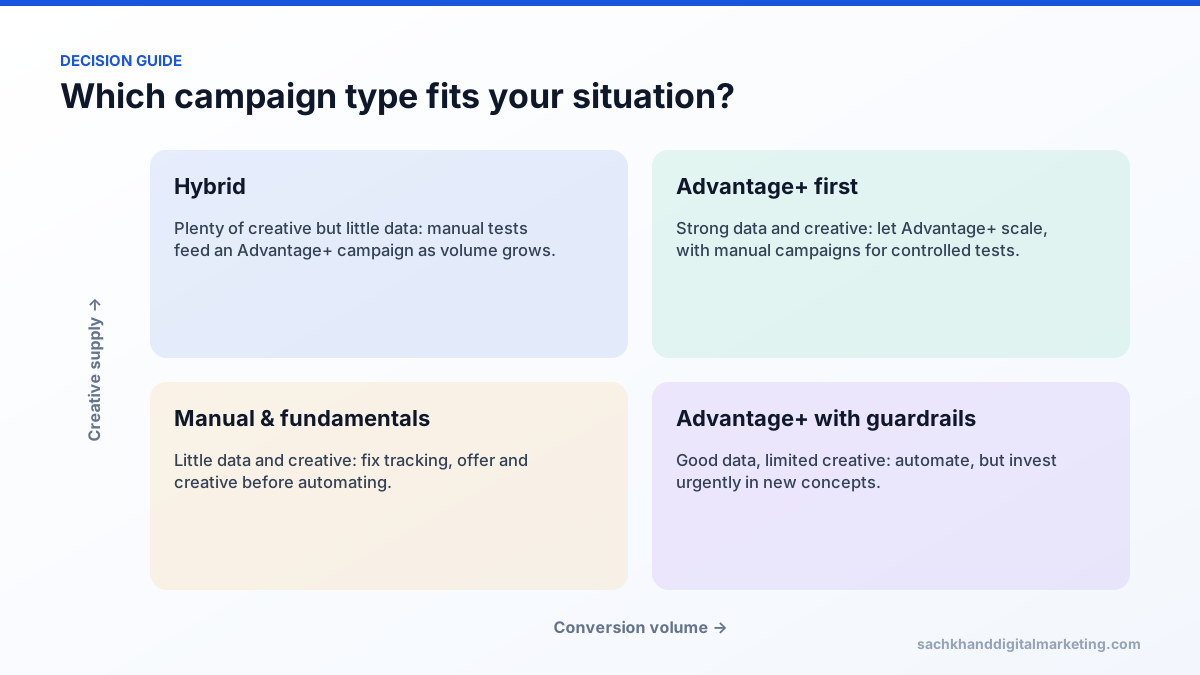
- Scaling campaign: an Advantage+ sales campaign with proven creative and most of the budget.
- Testing campaign: a manual or controlled campaign where new creative concepts and offers are tested with a defined budget.
- Retention or specific audience campaigns: only where there is a clear business reason, such as launches to existing customers.
Move winning creative from testing into scaling, and retire ads as they fatigue.
Guardrails for Advantage+
- Define existing customers in account settings so you can monitor or limit spend on them.
- Check breakdowns by placement, age and new versus existing customers.
- Exclude brand-safety-sensitive placements where needed.
- Review creative enhancements to make sure automated edits stay on-brand.
- Compare results against blended metrics, not only in-platform ROAS.
Get a prioritised action plan from our specialists, free.
Creative fatigue is faster now
Automated campaigns concentrate spend on the best-performing ads, so those ads reach high frequency quickly. Plan regular creative refreshes with new concepts rather than small tweaks, and keep a testing pipeline so replacements are ready. Our Meta Ads algorithm guide covers creative testing in detail.
How to test Advantage+ against manual fairly
- Use the same creative, offer, landing page and optimisation event.
- Run both for the same period with comparable budgets.
- Allow both to exit learning before judging.
- Measure cost per new customer and blended revenue, not only platform ROAS.
- Where possible, use Meta’s A/B testing tools or a conversion lift study.
Setting up an Advantage+ sales campaign well
- Confirm the pixel and Conversions API are both firing purchase events with deduplication and good match quality.
- Define existing customers in advertiser settings using customer lists and website or app audiences.
- Load at least several distinct creative concepts in different formats.
- Set a budget that can realistically produce enough weekly conversions for learning.
- Use cost or ROAS controls only once you have a stable baseline.
- Leave the campaign largely untouched during learning, then review breakdowns weekly.
Setting up a manual testing campaign
- Use broad targeting unless the test is specifically about audiences.
- Keep one variable per test: concept, offer, format or landing page.
- Fund each test cell enough to generate meaningful results.
- Define success criteria before launch, such as cost per purchase within target after a set spend.
- Move winners into the scaling campaign rather than raising the test budget indefinitely.
Scenario examples
| Business | Situation | Recommended approach |
|---|---|---|
| Established ecommerce brand | Hundreds of weekly purchases, strong creative team | Advantage+ for most spend, manual testing campaign for new concepts |
| New Shopify store | Few purchases, limited creative | Fix tracking and offer; test concepts manually or optimise to add-to-cart temporarily |
| Local service business | Tight service radius, lead forms | Manual or Advantage+ leads with location limits; send CRM quality signals back |
| Regulated industry | Audience and ad content restrictions | Manual campaigns within special ad category rules |
Reporting that keeps automation honest
Review Advantage+ results by new versus existing customers, placement, age and creative each week, and compare trends with blended metrics such as marketing efficiency ratio and new-customer acquisition cost from your store or CRM. If automated spend drifts toward people who were already going to buy, adjust existing customer settings and invest in prospecting creative. Our ROI framework explains these metrics.
Frequently asked questions
Is Meta Advantage+ better than manual campaigns?
Often, for advertisers with reliable conversion tracking, enough conversion volume and a steady supply of creative. Manual campaigns remain useful for strict targeting needs, low data volume and controlled tests.
Why is my Meta ROAS dropping?
Common causes are creative fatigue, rising competition, tracking issues, too many edits resetting the learning phase, spend shifting to existing customers, weaker offers or slower landing pages.
Do I still need the Facebook pixel with Advantage+?
Yes. Use the pixel together with the Conversions API so Advantage+ receives accurate, deduplicated conversion data to optimise toward.
Can I exclude existing customers from Advantage+?
You can define existing customers in advertiser settings to monitor and, where available, limit spend on them. Check current options in Ads Manager, as Meta updates these controls regularly.
Should I run Advantage+ and manual campaigns together?
For most accounts, yes. Use Advantage+ to scale proven creative and offers, and manual or controlled campaigns to test new ideas before moving winners into scaling campaigns.
Want your Meta campaigns run by specialists?
Talk to our team about your goals. We will show you where the biggest wins are, starting with a free, no-obligation audit.